
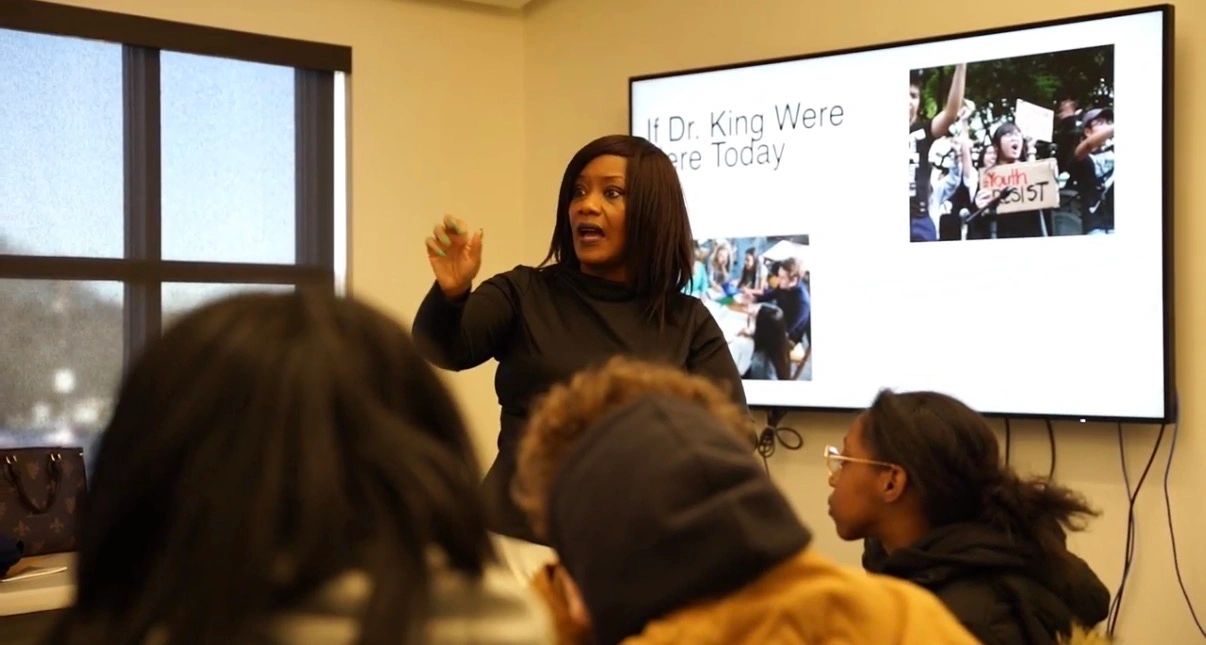
WORCESTER—By the time Jessica Pepple decided to build something of her own, the pattern was impossible to ignore.
“I began to notice a consistent theme everywhere I worked — across school districts, leadership teams, boards of directors, classrooms, and faith communities — and that theme was a lack of belonging,” Pepple told the Worcester Guardian. “That absence showed up everywhere: in culture, in how people were supported and trained, in trust, and in how decisions were made.”
That realization — paired with years spent inside institutions trying to move equity work forward — ultimately led Pepple, a former Worcester City Council candidate and longtime systems leader, to found The Reframe Institute, a nonprofit launched at the end of 2025 and now beginning its public-facing work across Central Massachusetts and beyond.
The organization’s guiding approach, known as the “liberation framework,” pushes past traditional equity and culture initiatives by asking institutions to look backward before attempting to move forward. The framework is built around three core steps: naming harm, understanding its impact, and rebuilding with intention — a process Pepple describes as essential to any lasting transformation.
“Reframing, to me, means going back and looking honestly at what the issue was and acknowledging that it was wrong,” she said. “It requires telling the truth about harm without getting stuck in blame, and then committing to bringing real help to fix what was broken.”
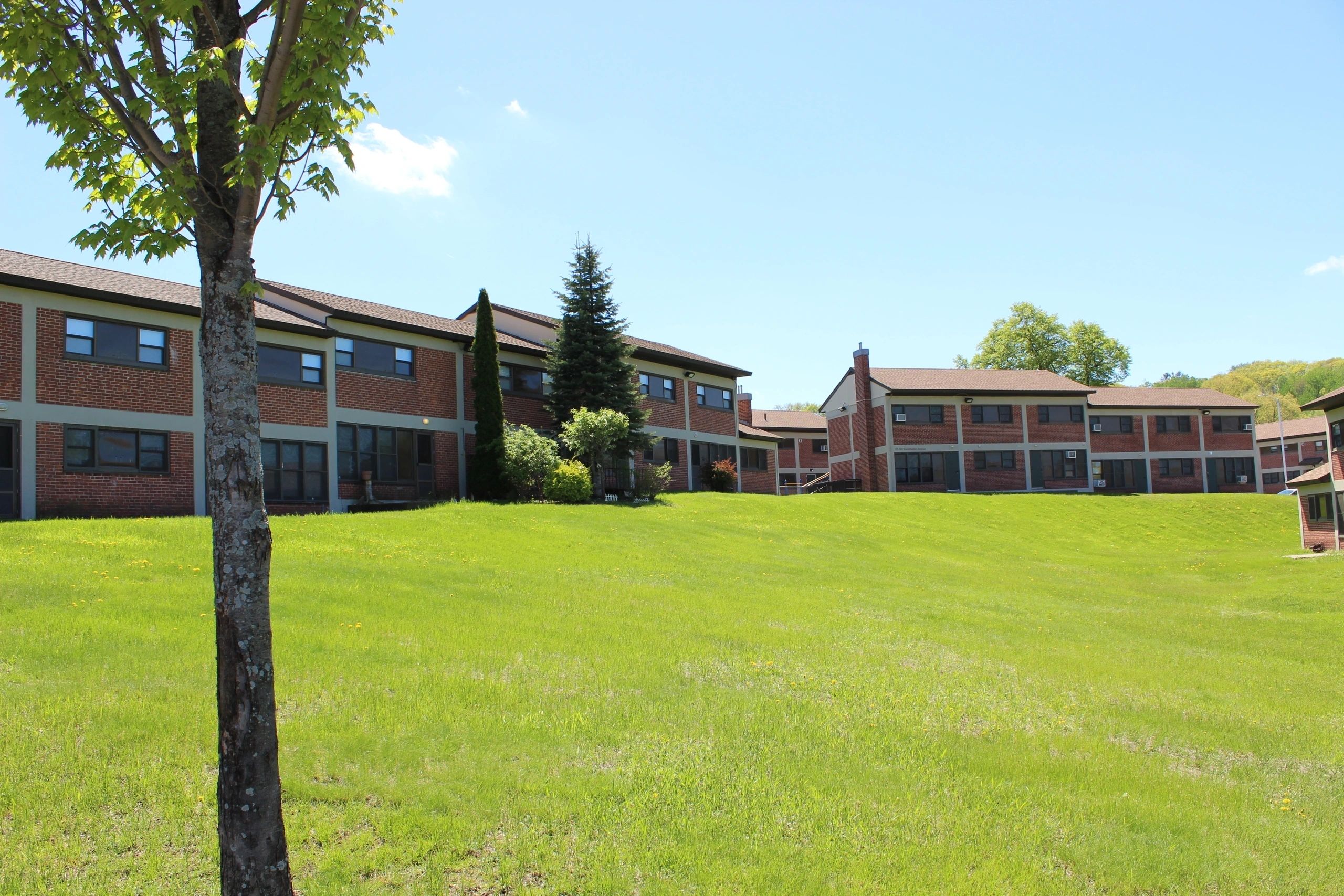
Pepple’s professional path — from classroom teacher to district leader to executive roles in large human services organizations — shaped both the urgency and the design of the work.
She grew up in Orlando, Florida, where she said early experiences shaped her understanding of belonging long before she had language for it. “Growing up in the South, I was aware of oppression and the importance of belonging long before I had the language for it,” she said. “Racism was present, but rarely discussed. There was no equity work, no shared vocabulary — just an unspoken understanding of where you belonged and where you did not. I knew to stay on my side of the railroad tracks.”
She moved to Central Massachusetts nearly eight years ago after accepting a position as an assistant principal in the Cambridge area, a professional transition that anchored her move north. Pepple said her academic path was “nonlinear but deeply intentional,” beginning with an undergraduate degree in risk management and insurance from Florida State University, followed by an MBA and a later pivot into educational leadership. She began her doctoral studies in educational leadership and policy studies at Boston University during the height of the COVID-19 pandemic, starting the program when her daughter was six weeks old.
Pepple has served as a chief diversity & culture officer, a district DEI director, and an organizational advisor, experiences that exposed what she describes as a persistent gap: people wanting to do equity work well, but lacking the structure, safety and support to learn, unlearn and act responsibly.
“Everyone was crying out for help,” said Pepple, who earned her doctorate in educational leadership & policy studies from Boston University. “People harmed by racial and social injustice, people who wanted to listen and learn but didn’t feel they had safe spaces to do so, and brave leaders who genuinely wanted to do the work strategically and well.”
Her time on Worcester’s council campaign trail deepened that understanding, she said. Running on equity as a platform during a period of heightened tension, Pepple said the experience reshaped how she thinks about leadership and systems change.
“Hearing people’s stories without rushing to solutions, without trying to be a savior, was a deeply humbling experience,” she said. “It affirmed that the work is not about position, but about presence.”
At the heart of The Reframe Institute’s work is the concept of belonging — not as a buzzword, but as a measurable outcome. When systems change is working, Pepple said, the results are both human and data-driven.
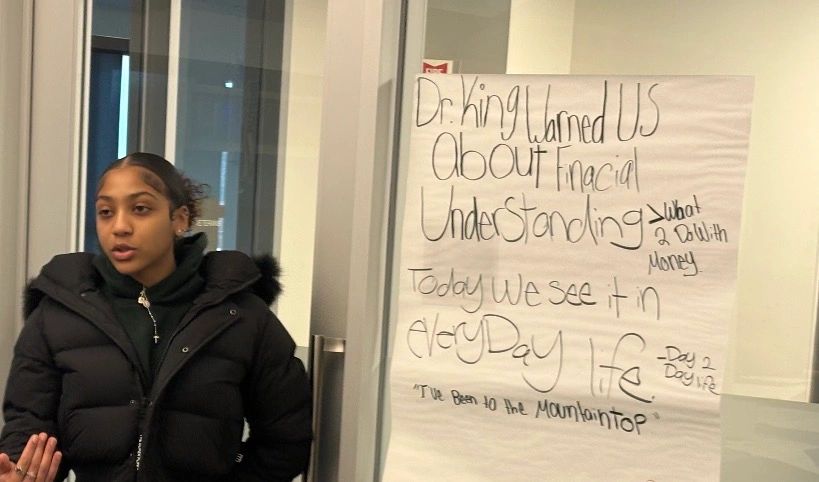
“When it’s working, people come — and they stay,” she said. “Barriers are removed. The mud is taken off people’s wings so they can fly. And that shows up not just in feeling, but in data: stronger retention, fewer microaggressions, people retiring with dignity instead of jumping from place to place because they were never humanized.”
While equity work often carries the expectation of quick fixes, Pepple is explicit about the pace required for meaningful change. “This work requires time, trust, and structure,” she said, noting that organizations must be prepared not only to host difficult conversations, but to responsibly act on what surfaces.
“Accountability without care creates more harm,” she said. “But care without accountability leaves systems unchanged.”
For Pepple, the motivation behind the work is deeply personal. She shared a moment that continues to anchor her sense of responsibility — a conversation with a relative who revealed, for the first time, that he had picked cotton as a child.
“I am literally one generation removed from experiencing cotton-picking,” she said. “It reminded me that to whom much is given, much is required.”
That sense of legacy now shapes how she talks about the future of The Reframe Institute — and who it is ultimately for.
“I’m doing this work for my ancestors, for my students, for my peers, for my allies — for my people,” Pepple said. “But most of all, I’m modeling this for my kindergartner. She needs to see what it means to come as one, but stand as ten thousand.”
Have news, tips, or a story worth telling? Reach Editor Charlene Arsenault at carsenault@theworcesterguardian.org—because good stories (and great scoops) deserve to be shared.
The Worcester Guardian is an independent nonprofit news organization. Support local journalism by making a DONATION today.