
Worcester Public Schools is preparing to spend more than $623 million next year while also bracing for growing financial uncertainty, particularly around federal funding.
Thursday night’s school committee meeting includes a review of Superintendent Brian Allen’s proposed FY27 budget, a $34.4 million increase over the current year that leans heavily on the final phase of funding tied to the state’s Student Opportunity Act. District leaders say the spending plan moves Worcester Public Schools from “vision to action,” shifting from broad strategic planning into actual implementation of programs, staffing and facilities upgrades.
The budget proposal brings total school spending to roughly $623.7 million, including a general fund budget of about $557.4 million. Much of the increase is tied to state aid, which is expected to rise by nearly $26 million, along with an additional $11.7 million in required city contribution. District officials say the budget maintains average class sizes of about 21 students, expands multilingual curriculum offerings, preserves late buses at secondary schools and funds replacement leases for thousands of Chromebooks and other student devices.
Still, the budget document repeatedly warns about clouds forming beyond FY27. Worcester schools currently rely on about $54 million in federal funding, supporting nearly 800 positions across the district, including teachers, paraprofessionals, Head Start staff and nutrition workers. The budget notes that any significant loss of those funds “will significantly impact Worcester.”
There is also the escalating costs of simply keeping a modern school district ticking. Health insurance costs alone are projected to jump by $6.7 million next year, while salary increases account for another $20 million. The district is also confronting the expensive reality of maintaining a one-to-one student device program that exploded during the pandemic and is now becoming a long-term operational cost rather than a temporary emergency measure. One attachment to the agenda lays out a multi-year replacement schedule for Chromebooks, MacBooks and iPads stretching into the next decade.
Technology is only one piece of the district’s larger facilities picture. The committee is also expected to consider accepting a $3.75 million state grant to modernize and expand the HVAC and plumbing programs at Worcester Technical High School. The proposal would support renovations and capacity expansion in two trades programs that school officials say are facing growing regional workforce demand.
Another major topic Thursday night centers on multilingual learners, one of the district’s defining student populations. Worcester currently serves roughly 7,740 English learners speaking dozens of languages, according to materials attached to the superintendent’s report. Spanish remains the most common home language among multilingual learners, followed by Portuguese, Twi, Haitian Creole and Vietnamese. District officials are expected to present updated data showing continued expansion of dual-language programming and rising numbers of former English learners meeting exit criteria from language support programs.

The report also highlights Worcester’s push to strengthen dual-language education pathways beyond elementary school. Plans include expanding the Worcester Dual Language Magnet School model through middle school grades and continuing development of dual-language offerings at Burncoat High School. One slide attached to the report describes a district goal of broader implementation by the 2027-28 school year. Overall district enrollment sits at about 24,677 students, according to the budget book, with elementary enrollment declining while middle and high school numbers tick upward slightly.
The meeting is also expected to bring renewed attention to several controversial school program closures and questions about how Worcester Public Schools supports vulnerable students.
Multiple public petitions on Thursday’s agenda focus on the district’s plans following the closure of Worcester Alternative School, the Academic Center for Transition and the New Citizen Center. Petitioners are asking district leaders to explain how students affected by the closures continue receiving academic, behavioral and social-emotional support services, particularly students with specialized learning needs, chronic absenteeism issues or histories of disengagement from school.
Educational Association of Worcester President Melissa Verdier is also expected to address the closures on behalf of union membership, while other petitioners are pressing for more transparency around student placement decisions and transition planning tied to the Central Massachusetts Collaborative.
Bullying prevention and district accountability are also returning to the committee agenda. One public petition calls on the schools to more consistently enforce its existing bullying prevention and intervention plan, while also seeking greater transparency with families during bullying investigations. The petition additionally urges expanded bullying education efforts, including cyberbullying awareness, stronger supervision of student activity on district devices and more districtwide consistency in how incidents are handled.
School committee member Molly McCullough is requesting a review of college and career readiness efforts across WPS, including the district’s AVID programming and how students and families are informed about academic, vocational and career-focused opportunities. The request also seeks more information about advising practices and whether students are receiving individualized guidance aligned with their interests and long-term goals.
Before the public meeting begins, the committee is also scheduled to enter executive session for ongoing contract negotiations involving several Educational Association of Worcester bargaining units, including teachers, paraeducators and aides. The executive session agenda also includes discussions involving nonunion personnel and matters tied to public records law compliance.
Other highlights on the agenda
- A flood of donations heads to Worcester schools: The committee is expected to approve a long list of donations this week, ranging from classroom support to major capital improvements. Among the largest is a more than $6.1 million donation tied to reconstruction and expansion of the Veterinary Tech Clinic at Worcester Tech, funded through Skyline Technical Fund in partnership with Tufts University’s Cummings School of Veterinary Medicine. Other donations include 200 chairs from Marvell for Burncoat High School, gym floor resurfacing work at Vernon Hill School through the Worcester Sports Foundation, and engineering kits and teacher training from the Museum of Science for seven middle schools. Smaller donations benefiting schools including Columbus Park, Dual Language Magnet School and Worcester Tech are also on the agenda.
- A longtime UPCS supporter remembered: Committee members consider a $7,500 donation from the family of Robert “Doc” Donahue to support students at University Park Campus School. Donahue died in November 2025 and was known for connecting especially closely with seniors preparing to become the first in their families to attend college.
- The district prepares to honor retiring educators: This week’s meeting also includes formal recognition of WPS’s retirees, along with confirmation of additional resignations and retirements across the district. This includes several teachers.
- A fourth grader’s kindness campaign heads to the spotlight: Member Kathleen Roy is asking the committee to formally recognize Heard Street Discovery Academy fourth grader Harley Rose Figueroa for launching “Harley’s Kind Kids Club,” a project using artwork and merchandise sales to raise money and promote kindness and inclusion. Proceeds from the effort benefited a local horse rescue farm where animals are trained for therapeutic programs serving children and adults dealing with PTSD and other trauma-related challenges.
- More grant money could support summer meals and student programs: Several additional grants are also up for approval Thursday night, including a $7,000 Unum Equitable Pathways grant and a $7,500 Summer Eats grant. Summer Eats funding supports meal access programs for students during summer break, when school-based food access disappears for many families. Worcester Public Schools has increasingly relied on outside grants and partnerships to support enrichment programming, student wellness efforts and community services outside the classroom.
- Six thousand new Chromebooks could be on the way: The committee is also expected to consider authorizing a five-year lease agreement to replace 6,000 Chromebooks as part of the district’s long-term technology replacement plan. Worcester dramatically expanded student device access during the pandemic, but district leaders are now confronting the ongoing cost of maintaining and replacing aging technology. The replacement schedule has quietly become one of the district’s major recurring operational expenses.
- School bus cameras could eventually arrive in Worcester: Member Alex Guardiola requests an update on whether Worcester plans to participate in the state’s newly authorized school bus stop-arm camera enforcement program. The technology allows cameras mounted on buses to capture drivers who illegally pass stopped school buses while students are boarding or exiting. Guardiola is seeking information on implementation timelines, projected costs and whether the program could improve student safety around bus stops across the city.
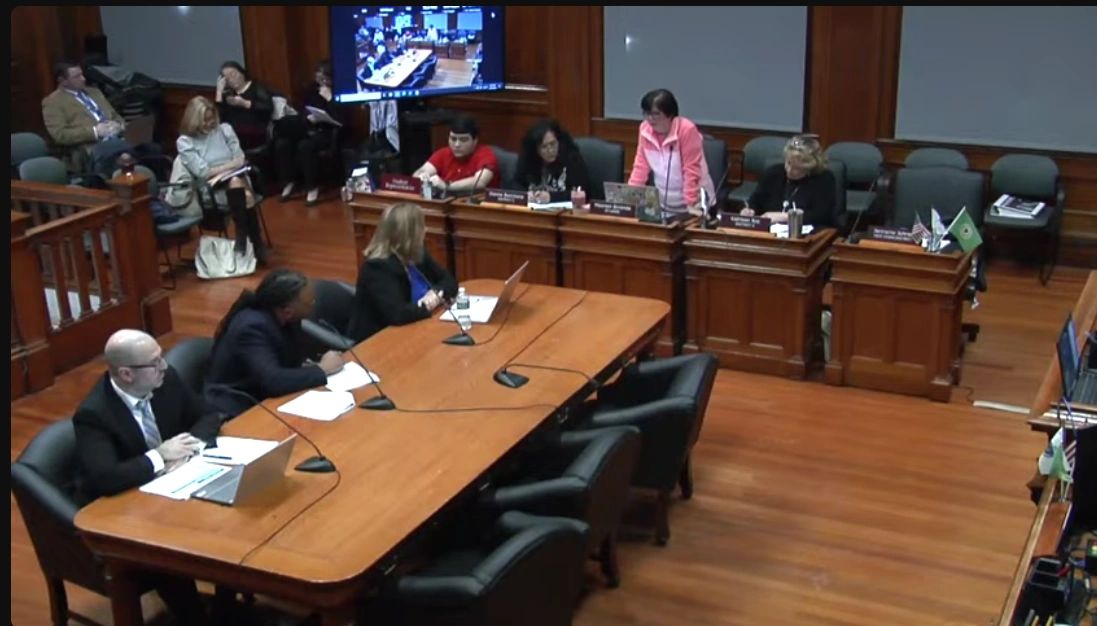
The Worcester School Committee meets on Thursday, May 21, at City Hall in the Esther Howland (south) Chamber at 6 p.m. (executive session meets at 5 p.m.) It is also live streamed on the Worcester Public Schools’ website.