
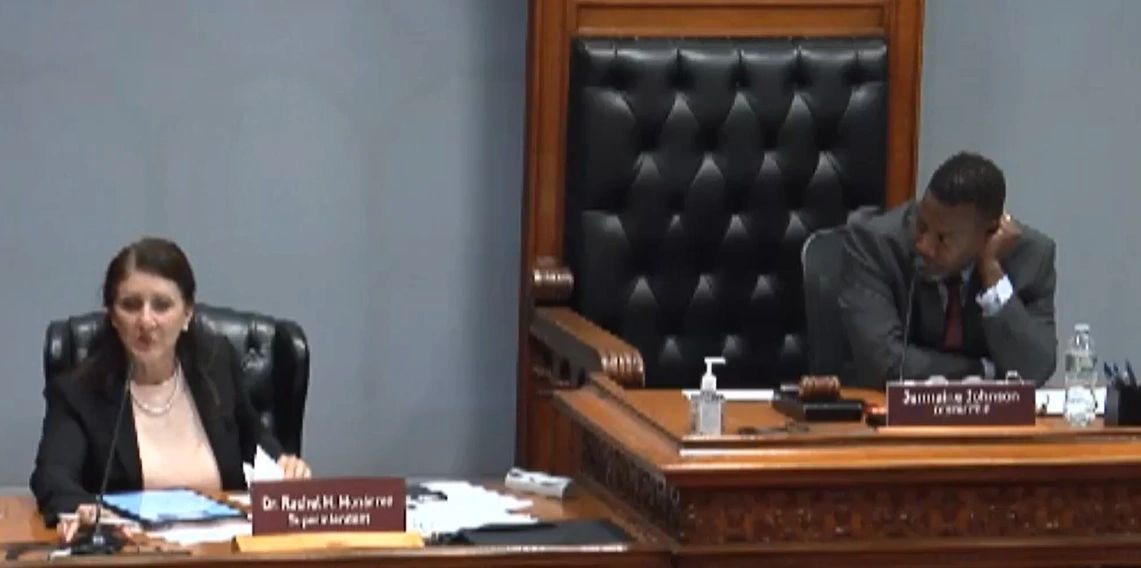
WORCESTER—Using the phrase “embrace the squiggle” as a guide to the path forward, Worcester Superintendent of Schools Rachel H. Monárrez shared with the Worcester School Committee on Thursday how the district is going to deal with an anticipated $22 million budget deficit for 2024-25.
Getting a dramatically slashed fiscal blueprint in place over the next several weeks “is not a straight line,” the superintendent said, referencing the mix of prioritizations and reductions on the table for review.
Another way of putting it, she added later, is “we are always faced with dilemmas. There is not always a clear right or wrong” in addressing these. We are on a lower dip, but we will come out of it.”
Monárrez prefaced her remarks to the school committee by posting a brief video 24 hours earlier. In the video, she noted that the $22 million represents about four percent of the system’s total budget and that there will be cuts to schools, departments, and programs.
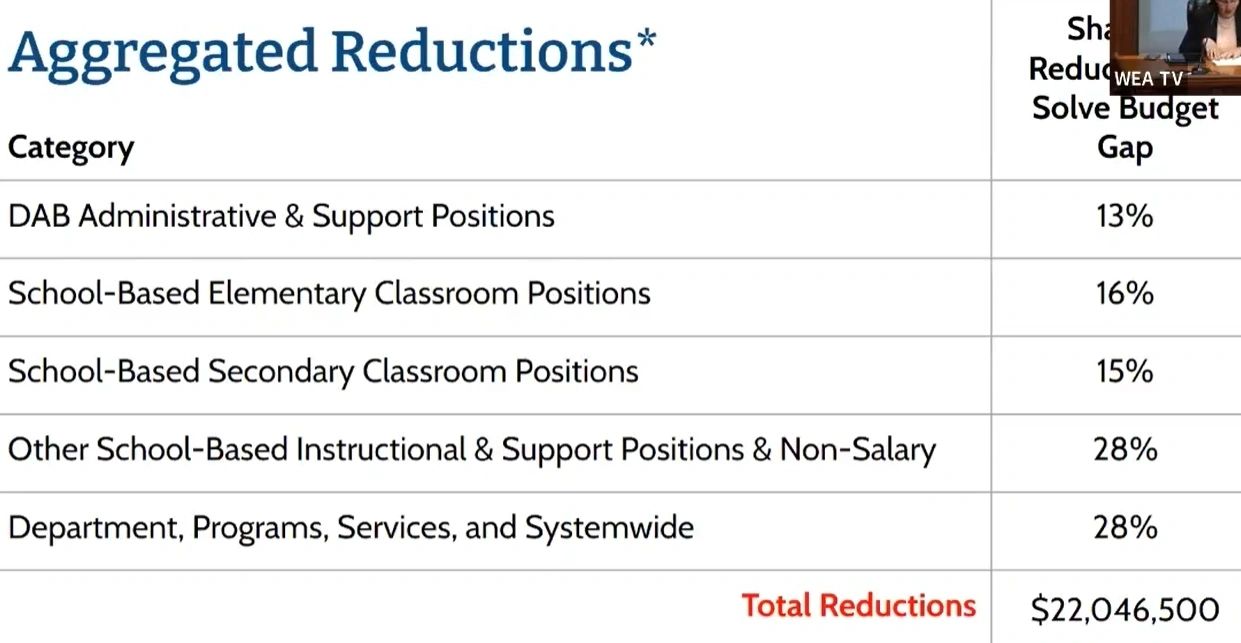
She also stressed that while administration accounts for only one-and-a-half percent of the district’s total spending, it will incur “13 percent of the cuts.”
When Member Maureen Binienda inquired on Thursday about the quantity of positions encompassed by this 13 percent, Deputy Superintendent of Finance and Operations Brian Allen responded that it equates to 22 positions.
On the bright side, which the superintendent mentioned in both the video and on Thursday, class sizes will not be significantly impacted. A 21:1 ratio of students to staff member will be maintained next school year, and the district will remain “laser-focused” on full implementation of the newly adopted five-year strategic plan and commitment to the “Vision of a Learner.”
Titled “Prevention, Efficiencies, and Coherence,” Monárrez initiated her presentation with an overview, emphasizing the importance of acknowledging the hard work invested thus far before discussing what aspects will be retained or removed. To chart the course, input was sought from several principals and other stakeholders. During the discussion, students emphasized the significance of preschool, viewing it as an essential component not to be altered.
“We do not want to lose sight of the hard work we have put in,” said Monárrez, who added that students involved in the discussion said, “Don’t do anything with preschool.”
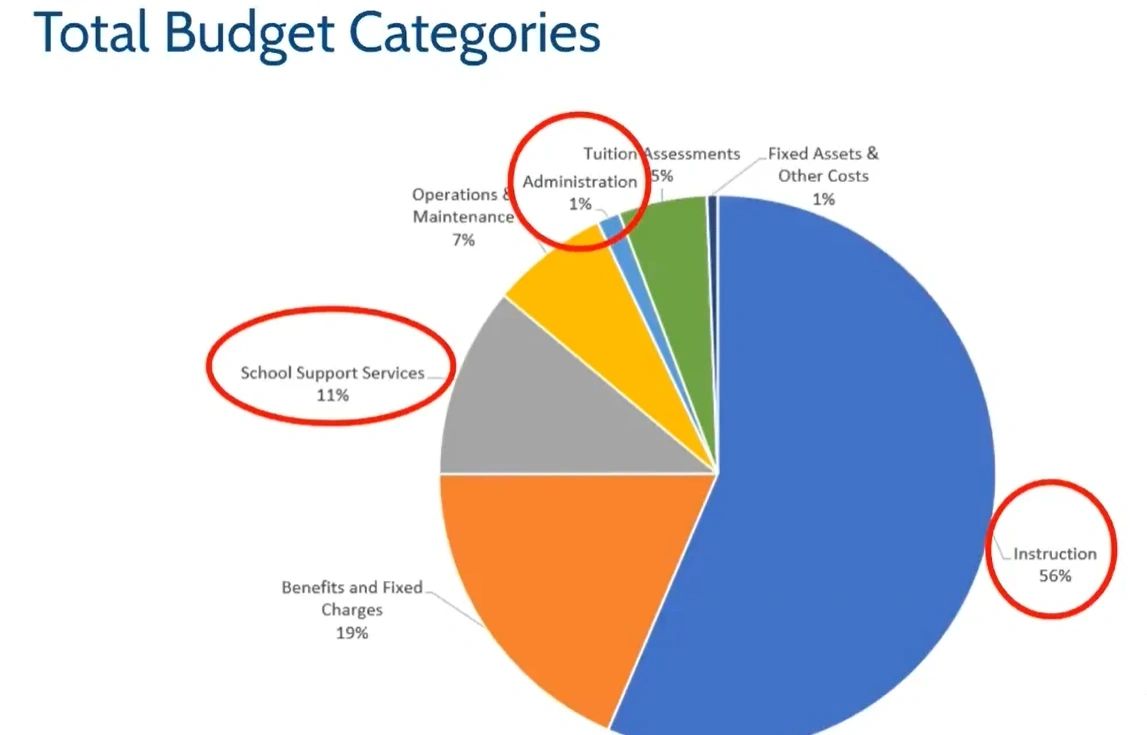
Emphasizing that the presentation is a preliminary look at the upcoming budget, Monárrez said, “I want to emphasize that what is circled in red are the only areas that we really can play with if you will. Twenty-five percent are fixed costs, and we cannot cut them. Things like benefits…that’s a fixed cost…unless we reduce people, that’s a fixed cost.”
The “biggest chunk,” obviously, Monárrez said, represents the “instruction” category, which comprises principals, teachers, wraparound coordinators, custodial and clerical staff.
“The administration costs represent the district office, and so it’s only one percent of our budget,” she continued. “It’s not a big number, so although you’ll see we are cutting 13 of that, one percent overall won’t represent as much money as what’s in blue because most of our money is what’s in instruction. That’s just what schools do. Although we don’t like that we have to look at [reducing] staff at the school, that’s where the overwhelming majority of money is allocated to.”
“What to keep” included assistant principals and deans, assessment specialists, classroom teachers, executive directors, the Family & Community Engagement office, focused instruction coaches, guidance, athletic teams, wraparound coordinators, SAIL staff, school adjustment counselors and internship coordinators, for instance.
“Aggregated reductions” are for DAB administrative and support positions (13 percent) already specified, school-based elementary classroom positions (16 percent), school-based secondary classroom positions (15 percent), and other school-based instructional and support positions, non-salary and department programs, services and system-wide (28 percent).
“We were able to keep all the top priorities and a majority of the mid-tiers,” she said.
In fact, the superintendent said, while talking about the investment in breakthrough strategies, “we actually cut more than the $22 million.”
The figure as it stands now is $22,046,500.
There was minimal pushback from school committee members.
Binienda posed several inquiries, covering topics such as the status of AP classrooms, certification requirements for middle school deans, the role of long-term substitutes, and the future of community collaborations. Additionally, she expressed satisfaction that middle school sports would be retained, a sentiment echoed by Member Molly McCullough.
“We fought hard to bring middle school sports back,” McCullough said.
A question from Member Dianna Biancheria about security at the doors of schools brought a reply that Climate & Culture personnel will be taking on this function.
“I am disappointed that we don’t have security at the desk” to sign people in, Biancheria said.
She cast the lone “nay” in opposition to a motion to approve the superintendent’s report.
On May 10, the annual Budget Book with details will be released publicly on the district’s website, Dan O’Brien, chief communications officer, said.
On June 6, the first Worcester School Committee public hearing on the budget with details will be held.
The School Committee will vote to approve the budget at the end of June.
Rod Lee is a career journalist, a veteran of the media scene in Central Massachusetts and the author of seven books including the recently published “Gil Cristopher,” a novel about the difficulties associated with aging. He can be contacted at rodlee1963@gmail.com
As the Worcester Guardian marks more than half a year of delivering free, independent digital news to our city, our dedication to this mission strengthens. Please consider a tax-deductible donation to support our ongoing commitment to providing hyperlocal news coverage to Worcester.
