
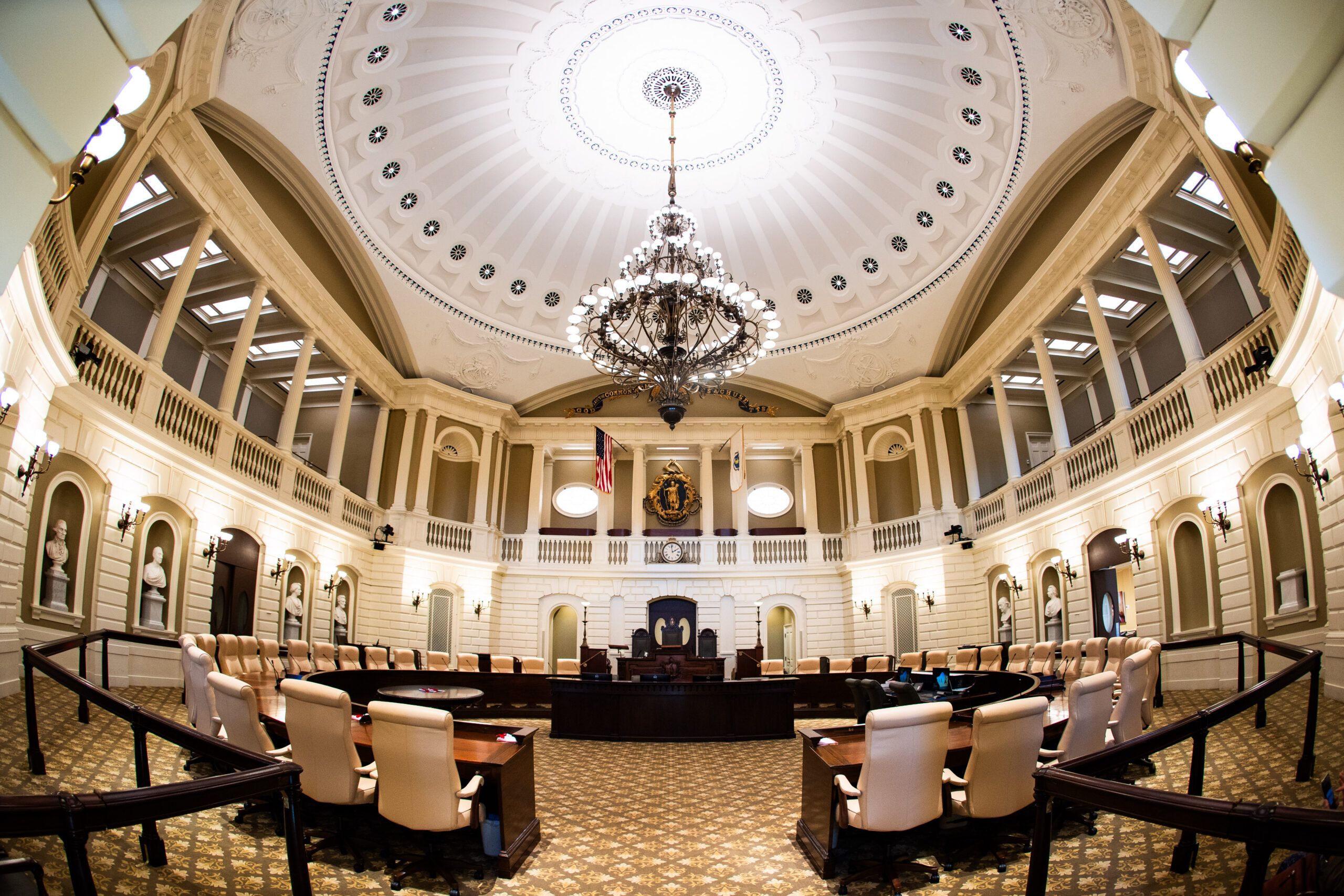
WORCESTER—A sweeping supplemental state budget approved by the Massachusetts Senate last week includes targeted funding for Worcester projects alongside broader efforts to address housing costs, health care access and municipal finances.
The $1.57 billion spending plan, known as the Fair Share supplemental budget, combines new investments in education and transportation with policy changes aimed at encouraging housing development and strengthening the state’s primary care workforce.
For Worcester, the legislation includes $130,000 to repair or replace ADA non-compliant sidewalk curb ramps and $45,000 for Worcester Public Schools’ Latino Education Institute, according to an announcement from Sen. Michael Moore’s office.
Moore, a Democrat representing the Second Worcester District, said the measure reflects both statewide priorities and local needs.
“The incredible success of the Fair Share Amendment is helping us make historic investments into our schools and transportation systems, and this legislation is the proof,” Moore said in a statement released by his office. “Combined with smart, targeted policy changes that will help boost housing production and expand healthcare access across the Commonwealth, this Fair Share supplemental budget is a massive win for hardworking Bay Staters.”
The bill also includes funding for surrounding communities in the district, such as Grafton, Auburn, Shrewsbury, Westborough and Millbury, with investments in school technology, transportation equipment and public safety upgrades.
Beyond earmarks, the legislation introduces a new sales tax exemption on building materials for qualifying housing developments, a move intended to incentivize construction of affordable and workforce housing. Lawmakers also approved a scholarship program aimed at increasing the number of primary care physicians by covering tuition for graduates of UMass Chan Medical School who commit to working in underserved communities.
Additional provisions include funding to help cities and towns manage the costs of severe winter weather, increased reimbursements for special education services, and support for public higher education research programs.
The senate passed the bill in a 35-4 vote and returned it to the House for further consideration.
