
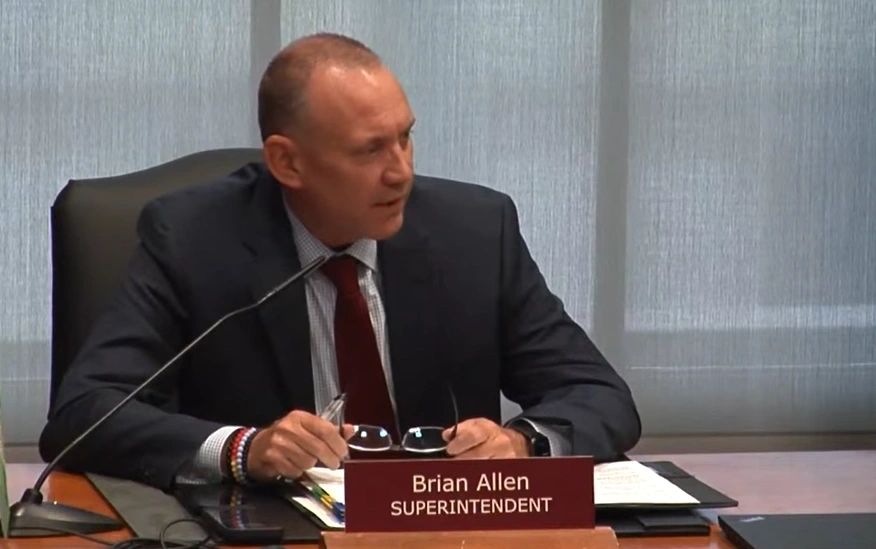
WORCESTER—Superintendent Brian Allen has outlined key objectives for his first year, focusing on district realignment, the new Vision of a Leader initiative, and an improved district communication strategy.
Allen shared his goals with the School Committee on Sept. 18, presenting both long- and short-term benchmarks aimed at balancing student numbers across the city’s schools, as well as fostering the future generation of educators. The School Committee unanimously approved the plan, expressing excitement for the work ahead.
The first major initiative is the development of a unified communication framework, which is set to be fully implemented by June 2026. This framework is part of a broader strategy to streamline communication between staff, families, and the community, ensuring consistent messaging from the district.
“We are working to improve internal communications across the district, making sure our message is consistent across departments and that the work aligns with the ‘Vision to Action’ strategies,” Allen said.
While communication improvements are essential, it was Allen’s focus on district realignment and the retention of future educators that sparked the most discussion. The School Committee showed strong interest in these two proposals, particularly the vision for preparing local students to become the educators of tomorrow and creating more balanced classroom sizes.
The “Vision of a Leader” initiative aims to inspire Worcester students to pursue teaching careers, with hopes they will return to the city to teach in the schools where they were once students.
“The Worcester Public Schools has access to a high-quality pool of future teachers right within our own student body,” said Allen. “A structured, supportive program is key to developing future educators. Many of our current staff members are alumni of Worcester Public Schools. Rather than rely solely on external programs, we can create a sustainable program that engages Worcester students in a teaching career.”
The district is aiming to recruit its first cohort of 15 to 20 students by next June, who will commit to the WPS Future Teacher Pipeline and complete their first early college course in the program.
Another significant goal is the exploration of district realignment. This process will involve assessing student enrollment, population shifts, and school assignments to address issues such as overpopulation, reduce class sizes, and ultimately enhance the educational experience for both teachers and students.
“This process will include a comprehensive analysis of student enrollment data, program placements, and school designations,” Allen explained.
The realignment process will begin with hiring a vendor to gather and analyze data, forming a realignment committee, and presenting recommendations throughout the next year. Stakeholder meetings are tentatively scheduled from early spring to summer, with a final recommendation expected by November 2026 for integration into the Fiscal Year 2027 budget.
Among Allen’s additional goals is increasing the percentage of students meeting or exceeding math and reading benchmarks, as well as fostering more collaboration among school staff. The district has also formed working groups to explore other programs, including culturally responsive instruction, restorative practices, and improvements to admissions-based programs.
Additionally, the district is exploring ways to enhance technology in elementary schools and expand Career and Technical Education Programs, including a five-year Elementary Library Plan, and continue equity-based resource allocation.
