WORCESTER—As Greater Worcester Community Foundation marked its 50th anniversary in 2025, the milestone offered more than a moment for celebration. It also provided a chance to explain something that even longtime Worcester residents sometimes struggle to pin down: what, exactly, the GWCF does—and how it quietly influences and reverberates throughout the county’s nonprofit landscape.
Today, the foundation stewards more than $250 million in charitable assets, supports more than 650 individual funds, and awards roughly $10 million in grants each year. But unlike a single-issue charity or a one-time fundraising campaign, its role is deliberately broad and long-term.
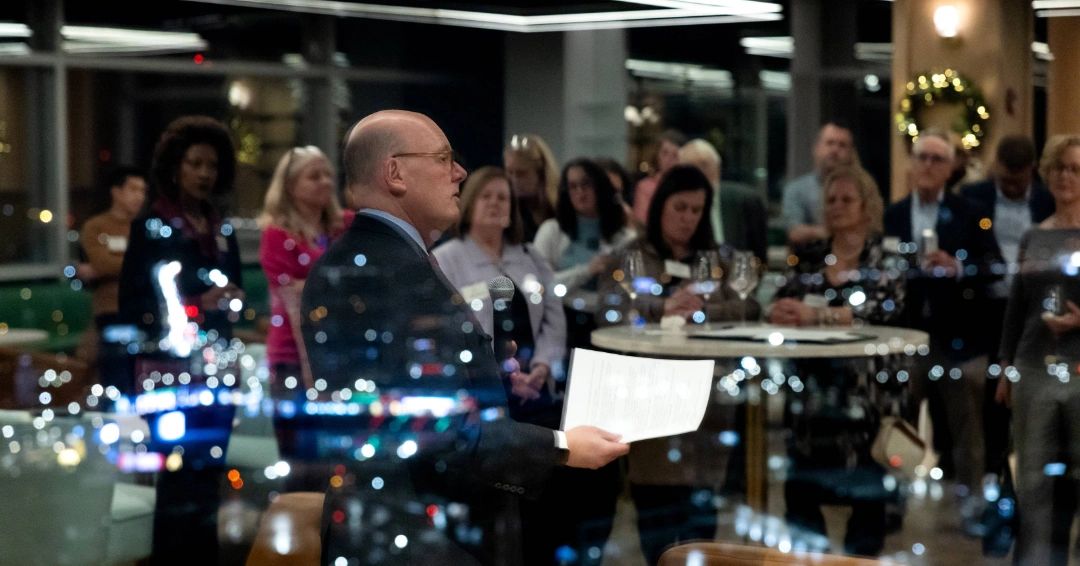
“We aren’t one pot of money,” Foundation President and CEO Pete Dunn told The Worcester Guardian in an interview this week. Instead, he said, the organization is made up of hundreds of charitable funds created by donors over the past five decades, many of them with specific purposes attached.
Some of those funds are restricted — scholarships, for example, or support for a defined cause or population. Others are more flexible, allowing the Foundation to respond to evolving needs across Worcester County. The result, Dunn said, is a hybrid model: donor-directed philanthropy paired with strategic, community-wide grantmaking.
That structure distinguishes community foundations from organizations like United Way, Dunn said, even though both play central roles in local philanthropy. While United Way focuses on raising and distributing funds for immediate needs, the GWCF functions more like a permanent civic savings account — building endowments that generate support year after year.
“We build permanent charitable capital and distribute a portion every year,” Dunn said, describing the Foundation as one part of a larger philanthropic ecosystem that includes direct donors, private foundations, corporations and government.
Grantmaking in a shifting landscape
In 2025, the Foundation scooped out $2.13 million through its Community Grants program, dishing 170 grants to nonprofits across Worcester County. Those grants included both project funding and general operating support—a mix that Dunn said has become increasingly important as nonprofit leaders navigate uncertain and shifting funding streams.
Nonprofits today are juggling changes in state, municipal, federal, corporate and individual giving, he said, often at the same time. In that environment, flexible funding can be critical.
The GWCF adjusted its Community Grants program, offering one round focused on specific projects and another that provides operating support for smaller organizations. Dunn said many nonprofits welcomed the flexibility, particularly funding that can be used where it’s needed most rather than tied to a single program.
“It’s a difficult time for nonprofit management,” he said, noting that organizations are increasingly looking for ways to stretch limited resources and focus on what will have the biggest impact. He added that free support services are available to help with that work, though many nonprofits may not realize they exist.
The 2025 grants reflected both stability and change within the county’s nonprofit sector. More than a quarter of grantees were new to the program and eight organizations received their first-ever grant from the Foundation, according to a December announcement.
Health and wellbeing got the largest chunk of funding last year, with $542,000 awarded — a 51 percent increase over the previous year. Youth development and basic needs also received roughly half a million dollars each, alongside significant investments in arts, creativity and economic opportunity.
Building capacity, not just programs
Beyond direct grants, Dunn said the Foundation has increasingly been focusing on nonprofit capacity-building—work that doesn’t always produce flashy headlines but can shape organizations’ futures.
For more than 25 years, Dunn said, the Foundation’s Nonprofit Support Center has provided training, planning assistance, and modest grants for behind-the-scenes needs such as fundraising systems, leadership transitions, and strategic planning.
“These are relatively small investments,” he said, “but they can help organizations do their work better.”
In 2025, the Foundation expanded that focus with new initiatives, including a merger and affiliation fund to help nonprofits explore partnerships, and Nourishing Tomorrow’s Leaders, a program aimed at board development.
Dunn said the latter grew out of a recurring challenge he hears from nonprofit leaders: a desire to diversify boards and bring in new voices, paired with the reality that many potential board members don’t fully understand what board service entails.
“If you haven’t served, it can be a mystery,” he said. The program is designed to create a broader cohort of people who understand nonprofit governance and feel prepared to step into leadership roles.
Managing legacy and partnership
One of the most significant moments of the year came with the Foundation’s receipt of the largest gift in its history, following the closure of Becker College. Proceeds from the sale of Becker’s assets are being used to establish scholarship funds honoring the college’s legacy.
“That was a really difficult moment for the community and for people connected to Becker,” Dunn said. “We were honored to be thought of as a partner.”
The gift, he said, exemplifies the Foundation’s core role: managing charitable resources in alignment with a donor’s intent, even as institutions and circumstances change.
The Foundation also entered into new partnerships in 2025, including a $1 million match fund with the Esler Family Foundation and a multi-year initiative with the the city focused on small nonprofit sustainability.
In each case, Dunn said, the GWCF operates under clear agreements that preserve its independence while leveraging its grantmaking expertise. With the city, for example, the Foundation is contracted to administer grants to small organizations—particularly those with budgets under $500,000—as part of a broader effort to strengthen nonprofit infrastructure.
Looking ahead
In a year-end message circulated to the Foundation’s supporters in late December, Dunn described 2025 as a year of both reflection and momentum. He noted that the Foundation is in a strong fiscal position and “well positioned for continued growth and impact,” while outlining priorities for 2026.
Those include continued 50th anniversary events through the Foundation’s annual meeting in June, a robust grant calendar with new opportunities for smaller nonprofits, and an expansion of impact investing — using financial tools beyond traditional grants to advance community goals.
One example came in 2025, when the Foundation announced a $1 million low-interest loan to Worcester Community Housing to help fill financing gaps in housing projects. Dunn said he expects that work to grow in the year ahead.
At the same time, the Foundation is focused on deepening local philanthropy. In 2025, Dunn said, the organization experienced its strongest year ever for charitable giving, with $22 million contributed.
“Part of our reason for existing is to grow philanthropy,” he said — and to ensure those charitable resources remain rooted in Worcester County.
As the Greater Worcester Community Foundation enters its next half-century, its work may remain largely behind the scenes. But its influence — in grants awarded, organizations strengthened, and futures shaped — is woven through the region it serves.
Have news, tips, or a story worth telling? A good recipe or a funny joke? Reach Editor Charlene Arsenault at carsenault@theworcesterguardian.org—because good stories (and great scoops) deserve to be shared.
- The Worcester Guardian is an independent nonprofit news organization. Support local journalism by making a DONATION today.