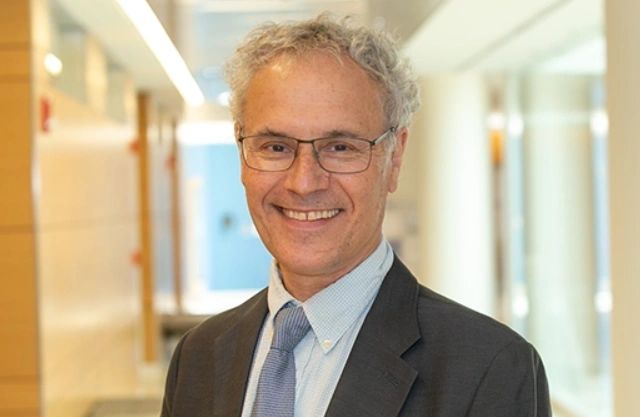
WORCESTER— It’s a defining moment for a local scientist, bringing the spotlight to Worcester, a city known for its high rankings in healthcare and scientific achievement.
UMass Chan Medical School’s Dr. Victor Ambros has been awarded the 2024 Nobel Prize in physiology or medicine, honoring his revolutionary discovery of microRNA. This tiny but crucial molecule, essential for regulating gene activity, has transformed the field of molecular biology.
The Nobel committee, in announcing the award, cited Ambros’s and colleague Dr. Gary Ruvkun’s work as a “fundamental principle” in how genes are controlled at the molecular level. The discovery of microRNAs has implications across many biological processes, from development to disease, and continues to be a vital area of research.
A professor of molecular medicine at UMass Chan, Ambros’s research has focused on the role of microRNAs in developmental biology. His current work, funded by the National Institutes of Health, delves into how genes control developmental timing in organisms, with the goal of unraveling complex genetic pathways that could lead to advances in understanding cell division and fate.
This is not the first Nobel honor for UMass Chan. In 2006, Dr. Craig C. Mello, another faculty member, was awarded the Nobel Prize in Physiology or Medicine for discoveries related to RNA interference, a related molecular mechanism with transformative potential for human health. Ambros’s award marks another major milestone for the university and underscores its growing reputation as a world-class center for scientific discovery.
Dr. Ambros has garnered many prestigious accolades throughout his career, including the Breakthrough Prize in Life Sciences, the Lasker Award, and the Wolf Prize. His pioneering work has been recognized globally, making him a respected leader in the scientific community.