
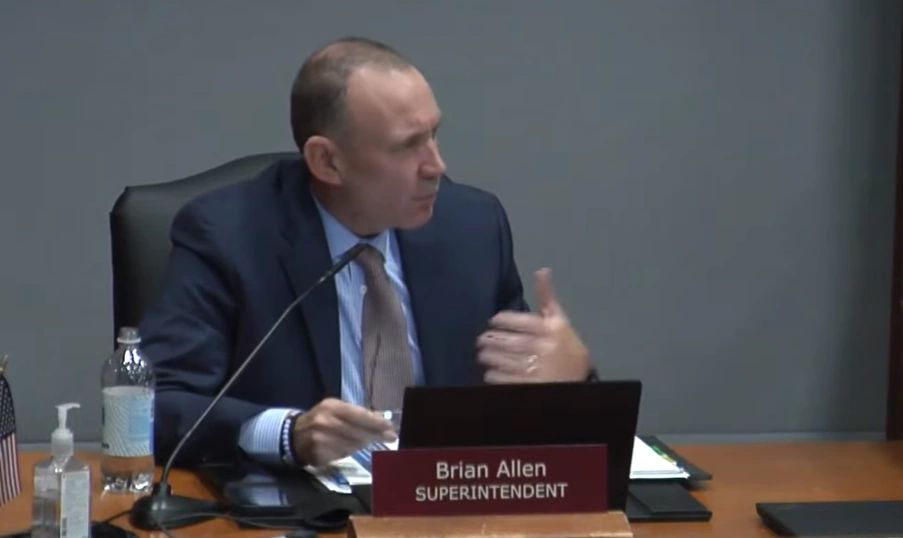
WORCESTER—Worcester Public Schools Superintendent Brian Allen shared a mid-cycle review of his Vision to Action goals at the school committee’s most recent meeting, outlining progress on student achievement, professional practice, district operations and long-term planning.
While committee members raised questions about staffing pipelines, school boundaries and data transparency, they also praised the action plan’s thoroughness and multi-faceted approach.
The presentation covered five goals originally rolled out in September and concluded with a vote to approve and file the report, along with two motions requesting additional information.
Student learning and assessment data
Allen began with the student learning goal, which centers on improving reading and math performance on the STAR assessment. The district aims to raise by three percentage points the number of students meeting or exceeding state benchmarks in both subjects by the end of the school year, bringing the total to 36%.
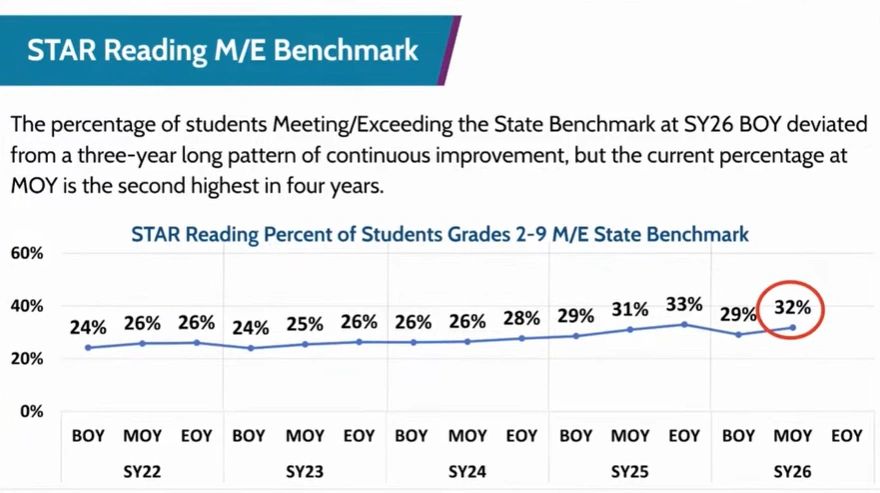
Allen said the district was able to include mid-year data in the presentation, showing that 32% of students in grades 2–9 were meeting or exceeding the reading benchmark at the middle of the year. He noted that while the district experienced a drop at the start of the school year compared to prior trends, the mid-year increase represented a larger gain than seen in recent years.
He also pointed to math performance, saying the percentage of students meeting or exceeding benchmarks was at its highest level since the district began tracking the data in this way, while cautioning that in past years scores have sometimes dipped slightly by the end of the year.
Allen said the district’s staff is working to break that pattern.
Professional practice and collaborative teams
A second goal focuses on professional practice, particularly the use of professional learning circles, or PLCs, across schools. PLCs are structured, school-based meetings in which educators regularly review student work and data and coordinate instruction.
Committee member Molly McCullough asked Allen to explain PLCs and why they matter. Allen said research shows that structured collaboration among educators—focused on student work, expectations and outcomes—is one of the biggest drivers of student achievement.
“The research is clear that PLC work is one of the most effective ways for student achievement,” Allen responded. “So if we put adults together to talk about students, their work and expectations, that has been a significant driver that leads to student achievement. We actually saw that during our Level 4 days where we actually used PLC and common planning time work to support the Level 4 schools with great success.”
McCullough said she wanted the public to better understand the emphasis on PLCs and how they connect to improved outcomes.
Allen also described a new data system used to track how school-based teams are implementing collaborative meeting structures. He said most teams are meeting many of the required elements, such as reviewing norms and documenting action steps, while noting areas for improvement, including consistent participation by English learner and special education staff.
The superintendent also highlighted ongoing work around the district’s Vision of a Leader initiative, a leadership framework aimed at strengthening alignment across roles. He said 14 principals are currently engaged in deep integration of the framework alongside district leaders, focusing on building leadership capacity in alignment with district priorities. As part of the initiative, leaders have participated in confidence mapping and awareness workshops to identify areas of need, which Allen said are being incorporated into upcoming district leadership meetings.
Grow Our Own pipeline and early college program
The district’s second improvement goal centers on a five-year “Grow Our Own” pipeline— often referred to during the presentation as “Grow Your Own”—designed to recruit and prepare future educators from Worcester schools.
Allen said the program began with an early college partnership allowing students to complete up to four education courses by high school graduation. While the original plan called for 15 to 20 students, Allen reported that 32 students are now enrolled, filling the program to capacity.
He said the students come from multiple high schools across the district and receive classroom experience, leadership development and ongoing support through college.
“I know somebody will ask about the 32 students [in the college partnership program],” said Allen. “Six are from Burncoat, three are from Claremont, nine from Doherty, six from North, four from South and four from Worcester Tech.”
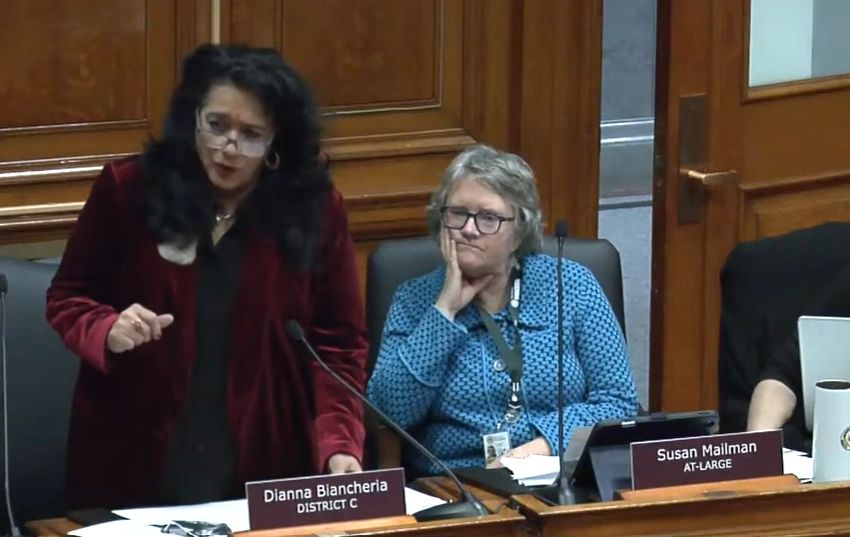
School committee member Dianna Biancheria praised the initiative and asked whether Worcester State University was the only higher education partner. Allen said Worcester State is currently hosting the early college courses, but the district is also in conversations with other institutions, including Assumption College, Quinsigamond Community College and Holy Cross.
Biancheria requested an update later this year on student progress and additional partnerships, which was approved as part of the final vote.
School boundaries and enrollment planning
Another major focus of the presentation was the district’s proposed school boundary and quadrant realignment, aimed at reducing overcrowding and improving building utilization by June 2027.
Allen said several schools are currently at or above capacity, including Belmont, Rice Square and Chandler elementary schools, as well as Sullivan Middle School, Forest Grove Middle School and South High School. He also cited confusing feeder patterns and uneven enrollment across the district.
The district has formed a working group to review enrollment data, building layouts and student addresses, and has selected a vendor to assist with community outreach. Allen said recommendations would be brought to the school committee in the spring.
Committee members raised questions about the impact of new housing developments, student transitions and whether changes would affect district boundaries. Allen said the district is working with the city’s economic development team to track proposed developments and their potential impact on enrollment, and remarked that the primary focus would be on elementary school alignment.
He also said the district intends to minimize disruption for currently enrolled students and would consider “legacy enrollment” to reduce multiple transitions.
Communications, AI and other initiatives
Allen also gave updates on a unified communications framework, including the launch of a weekly all-staff newsletter and expanded multilingual outreach to families.
He said the district is developing a multi-year strategy for artificial intelligence use, aligned with state guidance, and has paused some AI platforms while policies are reviewed to ensure ethical and appropriate use.
Additional initiatives mentioned included culturally responsive instruction pilots, restorative practices training, mission-based program improvements, expanded site councils, and long-term planning for Chapter 74 and career and technical education programs.
Committee feedback and vote
Several committee members offered feedback and suggestions, including requests to explore collaborative problem-solving approaches to student behavior and to include information about the superintendent’s external professional development activities in future reports.
At the end of the presentation and discussion, the committee voted to approve and file the superintendent’s report, along with motions requesting additional updates on the Grow Our Own program and professional practice goals.
Have news, tips, or a story worth telling? A good recipe or a funny joke? Reach Editor Charlene Arsenault at carsenault@theworcesterguardian.org—because good stories (and great scoops) deserve to be shared.
- The Worcester Guardian is an independent nonprofit news organization. Support local journalism by making a DONATION today.