
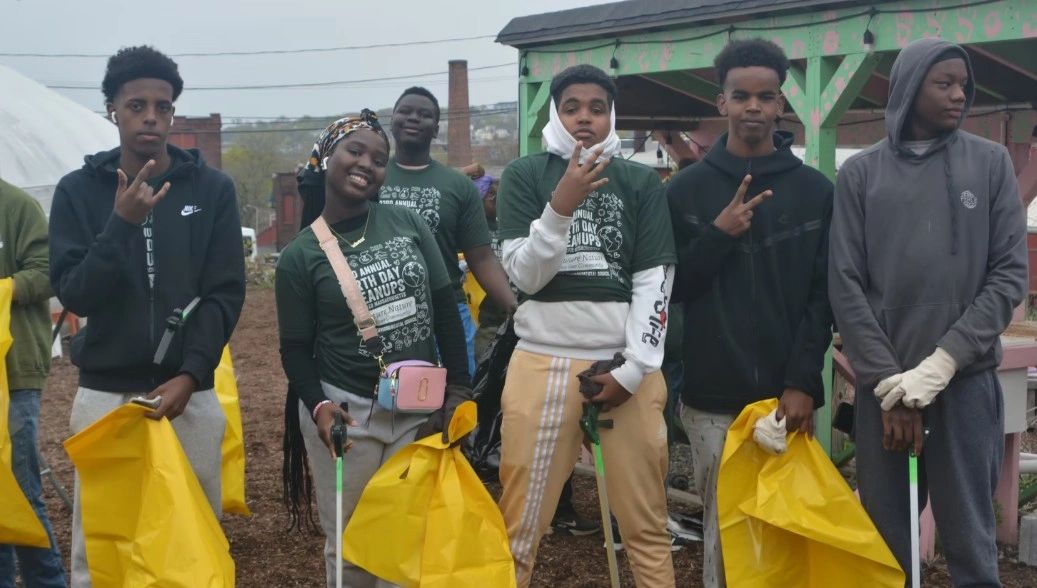
WORCESTER—Last April, a group of volunteers braved torrential rain on a Saturday morning to clean up Worcester’s Green Island neighborhood, clearing the streets of around 800 pounds of litter. Along with about 1,500 people, they cleaned up more than 70 sites across the city on Worcester Earth Day.
Among the hundreds of people helping out was Paul Ledoux, the face behind the Instagram account @ipickupworcesterlitterverywell. He started the account — and the movement — by documenting random litter he picked up while walking his dog, then progressed to organizing regular cleanups and inviting others to join. On last year’s Earth Day, he worked with Worcester Green Corps to recruit about 15 volunteers passionate about cleaning and beautifying the neighborhood.
This year, Worcester Earth Day returns Saturday, April 18, welcoming individuals, schools, faith communities, neighborhood associations, organizations and businesses to take part in the citywide cleanup. It marks the 36th year that the Regional Environmental Council (REC) has organized the event.
For more than three decades, Worcester residents have joined the annual spring cleanup to help keep neighborhoods clean, green and safe. Each year, volunteers remove more than 25 tons of trash from streets, parks, green spaces and neighborhoods across the city. REC coordinates the effort and works with the Worcester Department of Public Works and Superior Waste & Recycling to collect and dispose of the debris.
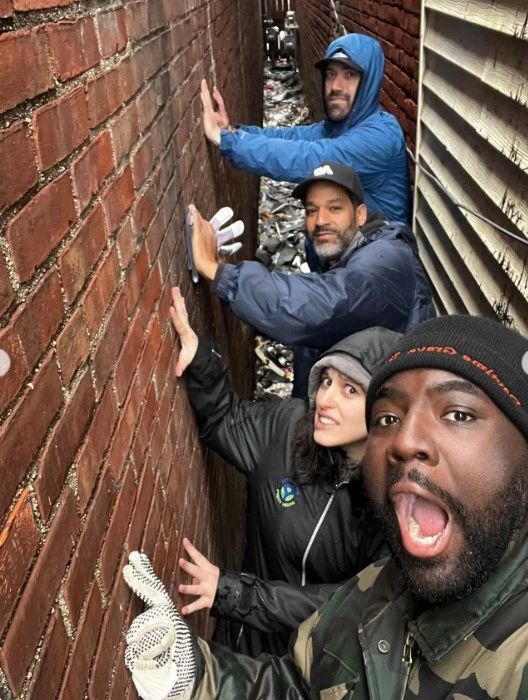
Cleanup sites span neighborhoods across Worcester, including areas such as Hadwen Arboretum, Worcester Technical High School, Coes Pond, the West Boylston Street corridor, Green Island south of Kelley Square, Franklin and Harding streets, Chandler Magnet/Worcester Dual Language Magnet, and areas around Piedmont and Austin streets, among many others.
Ledoux, who first got involved with Worcester Earth Day in high school around 2000, is particularly excited to be coordinating the cleanup on Mill Street this year. Every day on his way to work, he passed by the street with the city’s first parking-protected bike lanes and noticed that the lanes often collected litter.
Cleanups are more than an environmental action for Ledoux; they also serve as a way to connect with the community. His favorite experience during cleanups was talking to curious strangers and inviting them to join.
“It is a chance to connect with people, to network with people, and to also open or to offer participation at no pressure,” he said.
The theme of this year’s Earth Day is “nurturing your neighborhood,” said Tracy Andryc, development director of REC.
“Nurturing the earth and nurturing the places that we live, work, learn and play, to make sure that it is beautiful, safe, and clean for everybody,” she said.
REC supplies volunteers with gloves, trash bags, trash pickers and landscaping flags to mark hazardous items such as hypodermic needles so professionals can safely remove them.
“It’s a big effort involving a lot of people, and we are just sort of the hub and the kind of glue that holds the event together, and make sure that everyone has what they need,” Andryc said.
As snowbanks melt in early spring, April is a critical time for cleaning up months of buried debris and keeping neighborhoods pleasant for residents.
Community engagement has been central to Earth Day over the past 36 years. REC previously hosted a post-cleanup cookout for volunteers and hopes to bring the tradition back in the future, though it will not take place this year due to limited capacity.
As Earth Day continues to grow and attract more participants, organizers are working to preserve the neighborhood-focused feel of the event by encouraging site coordinators to recruit their own volunteers and take ownership of cleanup areas.
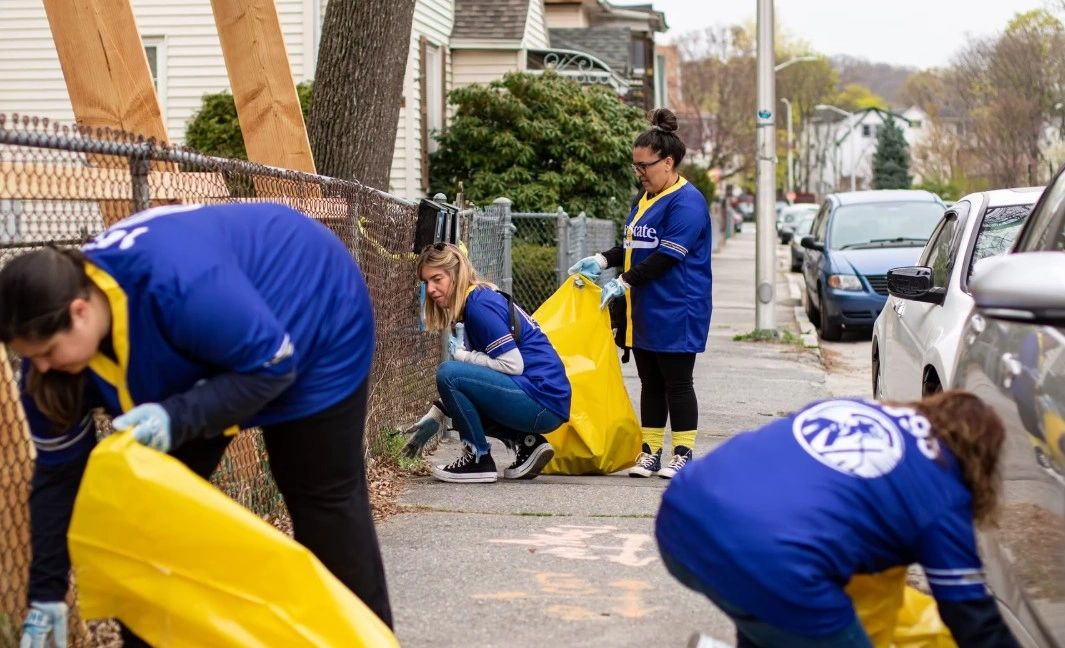
“Focusing on what you can do is going to make people feel empowered,” Andryc said, “and make them feel sort of better about the condition of the world right now, because there are things that we can do to make change, even when we’re feeling overwhelmed with all the craziness of the world.”
Sign-ups for site coordinators and volunteers are now open through REC’s website. Site coordinators must register by April 2, and volunteers must sign up by April 9. Volunteers are typically assigned to cleanup locations about two weeks before the event, though participants may also request specific sites when registering.
Paisley Huang is a Boston University graduate student studying journalism and the business, science and technology editor for BU News Service. She can be reached at paisleyh@bu.edu
