
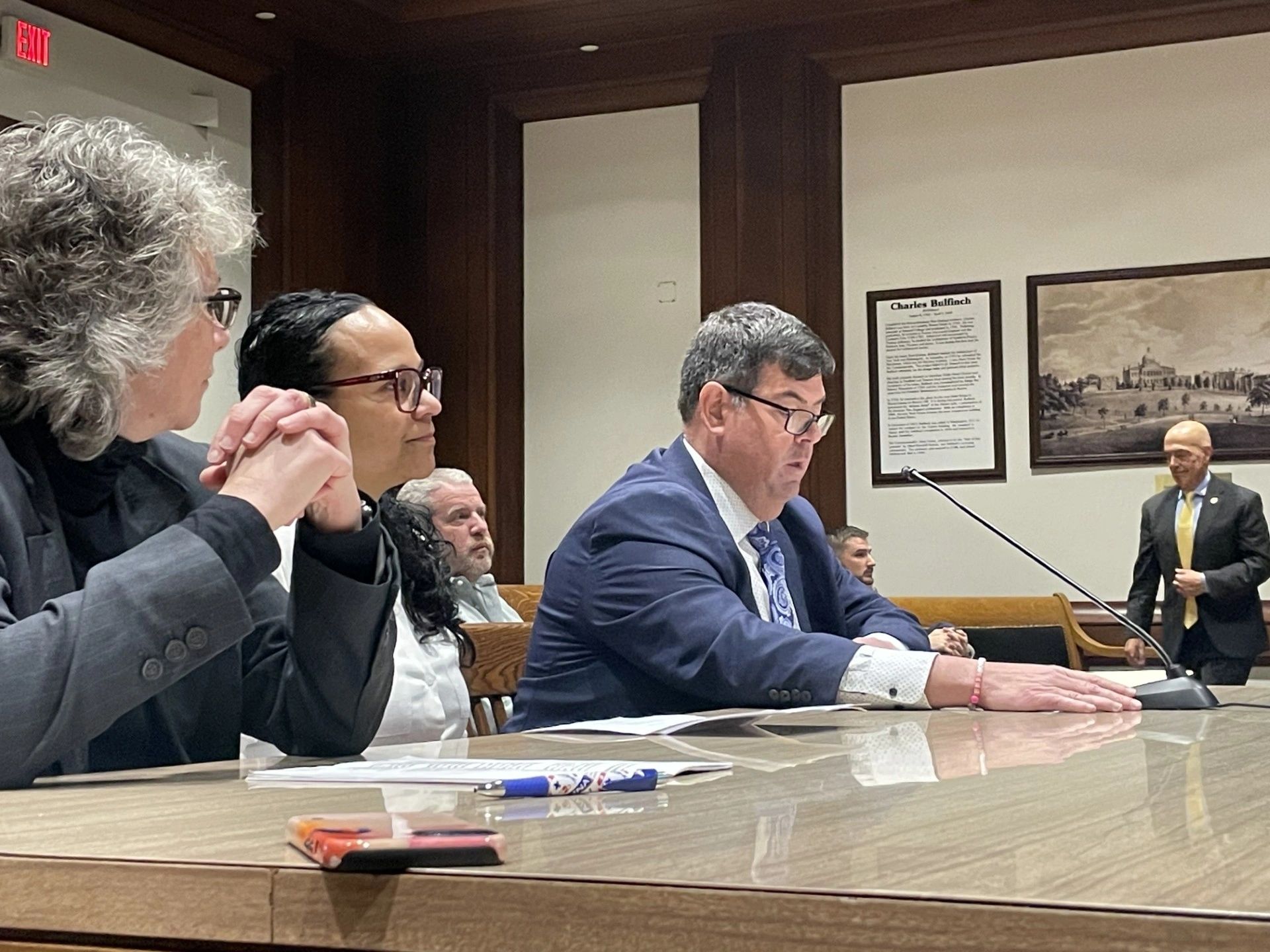
WORCESTER—Massachusetts healthcare workers and labor unions rallied at the State House in April to push for sweeping workplace safety legislation aimed at addressing the alarming rise in violence within the healthcare system.
The bill, “An Act Requiring Health Care Employers to Develop and Implement Programs to Prevent Workplace Violence” (H.2655/S.1718), marks the first time the Massachusetts Health & Hospital Association (MHA), Massachusetts Nurses Association (MNA), and 1199SEIU have jointly endorsed a violence prevention proposal.
Worcester nurses sound the alarm
In Worcester, tensions over hospital safety and working conditions remain high, particularly at Saint Vincent Hospital. Nurses have filed numerous complaints alleging unsafe staffing levels, administrative intimidation, and management’s lack of responsiveness to safety concerns.
“The incidences of violence have increased dramatically since I became an RN 38 years ago, including violent acts leading to death,” Marlena Pellegrino, a nurse at St. V’s, told the Worcester Guardian. “Most times, hospital corporations and administrators do not take this issue truly seriously.”
Pellegrino and other nurses described a persistent culture in healthcare where violence is treated as part of the job, discouraging workers from speaking out. That fear is compounded by what they characterize as a punitive management style.
Legal action and survey data paint troubling picture
In March 2024, eight Saint Vincent nurses filed a whistleblower lawsuit against Tenet Healthcare, alleging they were fired for reporting unsafe and unlawful patient care conditions. Around the same time, the joint commission found the hospital non-compliant with Centers for Medicare & Medicaid Services (CMS) standards, validating some of the nurses’ concerns.
According to the 2024 State of Nursing survey, 68% of nurses in Massachusetts reported experiencing workplace violence—up 11 percentage points from 2021. Nearly 60% said they receive no additional support after such incidents, and 80% believe hospital care quality has declined in the past two years.
Alarmingly, a healthcare worker in Massachusetts is subjected to violence or threats every 36 minutes—five times the rate of other private-sector workers.
Long wait times, mental health crisis fuel tensions
Joe Markman, associate director of communications at the MNA, pointed to systemic challenges worsening the problem. “Patients can wait hours to be seen in the ED and days for beds. This frustration is palpable,” he said. “Add to that the national mental health crisis, and the effects play out directly in hospitals.”
Karen Coughlin, chair of the MNA’s Workplace Violence Task Force, said Massachusetts has lagged behind other states in passing protections. “At least 38 states have assault laws protecting nurses. While Massachusetts is often ahead on healthcare, in this area we’ve fallen behind,” she said.
Legislation aims to prevent, not just react
The bill calls for facility-specific risk assessments, mandatory employee training, written prevention plans, and stronger enforcement via the Department of Public Health. It also includes paid leave for workers who are assaulted.
“Nurses and healthcare workers should have access to paid leave following an assault — a key component of our bill,” said Markman. “Just as important, the risk assessments are about preventing violence before it happens.”
Union Vice President Cari Medina said that violence affects all healthcare staff who interact with patients and the public. Nurses regularly report being punched, bitten, and kicked during their shifts.
“When nurses find themselves stretched too thin, they simply can’t care for multiple patients at once,” Coughlin added. “Delays in basic needs like bathroom trips or pain relief can escalate into violence.”
The bill has attracted 68 legislative sponsors, with Rep. John Lawn (D-Watertown) and Sen. Joan Lovely (D-Salem) leading the charge.
Workplace violence tied to patient care
Supporters argue that violence prevention isn’t just about protecting workers—it’s essential to maintaining patient care quality.
“If this issue is not addressed, the number of nurses willing to risk their lives at the bedside will continue to shrink—and society as a whole will suffer,” Pellegrino said.
Coughlin praised the collaborative effort behind the bill, noting that it recognizes the need to involve frontline workers in developing violence prevention strategies. “There’s an acknowledgment that we need the workforce at the table,” she said.
Matt Olszewski is a freelance content and news writer based in Boston, MA. In his free time, Matt enjoys running, hiking or skiing. Matt just graduated with his MPH from Tufts University. He can be reached at mattoskier@gmail.com