
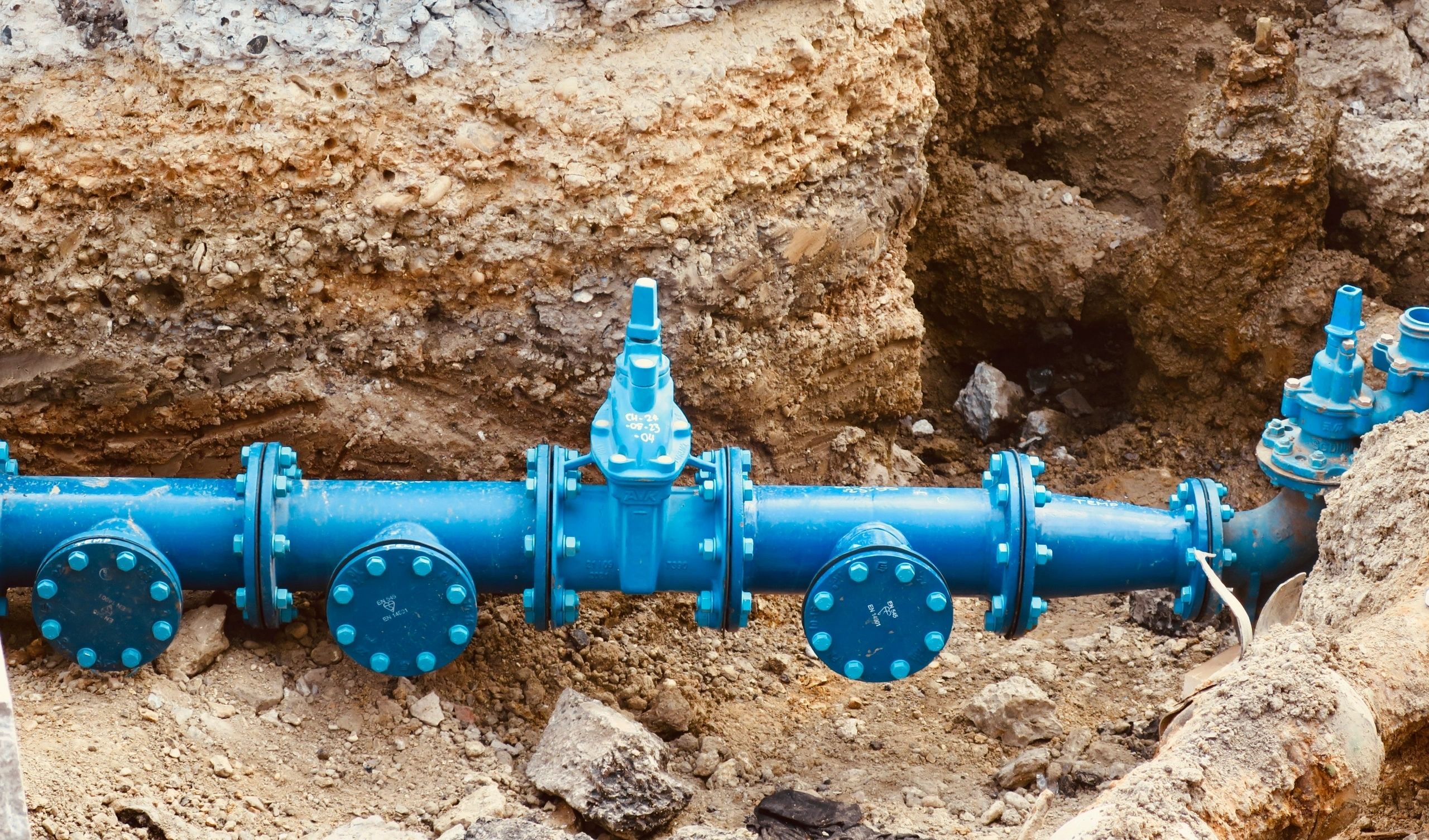
WORCESTER — A city council committee is pressing for answers about Worcester’s aging gas system, which has hundreds of leaks — including many that pose serious safety risks.
At a recent meeting, the Standing Committee on Public Health and Human Services voted to delay action on a proposal that could lead to a detailed report on local gas leaks.
The proposal, introduced by Councilor Etel Haxhiaj, calls on City Manager Eric Batista to work with utility company Eversource to release data on all reported gas leaks from the past two years — including the number, severity, location and repair status of each leak, along with estimates of how much gas was released and what it cost to fix.
The issue is urgent: So far in 2024, Worcester has reported 204 Grade 1 gas leaks — the most dangerous kind — plus 136 Grade 2 and 19 Grade 3 leaks. That’s about 17% of all gas leaks reported statewide this year, despite Worcester making up only a small portion of the state’s population.
Aging infrastructure, cold winters, and mounting risks
According to Eversource, the scale of Worcester’s issue is larger than most communities they serve.
“Nearly 50% of the gas mains in the city are leak prone pipe,” said Brian Gillis, director of operations at Eversource. “That’s about 170 miles. When you look across our whole footprint, less than 21% of our whole system is leak prone, which shows a higher concentration of leak prone pipe in the city.”
As of the first quarter of 2025, Eversource was still managing 1,427 active leaks carried forward from previous quarters—including 57 Grade 2 leaks and 1,370 Grade 3 leaks, 28 of which had been identified as having a significant environmental impact. During that same time period, just 51 new leaks were reported—and 171 were repaired or eliminated.

Harsh winters make matters worse. Frost heave, a phenomenon where frozen soil expands and puts pressure on pipelines, is responsible for an estimated 82% of cold-weather pipeline failures, according to industry data.
One recent incident, said Gillis, shows how quickly a leak can escalate. “On April 1, we had a call come into the fire department of an outside odor at a manhole,” he said. It was initially marked as a Grade 2 leak. But by April 28, the same location—85 Burncoat St.—was reclassified as a Grade 1 emergency leak after another report. Immediate repairs were required.
Calls for modernization and clearer communication
Worcester resident Jennifer Gaskin, founder and president of the Worcester Caribbean Festival and podcaster, has grown skeptical of how Eversource approaches system maintenance. “What I’ve seen looks more like patchwork than real infrastructure improvement,” she said. “Something breaks, and they just fix that one thing instead of evaluating the full system and figuring out what’s actually needed to make it modern and sustainable.”
For Gaskin and others, the strain isn’t just environmental or structural—it’s financial. “My electric bills have been a real burden—especially after my household became single income,” she said. Despite signing up for budget billing, cutting back on usage, and installing solar panels, she said the cost remains a challenge.
Haxhiaj recalled earlier grassroots efforts to raise awareness of gas leaks in the city. “In 2019, I worked with a group of mothers and we met with the president of Eversource,” she said. “We hired a gas leak expert who went around with us and did an audit.” She pointed to environmental damage as well: “Around Elm Park, they’ve killed at least two trees. We know that the particles remain in the area and clothing and know that grade 1 leaks are dangerous for explosion.”
Residents and councilors alike also raised concerns around communication. “I live in Worcester and had absolutely no idea any of this was happening,” said Gaskin, who suggested Eversource use its existing alert system to notify residents of leaks.
Councilor Luis Ojeda offered a more visible approach: “An opportunity to have a sign on a truck or one of those A-frame signs. That way when someone goes by, they know emergency digging is going on.”

Eversource maintains that it is making steady progress. “Grade 2 leaks have a one-year compliance date,” said Gillis. “We do monitor them at a six-month basis.” He emphasized the company’s long-term strategy: “We want to replace the pipe and eliminate all leaks or the probability of leaks occurring throughout the future and eliminate that old infrastructure.”
The utility’s broader leak response includes periodic reassessment. “We do monitor them at a six-month basis and go back and recheck, resurvey the leak mitigation to see if it’s expanded or remained the same,” Gillis explained.
In a statement to The Worcester Guardian, Eversource said, “Replacing leak-prone pipe is the most cost-effective solution to reducing leaks, improving safety, and reducing carbon emissions from the system, as repairing one leak today does not guarantee protection from another leak tomorrow, as these leak-prone, deteriorating pipes are still at risk to experience leaks.”
The company also noted its work under the Gas System Enhancement Program (GSEP), saying that since 2015, it has replaced 910 miles of leak-prone gas mains across Massachusetts, cutting greenhouse gas emissions by an estimated 42,460 metric tons of CO2e per year—the equivalent of removing 9,900 cars from the road.
As the committee continues to weigh next steps, Worcester’s gas infrastructure remains a point of tension—between residents demanding faster, more transparent change, and utility officials pointing to long-term upgrades already in progress.
Matt Olszewski is a freelance content and news writer based in Boston, MA. In his free time, Matt enjoys running, hiking or skiing. Matt recently graduated with his MPH from Tufts University. He can be reached at mattoskier@gmail.com
