
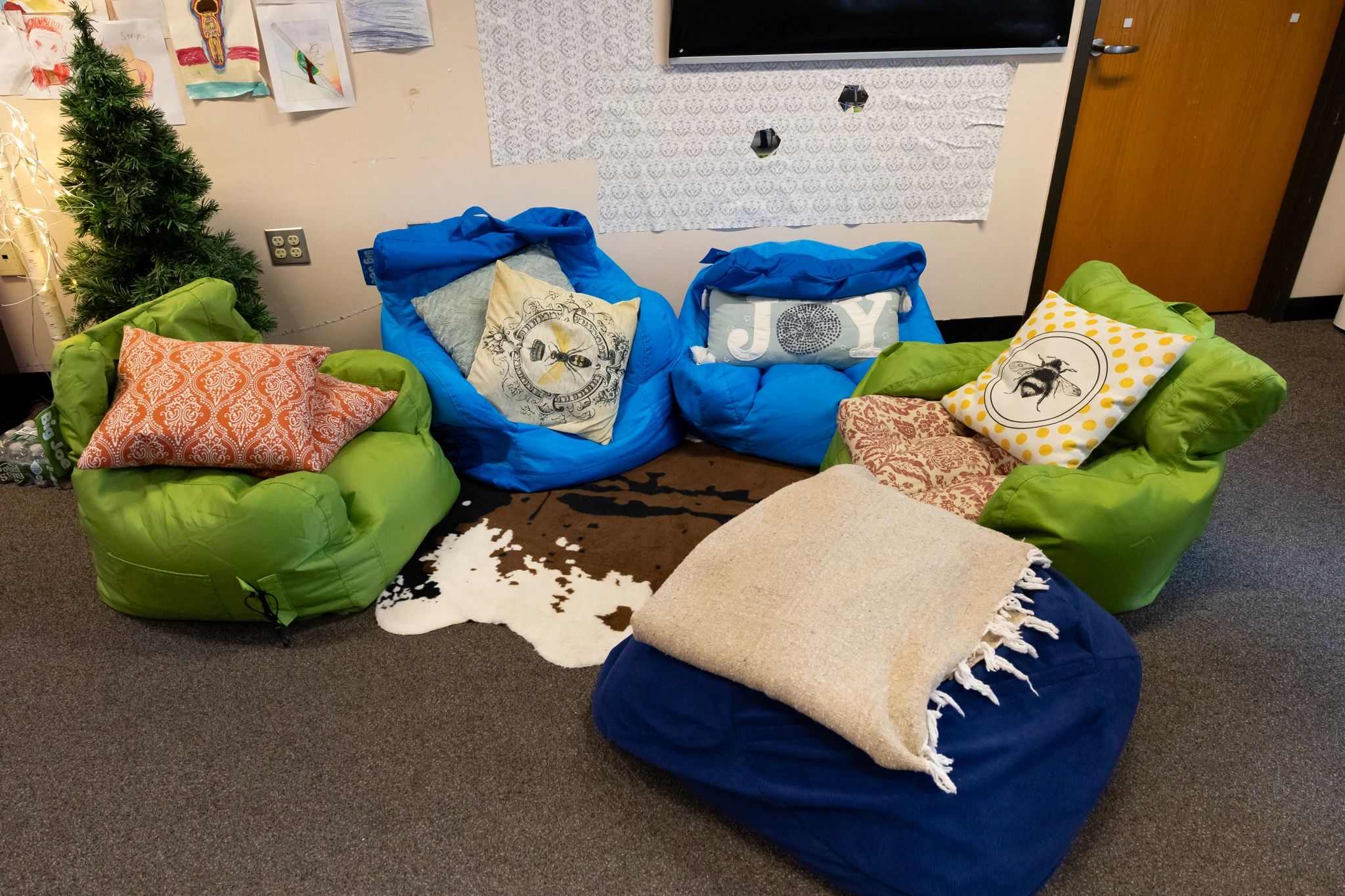
WORCESTER—Wellness rooms in Worcester’s middle and high schools are seeing significant use, with district officials reporting hundreds of student visits tied largely to behavioral and therapeutic support.
The rooms—designed as calming spaces where students can manage stress, anxiety and emotions—were the focus of a presentation during the Worcester School Committee’s April 16 meeting. Administrative Director of Positive Youth Development Thomas Toney and Director of Culture and Climate Jeff Creamer shared data illustrating how frequently the spaces are being used across the district.
Currently limited to middle and high schools, the rooms allow students to self-regulate, reflect, take breaks and build coping skills. District data shows the majority of visits are for therapeutic or behavioral purposes.
Burncoat Middle School reported the highest overall use, with 1,334 visits. More than 65% of those visits were categorized as therapeutic support, and 308 individual students used the space—also the highest in the district.
At the high school level, North High School had the most individual students using the rooms at 198, while South High School recorded the highest number of total visits at 771, with most visits categorized as break time.
Worcester Technical High School reported the lowest usage, with 55 students and 95 visits. Officials attributed that in part to the school’s shop-based programming, which they said can provide therapeutic benefits, as well as earlier inconsistencies in record-keeping that have since been addressed.

Burncoat High School operates its Wellness Room using the BRYT (Bridge for Resilient Youth in Transition) model, which provides short-term support for students returning to school after significant mental health, medical or life-transition challenges. Data presented showed 230 student check-ins, 335 family contacts and 138 consultations.
Toney said the rooms play a key role in supporting students without disrupting classroom learning.
“These spaces provide several key services,” said Toney. “They function as a safe, calming area where students can take a break and recharge to manage stress and overwhelming emotions. They are used for de-escalation of escalated behaviors, supporting students in self-regulating and completing a reflection, before returning to class.”
While committee members responded positively to the presentation, some raised questions about how to measure the program’s long-term impact.
Member Jermaine Johnson said he would like to see more comprehensive annual data to better evaluate effectiveness.
“I hope that the ultimate goal is we maybe start to see a decrease in some of the students,” said Johnson. “I think that’s kind of the stuff that we’re looking for because I think that will tell us how things are working and is that intervention working.”
Member Sue Mailman questioned why the program has not yet expanded to elementary schools. Superintendent Brian Allen indicated that budget constraints are at least partly limiting expansion.
Committee members also filed several requests for additional information. Johnson asked for annual data reporting, while members Dianna Biancheria and Maureen Binienda requested further details on individual student usage and how wellness rooms are being integrated with anti-bullying efforts.
Initially, those responses were expected to be delivered through a Friday report from the administration. However, after discussion about maintaining public transparency, the committee voted to refer the matter — along with all related motions — to the Standing Committee on Teaching, Learning and Student Success. Johnson and Mailman opposed that move.
