
WORCESTER — As questions about screen time and artificial intelligence in classrooms continue to arise, Worcester School Committee members said the district must balance innovation, transparency and student privacy.
During a recent meeting, the full committee considered two agenda items submitted by member Sue Mailman: one seeking the creation of a district policy on screen time and another requesting an update on the district’s software acquisition practices and clarification on when artificial intelligence is and is not permitted.
Both items were ultimately filed, though Mailman had sought to refer the software policy matter to the Standing Committee on Teaching, Learning and Student Success for further discussion.
The discussion followed a Feb. 3 meeting of the Teaching, Learning and Student Success subcommittee, when members reviewed two citizen petitions calling for requirements to notify parents about emerging technologies and to obtain parental consent before students access them. Those petitions were filed after comments from the district’s attorney that parents cannot opt out of technology used as part of the curriculum.
Following earlier coverage of that meeting, the district administration said that while state law does not require an opt-out policy, it is not accurate to say the district lacks the legal authority to establish one.
At the full School Committee meeting on Feb. 5, Mailman said she welcomed engagement from families.
“I am super happy with the level of interest and input from the parents and community around this topic,” Mailman said. “It helps us as members. It helps us, I think, as a district to do better and to be more responsive to what people’s worries are these days and certainly this topic is not just Worcester — it’s statewide, it’s nationwide.”
She emphasized the need for transparency about which technologies are required for curriculum and what role AI plays in those tools, describing the issue as a balance between “protection and innovation.” She also urged school leaders to adopt a tone that does not give “the appearances of resistance.”
Committee member Jermaine Johnson said he has contacted other districts to learn how they are addressing AI and other evolving technology. He said AI would not replace in-person educators and that teachers should be part of the conversation about implementation.
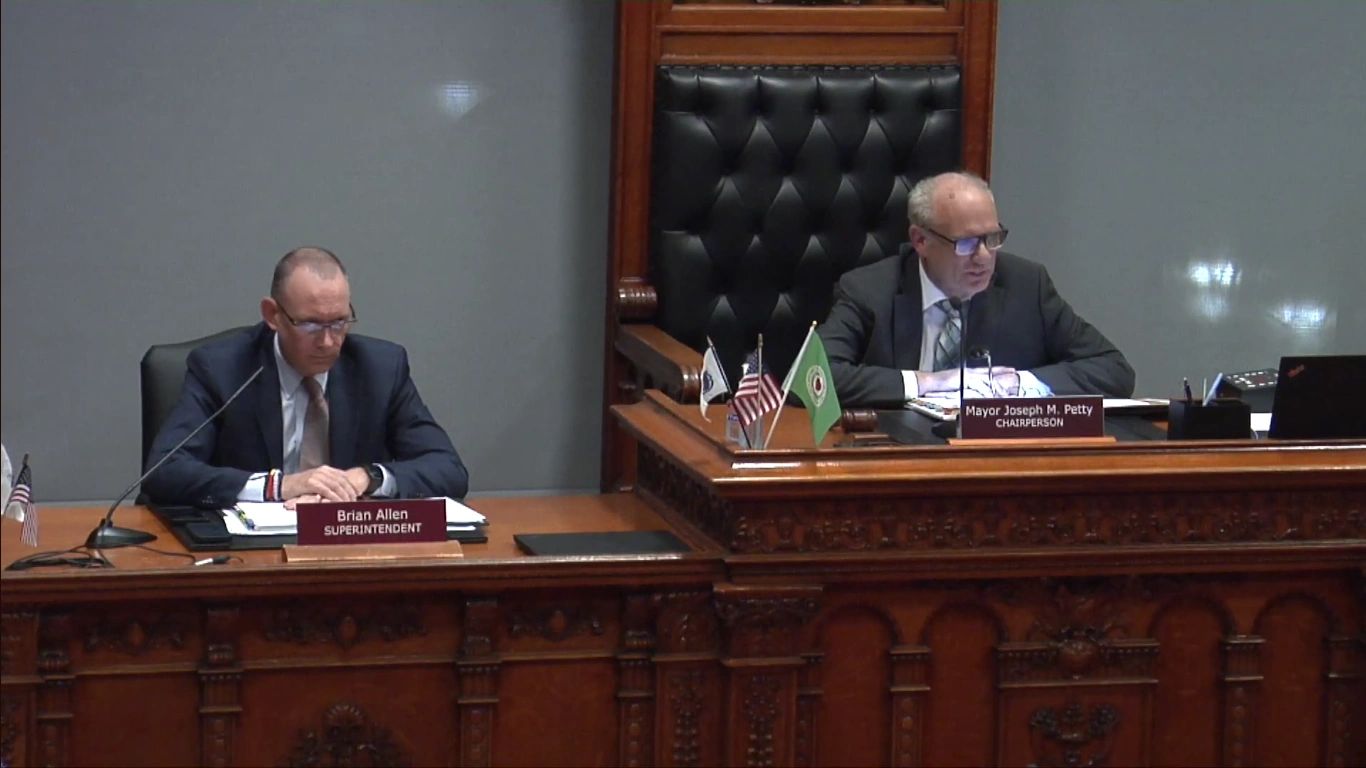
Superintendent Brian Allen said the administration is open to continued dialogue.
“I think we acknowledge and respect the concerns that have been raised around student data privacy. Maybe there’s more that we can do,” Allen said.
Allen pointed to the district’s Parent Technology Coalition Committee as a potential forum for improving parental notice, safeguards and accountability related to student data. He said the administration is “open and willing” to discuss opt-out options, particularly in cases involving biometric data collection, and added that communication and transparency should remain central to the discussion.
Mayor Joseph Petty, who chairs the School Committee, closed the discussion by expressing confidence that the district can address the issue collaboratively.
“We’ll get through this together,” Petty said. “We all have concerns. We don’t know where AI is going to be six months from now or a year from now. We’ll have these community discussions, get input, and listen to each other and try to make the right decisions as we go forth as a community.”
The issue has been discussed at several recent meetings, and committee members indicated additional discussions are likely in the coming months.
Jason Bleau can be reached at bleau.jason@yahoo.com