
WORCESTER — For Worcester resident Edry Jimenez, a recent water main break on Pleasant Street was more than an inconvenience — it raised questions about the condition of the city’s water infrastructure and how disruptions are communicated to residents.
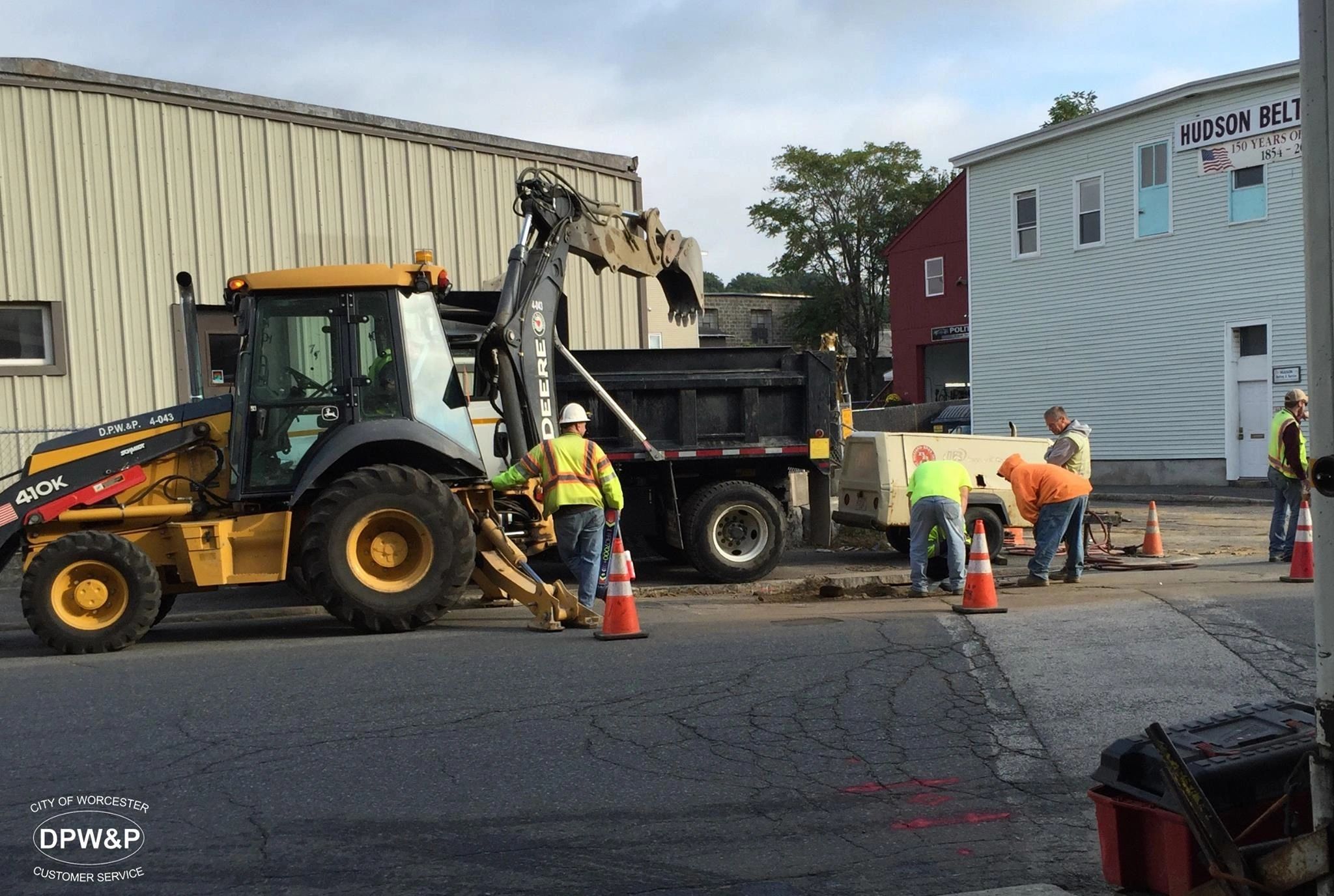
Her experience last month came as Worcester faced a cluster of water main failures across several neighborhoods, leading to temporary outages, street damage and repair crews working around the clock.
“The whole left side of the street collapsed because the water was running for so long,” Jimenez recalled. “We were told that it exploded during, like, midnight or late that night, and then we were without water for over 12 hours.”
Aging and largely unseen network of pipes
City officials say the incidents reflect the challenges of maintaining an aging and largely unseen network of pipes beneath Worcester’s streets — a system that spans hundreds of miles and, in some cases, dates back more than a century.
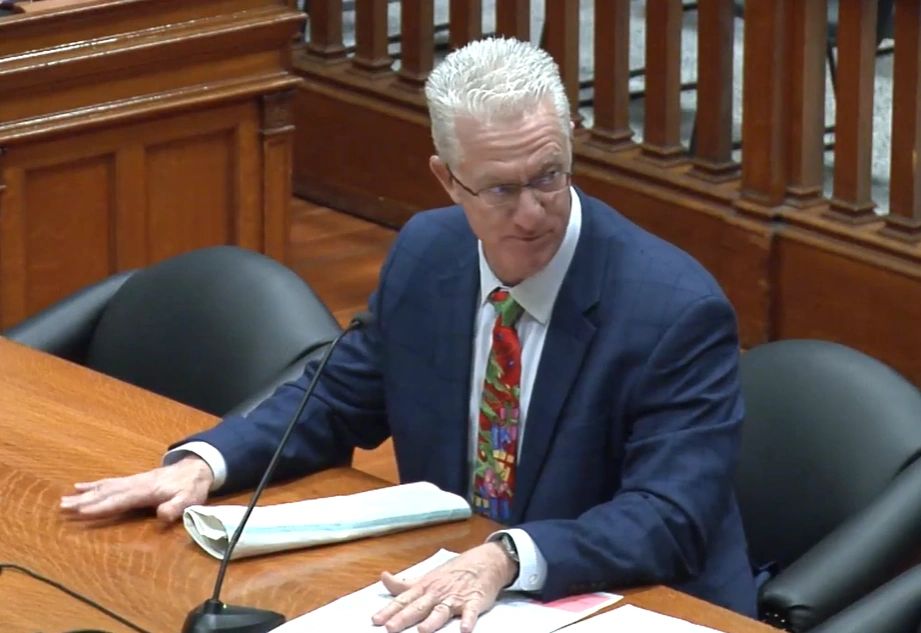
Public Works Commissioner John Westerling addressed the issue during the Dec. 23 city council meeting, explaining both the scope of recent repairs and the broader infrastructure challenges facing the city.
“We’ve got hundreds of miles of water main under the road,” he said, “and we have really no idea how many of them are in soils that turn them into this condition where they are paper thin. It’s important to invest in the Department of Public Works so that when we are faced with those breaks like that, we are well prepared, well staffed and well equipped to make those repairs.”
Westerling reported that crews had repaired 18 of 19 identified water main breaks, with one remaining on Millbrook Street. He also presented councilors with a section of corroded pipe from Norton Drive, where a 24-inch main installed in 1975 had deteriorated significantly. He noted that winter weather has played a noticeable role in recent failures.
Affected pipes installed between 1915 and 1970
Last month’s disruptions began with a Norton Drive break on Dec. 6, followed by failures on Frontage Road and a second Norton Drive break that forced a main out of service. The affected pipes ranged from 2 to 24 inches in diameter and were installed between 1915 and 1970.

Jimenez said clearer communication during the outage would have helped residents navigate the disruption.
“I had to call the city to find out when the water was going to come back—how quickly they were going to fix the problem,” she said. “And it was nothing that I was informed about. I had to look for answers.”
The city maintains approximately 600 miles of water main, some dating to the 19th century. Officials point to ongoing investment and long-term planning efforts designed to address aging infrastructure while managing costs for residents.
“We’re probably investing $10 to $20 million every year,” Westerling said. “We do have an integrated plan, which lays out the required infrastructure improvements for water, sewer and drainage over the next 50 years, and we follow that as best we can.”
Are improvements keeping pace with needs?
Still, residents like Jimenez wonder whether infrastructure improvements are keeping pace with the system’s needs.
“I believe that the city hasn’t been really keeping up with the water,” she continued. “You know, the plumbing in the city, because it’s all over, and we live in a really good area, and we pay high taxes for our homes, and I do not believe that they have been upkeeping it the way that they should.”
Mia Lin, another Worcester resident, said she views the situation from multiple perspectives.
“It’s an ongoing issue,” she said. “The pipes are really old in Worcester, from what I understand, and repairing the water main is very disruptive and expensive. But I think it’s more disruptive and expensive to have these things happen unexpectedly, especially when people don’t have the opportunity to make alternative arrangements.”
Lin added that city leaders face difficult choices balancing immediate needs with long-term planning.
“It’s just the constant battle of current demands and capital maintenance over time,” she said. “So policymakers are in a tough position, but if they don’t do the necessary maintenance, repairing and updating the pipes, then it’s only going to lead to people being discontented and a lot of infrastructure issues.”
For residents such as Jimenez, improved communication could go a long way toward easing frustration during future disruptions.
“We just want to be part of the conversation when it’s happening,” she said. “Maybe they send out a letter, an invitation, an email, just to keep us part of the conversation so that we can all work together as a team.”
Westerling said the recent failures reinforced the importance of sustained infrastructure investment.
‘Continue to invest in the integrated plan’
“I would say that the lesson learned is to continue to invest in the integrated plan, to continue to invest in replacement of those older pipes, and to continue investing in your Department of Public Works,” he said.
The city is exploring expanded monitoring systems as a preventive measure, including iHydrants technology for real-time pressure tracking, while also evaluating soil conditions that may have contributed to recent failures. Additionally, Worcester has earmarked $20.2 million for sewer upgrades in fiscal year 2026, as well as $6 million for the Chandler Street water main replacement.
Worcester’s Integrated Water Resources Management Plan includes water distribution system rehabilitation, covering water main renewal and replacement as part of a 50-year capital improvement strategy. The plan anticipates ongoing funding to rehabilitate and replace water mains throughout the city annually rather than responding only after failures occur.
In a statement, Tom Matthews, the city’s media relations and public relations administrator, said the Integrated Plan guides decisions on maintenance, capital improvements and regulatory compliance while aiming to improve reliability and keep water and sewer rates affordable. The plan also addresses drinking water quality, stormwater management and sewer service across the city.
Matt Olszewski is a freelance content and news writer who graduated with his MPH from Tufts University. In his free time, Matt enjoys running, hiking or skiing. He can be reached at mattoskier@gmail.com
