
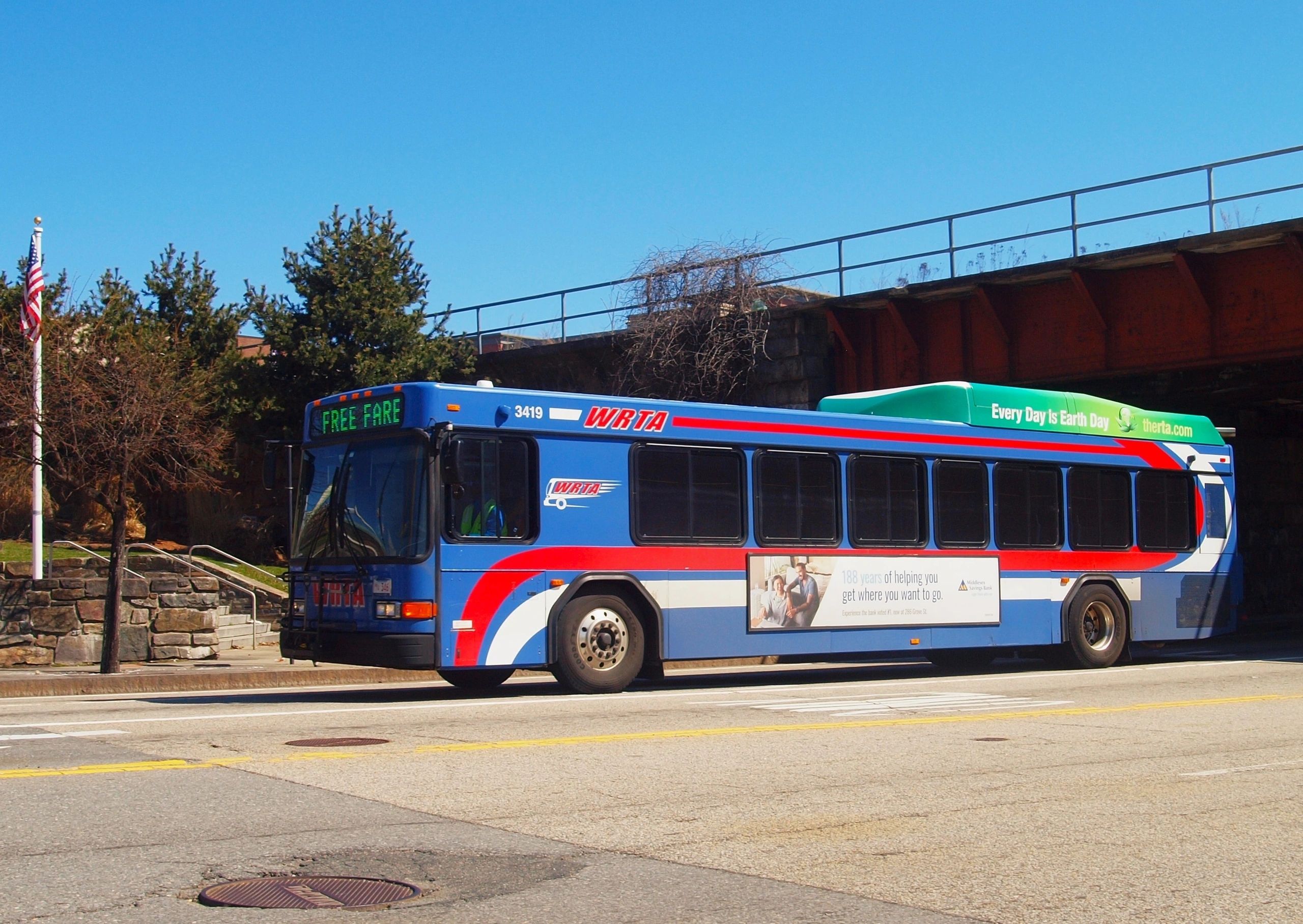
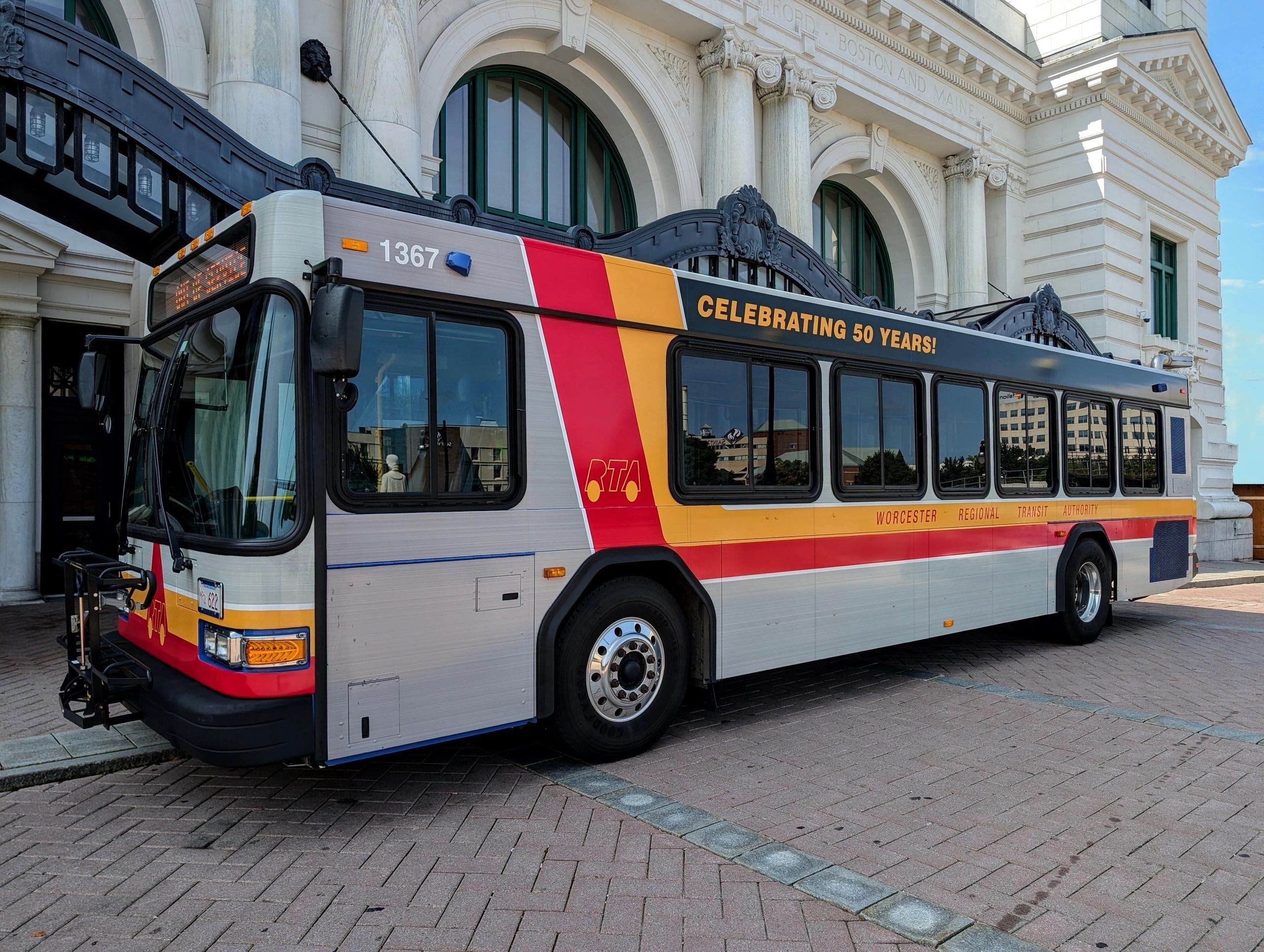
WORCESTER—As the Worcester Regional Transit Authority (WRTA) marks its anniversary this year, the organization is not only commemorating five decades of service, but says it is charting an ambitious course for the future.
In recent years, the WRTA became the nation’s longest-standing fare-free transit system. This initiative has yielded impressive results. “WRTA had over 4.5 million passenger trips in FY24 (July 1, 2023 to June 30, 2024),” said WRTA administrator Josh Rickman. “This is the highest ridership level this century.”
Building on this success, the WRTA has outlined a series of comprehensive plans to enhance its services and infrastructure. Rickman detailed several key initiatives, including a major renovation of the Central Hub Lobby. “This renovation will include increased seating, improved access to customer service, new technology and the re-opening of the bathrooms,” he explained.
Technology upgrades are also on the horizon. “In the upcoming year, WRTA will be releasing a procurement for a new technology to help internal operations and improve customer service,” Rickman stated. “This new CAD/AVL system will incorporate best practices for vehicle tracking technology that will improve customers’ access to real-time trip planning.”
In addition, a rebranding effort is set to give the WRTA a fresh look. According to Rickman, “This rebranding will include refreshing the bus and van livery, the authority’s logo as well as a new look for bus stop signs.”
Environmental sustainability is at the forefront of the WRTA’s future plans, Rickman announced, adding that “WRTA will be receiving seven battery electric buses in late fall 2025. WRTA will also be constructing battery electric bus charging infrastructure at the maintenance and operations facility on Quinsigamond Ave.”
While these advancements are promising, city officials recognize that there’s still work to be done to continue improving the WRTA’s efficiency and reach.
Councilor-at-Large Morris Bergman emphasized, “Whether it’s free or not, if you don’t have routes that are popular and buses on time, then it’s not going to be successful. The bus has to take you to where you need to be and needs to take you there on time. You don’t want to get to your job late. We should also have routes that are popular and have a higher frequency of routes. I don’t hear many complaints about cleanliness, it’s more about the efficiency of the bus. I think we can increase the number of users with better routes.”
Mayor Joe Petty argued that the positive impact of improving bus service is undeniable, noting that “enhancing the bus service is making a big difference.” He added that expanding free ridership and increasing service frequency could make an even bigger impact. “I think a survey to get residents’ input would be helpful,” Petty said, suggesting that more service and higher frequency of routes are key to making the WRTA more effective.
Petty also noted the importance of continued state and federal support, saying, “In order to come up with a budget, we need the state to continue to help us out. It’s a three-way partnership… Jim McGovern has been helpful, too. The new administrator has a good vision, understands how to get things done, and I look forward to working with him. He’s also trying to bridge the MBTA with the WRTA.”
The WRTA plays a crucial role in the city’s broader transportation initiatives, stressed City Manager Eric Batista. “The WRTA is an incredibly important resource in the Worcester community offering accessible, free transportation to all residents and visitors of the city. The WRTA will be a key player in implementing our Vision Zero, Complete Streets, and Mobility Action Plan initiatives to enhance the safety, sustainability, and equity of the city’s transportation network.”
Looking ahead, the WRTA plans to conduct a comprehensive service analysis to align its services with market demand and create a vision for future growth. Rickman explained, “Five of the WRTA’s 26 routes account for more than 40 percent of the system’s ridership. These routes need both capital and operational investment to improve their reliability, frequency and span of services.”
He further detailed that the capital investments include installing shelters, benches and lighting, and potentially real-time signs in the future. “For the operational investment, it will include funding to increase frequency and span,” he explained, adding that the investment increases choices for residents along these corridors and thus the usability of WRTA’s services.
Rickman also highlighted the importance of reliability: “Later this fall, WRTA will be talking with the public about a service plan to enhance the reliability and on-time performance. It is important the buses are as efficient as possible so people can rely on them for their trips to work, school medical appointments.”
As the WRTA moves forward, it appears well-positioned to build on its 50-year legacy. Petty summed up a sentiment shared by many: “The council is supportive of the WRTA and we’re big fans of the free-fare rides. Biking and public transportation are growing throughout the country—that’s the way things are going.”
While plans are considered “ambitious” by most standards, officials maintain that the WRTA is poised to become a more vital resource for the Worcester community while adapting to evolving transportation needs.
Matt Olszewski is a freelance content and news writer based in Boston, MA. In his free time, Matt enjoys running, hiking or skiing. Matt is currently finishing up the MPH degree program at Tufts University. He can be reached at mattoskier@gmail.com
As the Worcester Guardian marks nearly a year of delivering free, independent digital news to our city, our dedication to this mission strengthens. Please consider a tax-deductible donation to support our ongoing commitment to providing hyperlocal news coverage to Worcester. Scroll to the bottom of our home page to sign up for our daily newsletter
