
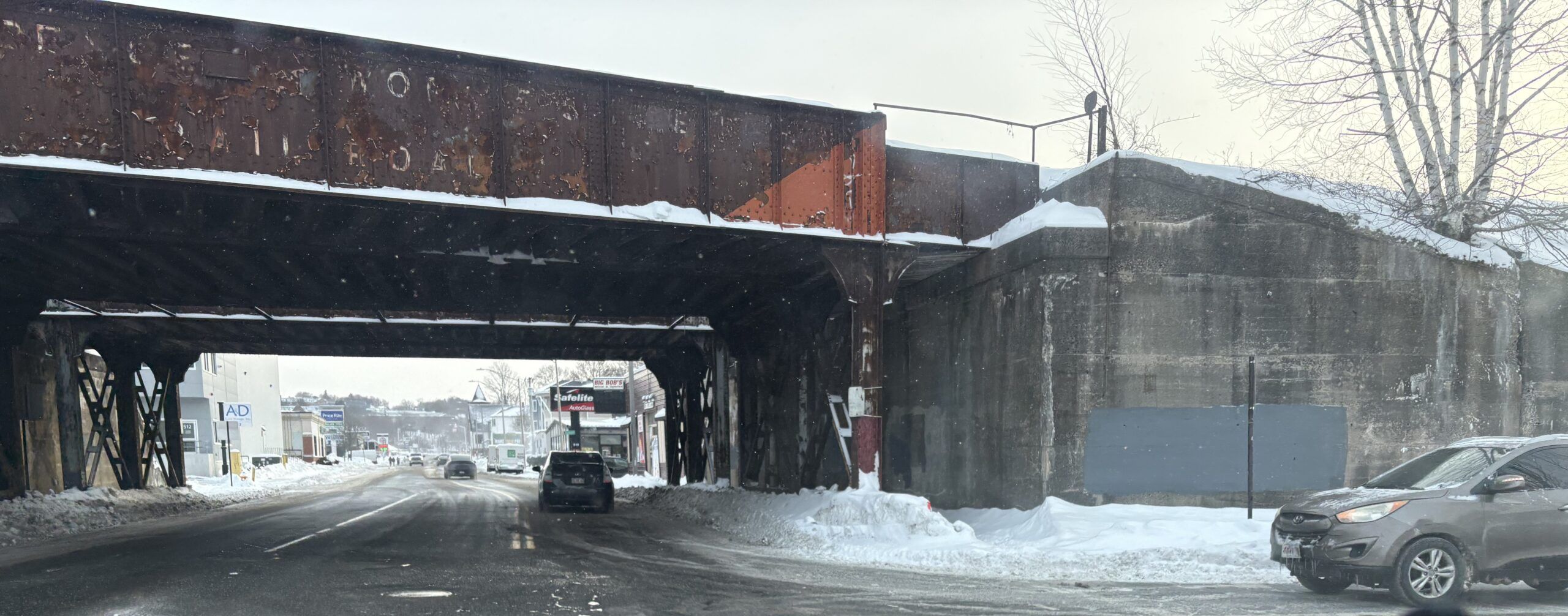
In Worcester, potholes, rough roads and aging infrastructure have become near-constant topics at city council meetings this spring, with residents and officials debating how the city can patch up and keep up with maintenance. Now, a major transportation bond bill moving through the Massachusetts Senate could eventually funnel additional money toward many of the same issues dominating local debate.
The Massachusetts Senate this week advanced a $2.737 billion infrastructure package focused on local road repairs, bridge maintenance, public transit upgrades and transportation-related housing development projects. The legislation, which had already passed the House, was reported favorably by the Senate Committee on Ways and Means on Tuesday before being read a second time and ordered to a third reading in the Senate.
The bill includes $300 million for municipal road and bridge repairs, including $200 million through the state’s long-running Chapter 90 road funding program. Another $100 million would be distributed based on road mileage, a move lawmakers said is intended to provide additional support for more rural communities.
The proposal also includes $500 million for MassDOT’s Lifecycle Asset Management Program, which focuses on roads and bridges considered to be in the worst condition statewide.
While the legislation is statewide in scope, many of the issues highlighted in the bill have become recurring flashpoints in Worcester, where potholes, aging roadways and deferred infrastructure maintenance have increasingly dominated City Council discussions this spring.
As the Worcester Guardian recently reported, Worcester officials have spent weeks debating how to address worsening potholes, aging roads and years of deferred infrastructure maintenance across the city.
At a recent city council meeting, Worcester resident Wilson Lam turned public comment into an impromptu performance, physically acting out the experience of driving over potholes while criticizing the city’s road conditions.
“I’ve had to change my tire two times, and I’ve had damage just [to] my motorcycle,” Lam said during the meeting. “It’s a safety hazard. … Please fix the potholes.”
Beneath the theatrics, city officials acknowledged a more serious long-term infrastructure problem.
“My administration takes full accountability for the frustrations voiced by residents who have been navigating potholes throughout the winter months,” City Manager Eric Batista wrote in a recent letter to councilors. “We can always do a better job.”
According to Worcester officials, the city logged 3,868 potholes in 2024 and another 3,683 in 2025. As of earlier this month, Worcester had already recorded 1,553 potholes in 2026.
Public Works Commissioner John Westerling told councilors the issue extends beyond potholes themselves and reflects the condition of Worcester’s aging roadway network.
“Potholes are not the root cause,” Westerling said at the meeting. “They are a symptom of the problem.”
That strain on the city’s infrastructure has also become increasingly visible in Worcester’s proposed FY27 budget, which includes major increases in borrowing for roadway resurfacing, sidewalk repairs, sewer work, fleet upgrades and snow equipment replacement.
The city’s proposed five-year capital plan includes approximately $26.7 million for roadway resurfacing and street and sidewalk projects, along with millions more for sewer and water infrastructure upgrades.
Councilor-at-Large Gary Rosen recently said the city is still trying to catch up after years of underinvestment.
“They said we were under funded and under budgeted so we’re trying to catch up and that’s all great news,” Rosen said in a recent Worcester Guardian story on the city budget.
State lawmakers said the new transportation bond bill is similarly intended to balance immediate repairs with longer-term infrastructure planning.
According to a fact sheet released by the senate, the legislation also includes $200 million for MBTA rail improvements and vehicle modernization, $200 million for Department of Conservation and Recreation transportation infrastructure projects, and another $200 million tied to housing-supportive infrastructure projects such as stormwater systems, culverts and pedestrian improvements.
The bill additionally reauthorizes several transportation programs originally included in the state’s 2022 transportation bond legislation, including funding for federal highway projects, bridge work and municipal roadway construction.
The bill now advances in the Senate after being ordered to a third reading Tuesday.
Have a story tip, community concern, or insight to share? Email Editor Charlene Arsenault at carsenault@theworcesterguardian.org.
The Worcester Guardian is a nonprofit newsroom serving Central Massachusetts. Help keep independent reporting alive by making a donation today.
