
Worcester’s proposed Fiscal Year 2027 budget would surpass $1 billion for the first time in city history, funding major investments in schools, infrastructure and public safety amid rising municipal costs.
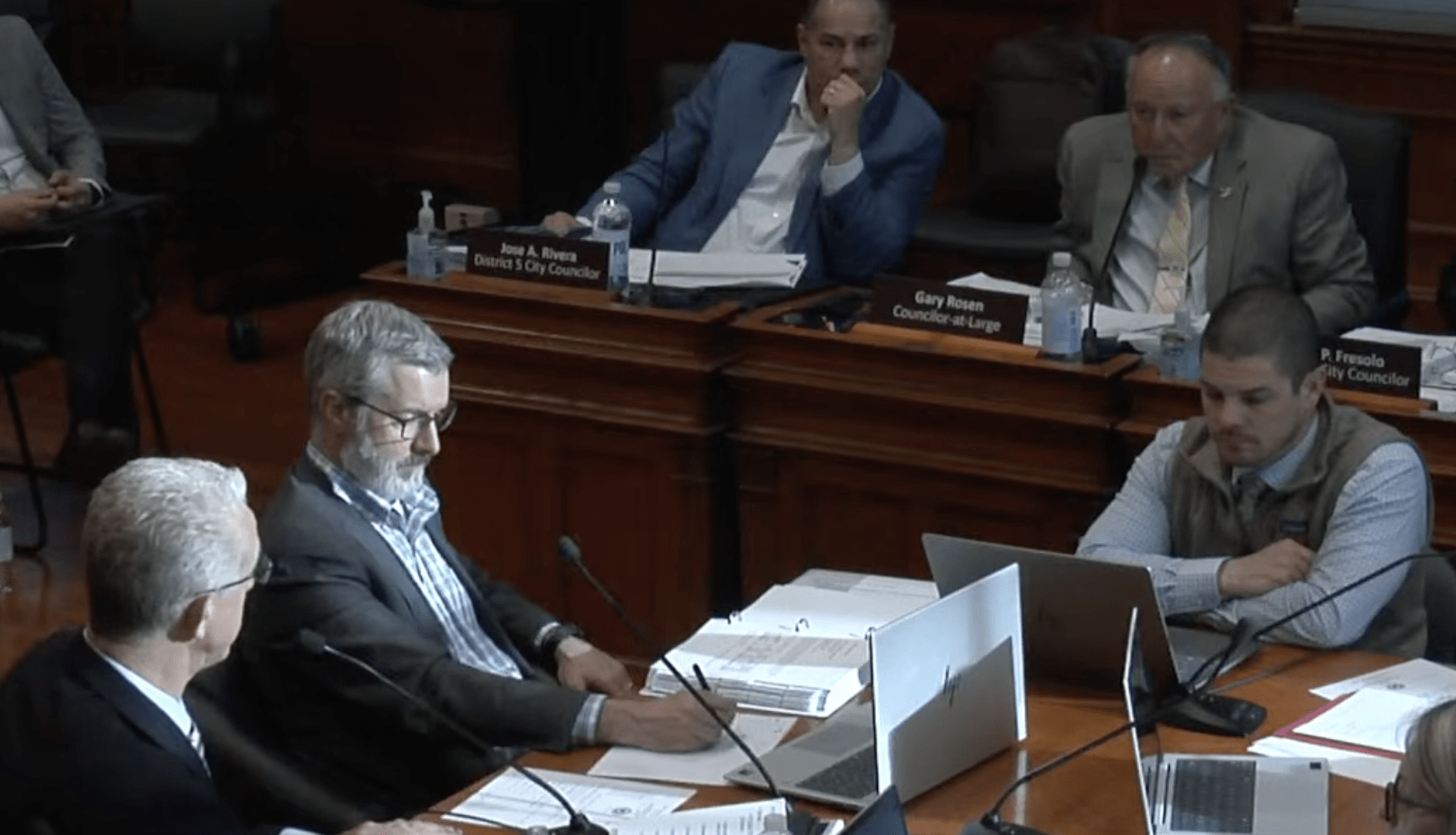
The Worcester Finance Committee advanced the proposal last week, sending it to the full City Council for consideration.
The proposal, submitted by City Manager Eric Batista, represents a $43.6 million increase — about 4.7% — over the current fiscal year budget. Budget documents attribute the increase largely to rising education aid, infrastructure investment, pension and health insurance costs, and continued growth in Worcester’s property values.
The proposed budget comes as Worcester continues to see major development activity, particularly in the Canal District and along several commercial corridors, contributing to an expanding tax base.
Education continues to drive spending
Education remains the largest portion of the budget, accounting for more than 61% of total spending. Worcester Public Schools, charter school assessments, school choice and special education costs total about $612.4 million in the proposed budget, an increase of nearly $34.8 million over FY26.
Budget documents attribute much of that increase to continued funding under Massachusetts’ Chapter 70 school funding program, which has significantly increased education aid to Worcester in recent years. State education aid alone is projected to rise by about $26.9 million, reaching nearly $446.9 million in FY27.
The city’s required local contribution to schools would also increase by about $7.9 million, bringing Worcester’s direct local contribution to education to roughly $165.5 million.
Infrastructure investments expand
Outside of education, one of the largest focuses of the proposed budget is infrastructure spending. City officials say worsening road conditions after winter weather helped drive the push for higher infrastructure investment. The proposed FY27 capital budget includes about $159.4 million in borrowing, roughly $46 million more than the prior fiscal year.
The Department of Public Works would see one of the largest increases in capital funding under the proposal. Funding would support resurfacing projects, sidewalk repairs, fleet upgrades, snow equipment purchases and building improvements.
Councilor-at-Large Gary Rosen said the spending reflects years of deferred infrastructure investment.
“A lot of the older equipment is becoming not too useful to the city and not that efficient and not that helpful,” Rosen said. “I’m glad we’re getting some new equipment but there’s probably equipment we should’ve had several years ago.”
Rosen added that the city is now attempting to catch up after years of deferred investment.
“They said we were under funded and under budgeted so we’re trying to catch up and that’s all great news,” he said.
The proposed capital plan includes about $26.7 million for roadway resurfacing and street and sidewalk projects, $7.3 million for transportation design and traffic signal work, $15 million in sewer infrastructure projects and $18.5 million in water infrastructure upgrades. Nearly $14 million is also proposed for park improvements throughout the city.
Commissioner of Public Works John Westerling said Worcester’s aging fleet remains one of the department’s biggest operational challenges.
“The average age of our snow fighting equipment is 11 years, so the average age is approaching the end of life for those vehicles,” Westerling said. “Credit to the city manager, the finance team and city council to help us purchase new equipment. But that doesn’t mean we don’t have old equipment that’s out there. It’s a challenge. The city has a lot of financial needs.”
Public safety and resident services
Public safety spending would also increase under the proposal. Public safety departments — including police, fire, emergency communications and inspectional services — would total about $126.5 million, an increase of roughly $3.8 million over FY26.
The capital plan includes $25 million for construction of a new South Division Fire Station and $5 million for roof replacement and upgrades at Worcester Police Headquarters. Additional investments would go toward police cruisers, fire vehicles and radio replacement equipment.
The Worcester Fire Department is seeing one of the larger operational increases, partly due to the expiration of the federal SAFER grant program that previously supported expanded firefighter academy staffing.
Residents could also see more direct service-related changes under the proposal. Inspectional Services would add new plumbing, gas fitting and electrical inspector positions intended to help speed up permitting and development approvals. The Department of Transportation and Mobility would receive additional funding for roadway line painting and traffic-calming measures, including temporary and permanent speed humps. The Worcester Public Library would also receive additional security staffing aimed at improving safety for staff and patrons.
Rising costs and long-term debt
At the same time, the proposed budget reflects growing financial pressures facing Worcester and municipalities across Massachusetts. Fixed costs — including pensions, debt service and health insurance — are projected to total about $172.5 million in FY27, increasing by roughly $3.8 million year over year. Health insurance costs alone are projected to rise by about $2.8 million, while pension obligations are expected to increase by roughly $2.4 million.
The city is also preparing for future borrowing tied to major school projects, including the proposed Burncoat High and Middle School project, which budget documents estimate could eventually cost about $650 million. Worcester’s five-year debt projections show annual debt service obligations exceeding $101 million in FY27 before gradually declining in later years.
Worcester’s tax base
Worcester’s top taxpayers are led by utility companies, health care institutions and major real estate holdings. NEP–Mass Electric tops the list at about $17.9 million in taxes, followed by NStar Gas Co./Eversource at roughly $12.2 million. Together, the city’s top 10 taxpayers account for nearly 12% of Worcester’s total tax levy, according to budget documents.
Budget documents note Worcester has avoided the type of tax override votes many Massachusetts municipalities have recently pursued to stabilize finances, while maintaining about $25.8 million in unused tax levy capacity.
The City Council is expected to continue reviewing the proposal before adopting a final FY27 budget later this year.
Matt Olszewski is a freelance content and news writer who graduated with his MPH from Tufts University. He can be reached at mattoskier@gmail.com
