
On a recent afternoon in Worcester, Maggie Kilcoyne opened an email that would shape her son’s next four years of school — and found his name wasn’t on any acceptance list.
Instead, he had been placed on waitlists for every program he applied to.
“My son just went through the lottery,” Kilcoyne said. “He was waitlisted at all six programs — Tech, Doherty and South — to which he applied.”
For Kilcoyne and hundreds of other families, admission into vocational and technical education programs has become increasingly competitive and uncertain, as rising demand collides with a limited number of seats.
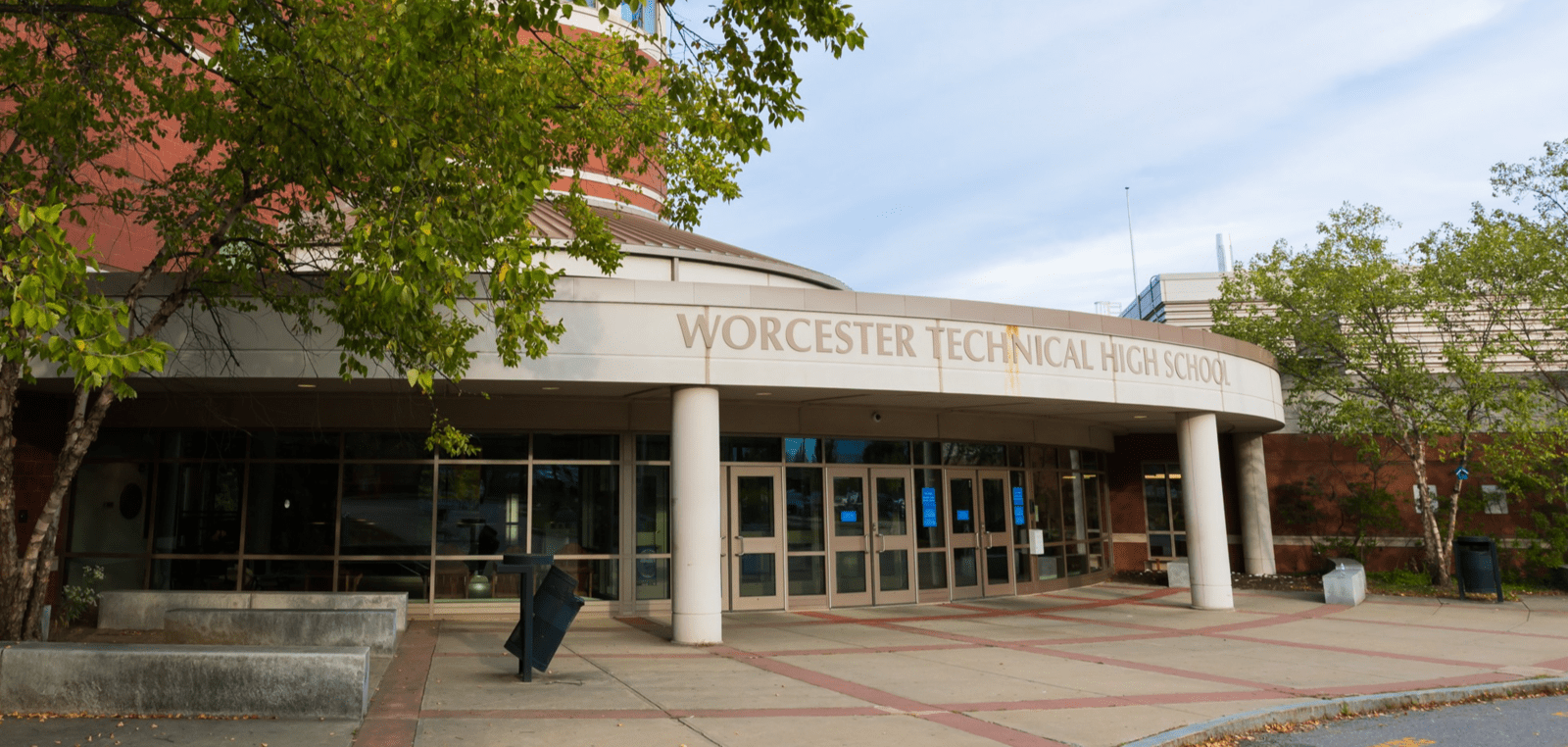
Worcester Technical High School, widely regarded as one of the city’s most sought-after options, has seen a steady increase in applications in recent years. In 2025, roughly 700 students were placed on the school’s waitlist, up from nearly 500 the year before. In some recent admissions cycles, more than 1,000 students have applied for about 400 freshman seats.
The school enrolls about 1,400 students — roughly 350 to 400 per grade — meaning capacity has remained relatively fixed even as interest has grown.
That demand reflects a broader shift in how students and families view education, educators say.
“We’re right there in the national mix,” said Emily Lehman, administrative director of college and career readiness for Worcester Public Schools. “There’s a real interest in getting hands-on experience in high school. Students are looking for environments where they can engage in problem-solving with their peers, learn about themselves and others, and be actively involved in their education.”
Once seen primarily as an alternative pathway, vocational schools are now often viewed as offering both career preparation and a route to college — a shift that has helped fuel rising interest.
“With the introduction of MCAS, the focus changed because vocational-technical schools had to meet the same passing standards as comprehensive schools,” said Janis Pigaga Tebo, a Worcester resident and former vocational-technical teacher. “That led to more rigorous academics and the introduction of AP courses. As a result, more students began choosing vocational-technical schools because they could still meet college admission standards.”
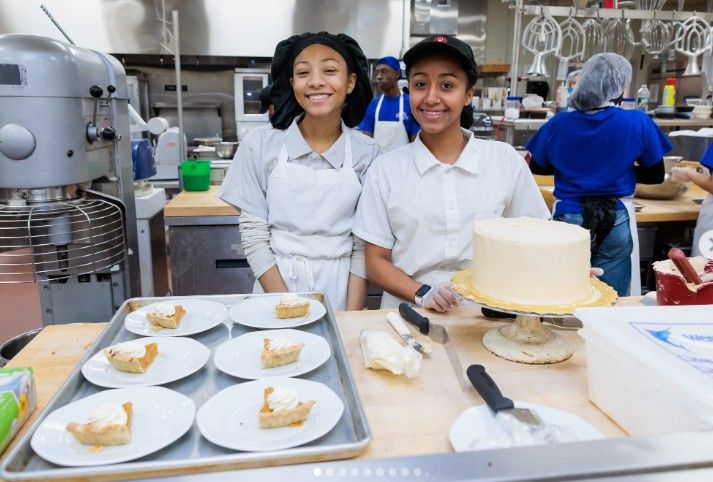
At Worcester Tech, students split their time between traditional academics and hands-on training across more than 20 career pathways, including health care, engineering, construction and information technology.
“We have students who are interested in the trades and others who are planning for college,” Lehman said. “They’re all in the same classrooms and shops, but they take that experience and shape their own postsecondary paths.”
But as interest grows, the number of available seats has not expanded at the same pace.
“The waitlists began to increase to the point where many students would be unlikely to ever get a seat,” Tebo said.
In response, Worcester Public Schools has worked to expand career technical education opportunities beyond Worcester Tech. Programs have been added at comprehensive high schools, including Doherty, North and South, with additional expansion planned.
“We’ve added CTE seats in our comprehensive high schools and plan to continue doing that,” Lehman said. “We have 23 career technical programs at Worcester Tech and nine additional programs across Doherty, North and South. We’re also looking to expand when the new Burncoat High School is built.”
Still, access remains limited for many students. Across Massachusetts, thousands of students are on waitlists for vocational programs, according to recent reporting.
The admissions process itself has also become a point of discussion. Historically, vocational schools used selective criteria such as grades, attendance and discipline records. More recently, the state implemented a lottery-based system intended to create a more transparent and equitable process.
For families such as Kilcoyne’s, that system introduces a level of unpredictability.
“As a parent, I’m interested to see how many students move off waitlists, especially since some were accepted to multiple programs,” she said. “It’s an interesting process.”
Others have raised questions about how the evolving role of vocational education may be affecting access.
“The issue is vocational education versus technical education,” said Worcester resident Amanda Hutchins-Westerlind. “The engineering side, which attracts college-bound students, can overshadow students who want to go directly into the trades. One can squeeze the other out.”
At the same time, educators say vocational programs are part of a broader system aimed at preparing students for both college and careers.
“We also have one of the largest early college programs in the state,” Lehman said. “More than 1,000 of our students take early college classes each year at their high schools, Quinsigamond Community College and Worcester Tech. We’re trying to make sure every student has access to college and career readiness opportunities.”
Expanding vocational programs presents logistical challenges. These programs require specialized equipment, dedicated shop space and smaller class sizes. At Worcester Tech, the student-to-teacher ratio is about 12-to-1, reflecting the hands-on nature of the training.
State leaders have begun investing in solutions, including a recent $24.2 million initiative aimed at expanding career technical education programs. Still, officials say increasing capacity will take time.
For now, many students who are not admitted to Worcester Tech enroll in traditional high schools, where access to hands-on training opportunities can vary.
As more students seek education tied directly to careers and real-world skills, Worcester — like much of Massachusetts — continues to face a central question: how to expand access while maintaining fairness in an increasingly competitive system.
