
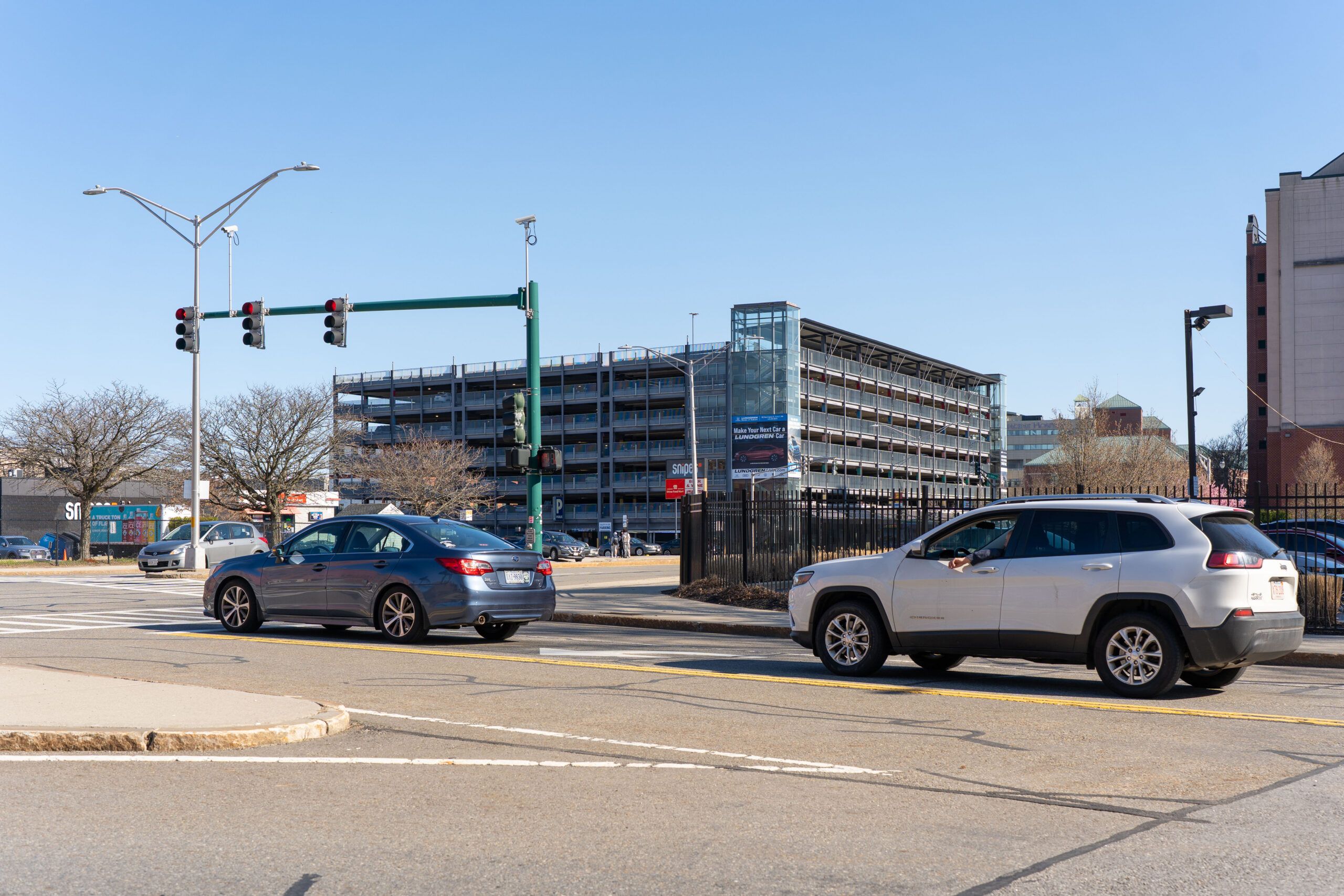
Main South is seeing new investment, with businesses opening, construction projects reshaping parts of the neighborhood and longtime institutions investing in their future. At the same time, many residents say those signs of progress exist alongside persistent concerns about homelessness, public safety and everyday quality-of-life issues that have long defined parts of the neighborhood.
As investment continues throughout Main South, residents, business owners and city leaders say the neighborhood reflects both meaningful momentum and longstanding challenges that have proven more difficult to overcome. While many point to new development and community initiatives as signs of positive change, others say more work is needed before residents see those benefits reflected in their daily lives.
“Main South has always had this very negative reputation, the stigma attached to it, and one of the things that we want to do especially is to change that perception,” said Maritza Cruz, co-chair of the Main South Beacon Brightly Neighborhood Association. “I think it’s slowly coming along.”
For longtime residents like Cruz, the neighborhood’s story extends well beyond new construction.
Main South has long served as one of Worcester’s most culturally diverse communities, welcoming successive generations of immigrant families who established themselves in the neighborhood before moving elsewhere throughout the city.
“It’s always been a place where you had the different groups of diverse folks in Worcester kind of come in and settle, and then move elsewhere throughout the city,” Cruz said.
Investment reaches Main South
City officials say Main South has benefited from broader redevelopment occurring across Worcester, even if downtown projects often receive most of the public attention.
“Downtown and Main South are two distinct neighborhoods. That said they’ve both undergone notable transformations in the past decade,” City Manager Eric Batista said.
Batista said Main South has experienced significant investment in recent years.
“Main South has seen a significant investment of businesses, most recently the Main South Plaza Condominiums, which are lease-to-own condos that went to established business owners in the neighborhood,” Batista said. “These condos will help them build generational wealth and help ensure they’re in business for years to come.”
Batista also highlighted the Regional Environmental Council’s new Center for Urban Agriculture and Food Security, the opening of Belen’s Clark Brunch on Main Street and plans by the Main South Community Development Corporation to construct a five-story building with 41 units of affordable workforce and senior housing on Hammond Street.
District 5 City Councilor Jose Rivera said those projects reflect broader investment occurring throughout Worcester, even if downtown developments often dominate headlines.
“Investments downtown tend to get more attention from the media but there have been investments all around the city over the past several years,” Rivera said.
Rivera said Worcester’s higher-density zoning naturally attracts larger development projects to the city’s urban core, while redevelopment has also focused on vacant buildings and underutilized properties throughout neighborhood business districts.
“Putting those properties into productive use with new housing and businesses is certainly a good thing, providing new opportunities and expanding the tax base,” he said.
Progress, but not a complete transformation
That sense of progress was echoed in conversations held recently through Clark University’s Small Business Development Center.
Tom Herald, regional director of the Small Business Development Center at Clark University, spoke with 10 participants in the SBDC’s Emerging Leaders program, an initiative in which students from Clark University’s School of Business work alongside the SBDC to coach Main South business owners through the StreetWise MBA curriculum. Participants included immigrants, longtime residents, students and entrepreneurs with deep ties to the neighborhood.
Rather than describing Main South through a single lens, Herald told The Worcester Guardian that participants painted a more nuanced picture of a community that has made meaningful progress while continuing to face longstanding challenges.
“The Emerging Leaders painted Main South as a culturally rich, improving neighborhood with dedicated business owners and residents who see real potential — especially with stronger city investment, landlord partnerships, and solutions to concentrated social challenges,” Herald said.
He noted that participants also acknowledged improvements in neighborhood safety and recognized previous cleanup efforts and grant funding, but identified persistent concerns surrounding infrastructure, public perception and the concentration of social services.
“The group mentioned progress on safety and persistent barriers (perception, infrastructure, services),” Herald said. “Residents acknowledged past cleanups and grants, but overall responses were critical.”
The group also praised Clark University’s community engagement efforts and the responsiveness of Clark University Police while expressing a desire for additional beautification projects, stronger partnerships with landlords and more consistent investment throughout the neighborhood.
“Overall, people felt more could be done on beautification, consistent investment, and balancing services to avoid overburdening the neighborhood,” Herald said.
Persistent challenges remain
While many residents acknowledged visible improvements, participants in Clark University’s Small Business Development Center’s Emerging Leaders program said redevelopment alone has not resolved many of Main South’s longstanding concerns. They pointed to persistent issues involving infrastructure, public perception and the concentration of social services while expressing a desire for stronger partnerships with landlords and more consistent investment throughout the neighborhood.
For Worcester resident Ted Kostas, the city’s recent progress is undeniable, but uneven.
“I have been thankful for the efforts made in the Canal and Green Island districts, the opening of new smaller independent businesses (including family owned), a minimal increase in the development of multi-unit housing, a continuation of free public transportation and the Mental Health Mobile Unit,” Kostas said.
At the same time, he said some commercial corridors continue to struggle with issues that discourage customers and create additional challenges for neighborhood businesses.
“Many of the existing businesses have suffered losses in revenue and have had to shutter their doors to multiple factors,” Kostas said. “Location, high crime and localized blight discourage residents and potential shoppers from walking the streets, particularly at night.”
Councilor Rivera offered a similar perspective, arguing that Main South has not always received the same level of public attention as some of Worcester’s highest-profile redevelopment areas.
“I think Main South is probably a neglected area of town since all the glamour is in Green Island and Polar Park,” Rivera said.
Homelessness and public safety
For many residents, concerns about homelessness, addiction and public safety continue to shape daily life in the neighborhood.
Until last month, Steven Thomas Rivera worked for Spectrum Health Systems at its 1023 Main St. location, where he regularly interacted with individuals seeking addiction treatment and recovery services. He said Main South’s concentration of recovery housing and treatment resources allows providers to connect patients with care more efficiently.
“There are a lot of sober houses close range to the Main Street location, so we’re able to serve patients and get them in and out faster than having them transported to the Lincoln Street location, which is very busy already,” Steven Rivera said.
City officials said addressing homelessness requires looking beyond what residents see on the streets and recognizing the broader regional demand for housing, treatment and support services.
Citing the U.S. Department of Housing and Urban Development’s annual Point-in-Time Count, Batista pointed to encouraging trends while cautioning that significant work remains.
“The Department of Housing and Urban Development’s Point-in-Time Count from January of this year identified 1,187 people in Worcester County as unhoused, a 56% decrease over last year,” Batista said. “While these numbers are heartening, it still shows a significant population in need of services and we recognize the piecemeal approach is not doing enough to address the dire need.”
Councilor Rivera agreed that lasting solutions will require collaboration well beyond City Hall.
“It is definitely a balance and solving homelessness is not something the City can do on its own,” he said. “It requires partnerships with service providers and governmental agencies and we need to tackle root causes, not just the symptoms.”
At the same time, city officials acknowledge that many residents and business owners continue to express concerns about safety and quality of life in both Main South and downtown.
Batista said recent incidents at Worcester Common have heightened those concerns, even as the city views them as isolated events.
“I am aware that recent events in the Worcester Common have raised safety concerns,” Batista said. “While the incidents were isolated, we do not take any act of violence lightly, and have worked with both the Worcester Police Department and Municipal Security to be vigilant in maintaining security. This work is ongoing, it is continuous, and does not start and stop related to any one specific event.”
The city’s response
Mayor Joseph Petty said Worcester’s recent progress reflects the combined efforts of residents, businesses and community organizations, while acknowledging that the city continues to face many of the same challenges affecting communities across the country.
“We view both Downtown and Main South as vibrant, diverse, and vital economic engines for Worcester that are currently experiencing a historic period of transition and growth,” Petty said. “These neighborhoods possess incredible momentum, driven by resilient local businesses, dedicated community organizations, and active residents.”
Petty acknowledged that Worcester faces many of the same issues confronting cities nationwide, including housing affordability, mental health challenges and substance use disorders. Those issues are often most visible in areas where businesses, public gathering spaces, transit stops and social service providers intersect.
“We believe that we cannot arrest our way out of homelessness or addiction,” he said. “Our strategy relies on a unified system where public safety and public health work as partners, not opposites.”
Petty said concerns about public safety raised by residents and business owners remain a priority for the city.
“We take these concerns incredibly seriously, and we validate the frustrations of our residents and business owners,” Petty said. “When a storefront owner or a family feels unsafe or disrupted, that is a top priority for me.”
According to Petty, the city evaluates neighborhood conditions through both crime statistics and regular conversations with neighborhood organizations, business owners and residents. Those efforts have included expanded foot and bicycle patrols, community policing initiatives and coordination through Worcester’s Quality of Life Task Force.
Why opinions differ
The differing perspectives expressed throughout Main South often come down to how residents define progress.
City officials point to new housing, neighborhood investment, business development and expanded services as evidence that the area is changing. Many residents acknowledge those improvements while arguing that quality-of-life concerns continue to shape public perception of the neighborhood.
Worcester resident Mark Buchanan said the city’s trajectory over the past decade has been overwhelmingly positive.
“It’s much better than it was 10 years ago. So proud of my Worcester,” Buchanan said.
For some, new housing, businesses and community projects signal a neighborhood gaining momentum. For others, concerns about public safety, homelessness, infrastructure and quality of life remain pressing and underscore the need for continued attention.
For Cruz, Main South’s greatest strength has never been its buildings or redevelopment projects, but its people.
“We have a lot of people who are very committed to the neighborhood,” Cruz said. “The concerns are the ongoing issues of safety in the neighborhood, the ongoing concerns of getting the resources that should be committed to the neighborhood.”
She said many residents feel Main South has carried the weight of longstanding challenges for decades, making sustained investment and continued collaboration essential to the neighborhood’s future.
As Worcester continues to grow, Main South remains a neighborhood defined by both its challenges and its strengths. Its diverse population, locally owned businesses, community organizations and ongoing redevelopment efforts continue to shape its future, even as residents and city leaders work to address issues that have persisted for years.