
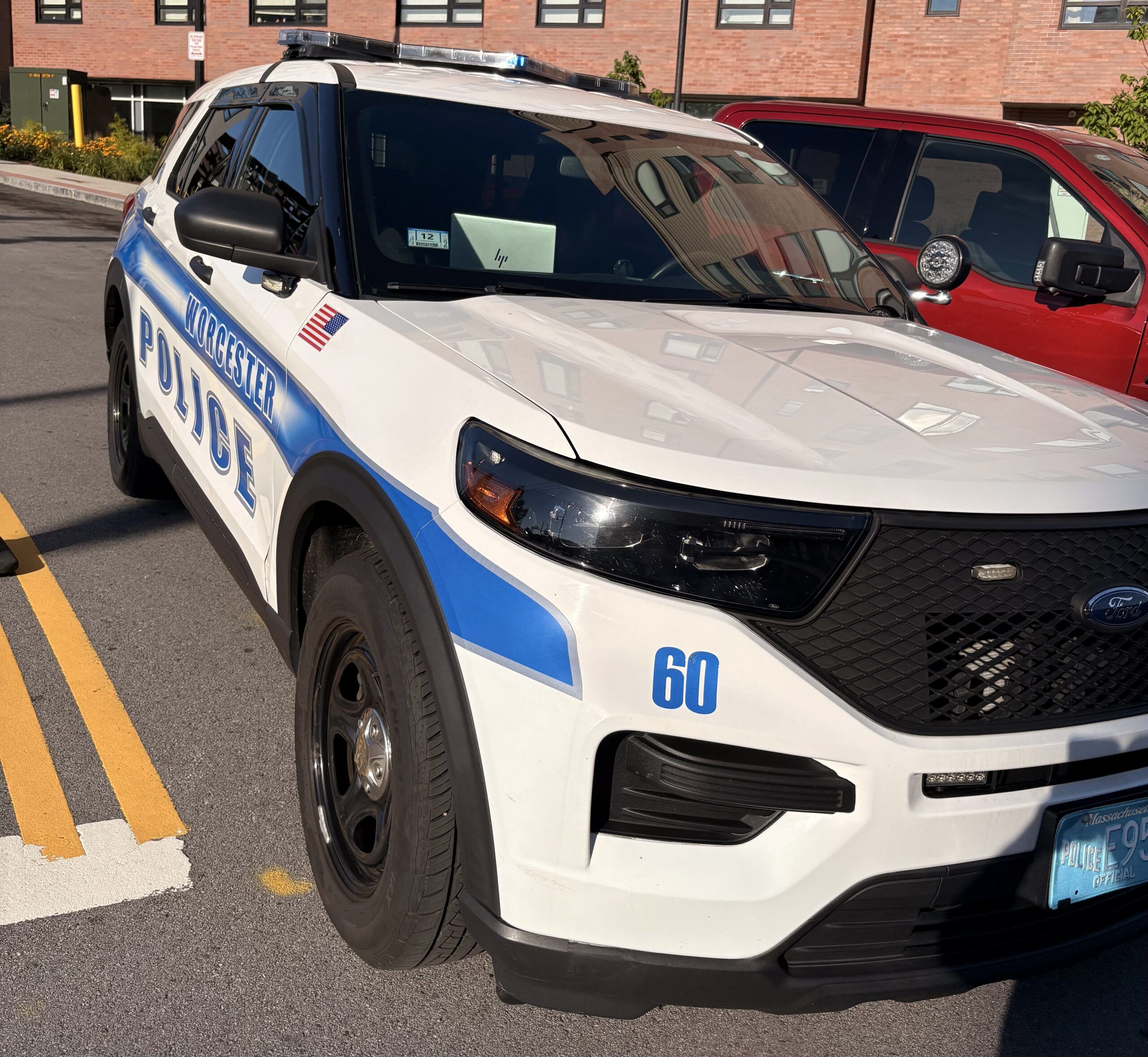
WORCESTER—When a confrontation involving federal immigration agents on Worcester’s Eureka Street drew national attention in May 2025, the city released police body-camera footage and emergency dispatch audio eight days later. When a city councilor was involved in a crash this September, police footage became public through records obtained by news organizations.
A coalition of Worcester community organizations wants to know why the two incidents were handled differently—and whether the city applies the same standards of transparency when elected officials are involved.
The Worcester Civilian Review Board Coalition announced Monday that its members will address the city council during Tuesday’s meeting, urging councilors to examine the city’s practices for releasing police body-camera footage, 911 calls and dispatch communications.
The effort comes nearly three months after the council rejected a proposal to establish an independent civilian review board for the Worcester Police Department, a decision that has done little to quiet the debate over police accountability.
A petition submitted by Janet Davis, appearing as item 9l on Tuesday’s agenda, requests a review and comparison of the city’s policies concerning the publication and release of police recordings involving elected officials.
The coalition is calling for consistent disclosure practices regardless of the position or public standing of those involved.
Two incidents, different paths to disclosure
In its announcement Monday, the coalition contrasted the city’s response to the May 8, 2025, incident on Eureka Street with its handling of records related to the Sept. 2, 2026, crash involving Councilor-at-Large Kathleen Toomey.
Following the Eureka Street incident, the city released body-camera footage and emergency dispatch audio on May 16 and committed to releasing additional footage subject to disclosure on a rolling basis.
Footage related to Toomey’s crash, by contrast, became public through records obtained by news organizations, including the Worcester Telegram & Gazette and Boston.com, according to the coalition.
The coalition also pointed to the police department’s internal investigation, released in October, which found that an officer violated the department’s body-camera policy by muting his camera for more than 13 minutes, including while speaking with Toomey. The investigation also found that a 911 caller’s belief that the driver was intoxicated had not been relayed to responding officers, according to the coalition’s account of the findings. The caller’s suspicion does not establish that Toomey was intoxicated.
The department has since required a sergeant or higher-ranking officer to respond to calls involving elected officials and required officers to state a reason before muting their body cameras, according to the coalition.
The changes have not satisfied advocates who argue that stronger accountability measures are needed.
“Retraining is not discipline because allowing for continued lack of transparency is not a sustainable practice of accountability,” Giselle Rivera-Flores, founder of the People Praxis & The Meaning Gap Study, said in an Oct. 21 statement, cited again in Monday’s announcement.
The petition seeks a comparison of the city’s disclosure practices. It does not establish that preferential treatment occurred or that the differences in how the recordings became public were the result of an elected official’s involvement.
An accountability debate far from settled
Tuesday’s appeal represents the latest chapter in a decades-long effort to establish independent civilian oversight of Worcester police.
In October 2025, the Worcester Regional Research Bureau released a report recommending the creation of a civilian review board, placing Worcester among a shrinking number of major American cities without such an oversight body.
The report followed the December 2024 U.S. Department of Justice findings that Worcester police engaged in a pattern or practice of excessive force and raised serious concerns about sexual misconduct and weaknesses in the department’s internal accountability systems. The federal investigation was closed in August 2026.
City Manager Eric Batista recommended in July that Worcester strengthen its existing accountability framework rather than establish a separate civilian review board, citing the resources necessary to create an effective independent oversight body and the work already being done within the municipal administration.
“This recommendation should not be viewed as the conclusion of the municipality’s accountability efforts,” Batista wrote in his July communication to the council. “Accountability requires continuous evaluation, transparency, and responsiveness to community expectations.”
In September, following a five-hour meeting that drew extensive public testimony, the council voted 8-3 to file the civilian review board matter. Councilors Khrystian King, Luis Ojeda and Robert Bilotta opposed filing it.
Chief Equity Officer Kevin Lovaincy outlined the city’s existing oversight structure, which includes civilian investigators operating outside the Police Department’s chain of command. He also cited an 81% decline in excessive-use-of-force complaints since 2018.
Supporters of the existing framework have argued that another oversight body could duplicate responsibilities, introduce additional costs and complicate disciplinary procedures. Advocates for a civilian review board maintain that an office operating within the municipal administration cannot provide the same independence as an outside body with investigative authority.
Following the September vote, coalition spokesperson Giselle Rivera-Flores told the Worcester Guardian in a written statement that effective oversight should not depend on confidence in individual city officials or police leaders.
“Good leadership and independent oversight can—and should—exist at the same time.”
A narrower request for council action
Unlike the proposal rejected in September, the petition before councilors Tuesday does not seek to establish a civilian review board. Instead, it asks the city to examine a specific aspect of police transparency: how records involving elected officials are made available to the public.
The coalition continues to advocate for independent civilian oversight, but its immediate request concerns whether the city’s disclosure practices are consistent and equitable.
Its members include the Worcester NAACP, The Village Worcester, Black Families Together, Neighbor to Neighbor Massachusetts, Progressive Worcester, Her Way Home, Massachusetts Organization of African Descendants, Showing Up for Racial Justice Worcester, Safe Exit Initiative, Worcester Interfaith and Friends of Worcester, as well as former Human Rights Commission Chair Ellen Shemitz and former Vice Chair Liz O’Callahan.
The city council meets at 6:30 p.m. Tuesday, Nov. 24, in the Esther Howland South Chamber at City Hall, 455 Main St. Residents may participate in person or remotely.
Have news, tips, or a story worth telling? Feedback to this story? A good recipe, a funny joke or a suggestion? Reach Editor Charlene Arsenault at carsenault@theworcesterguardian.org—because good stories (and great scoops) deserve to be shared.
- The Worcester Guardian is an independent nonprofit news organization. Support local journalism by making a DONATION today.
