
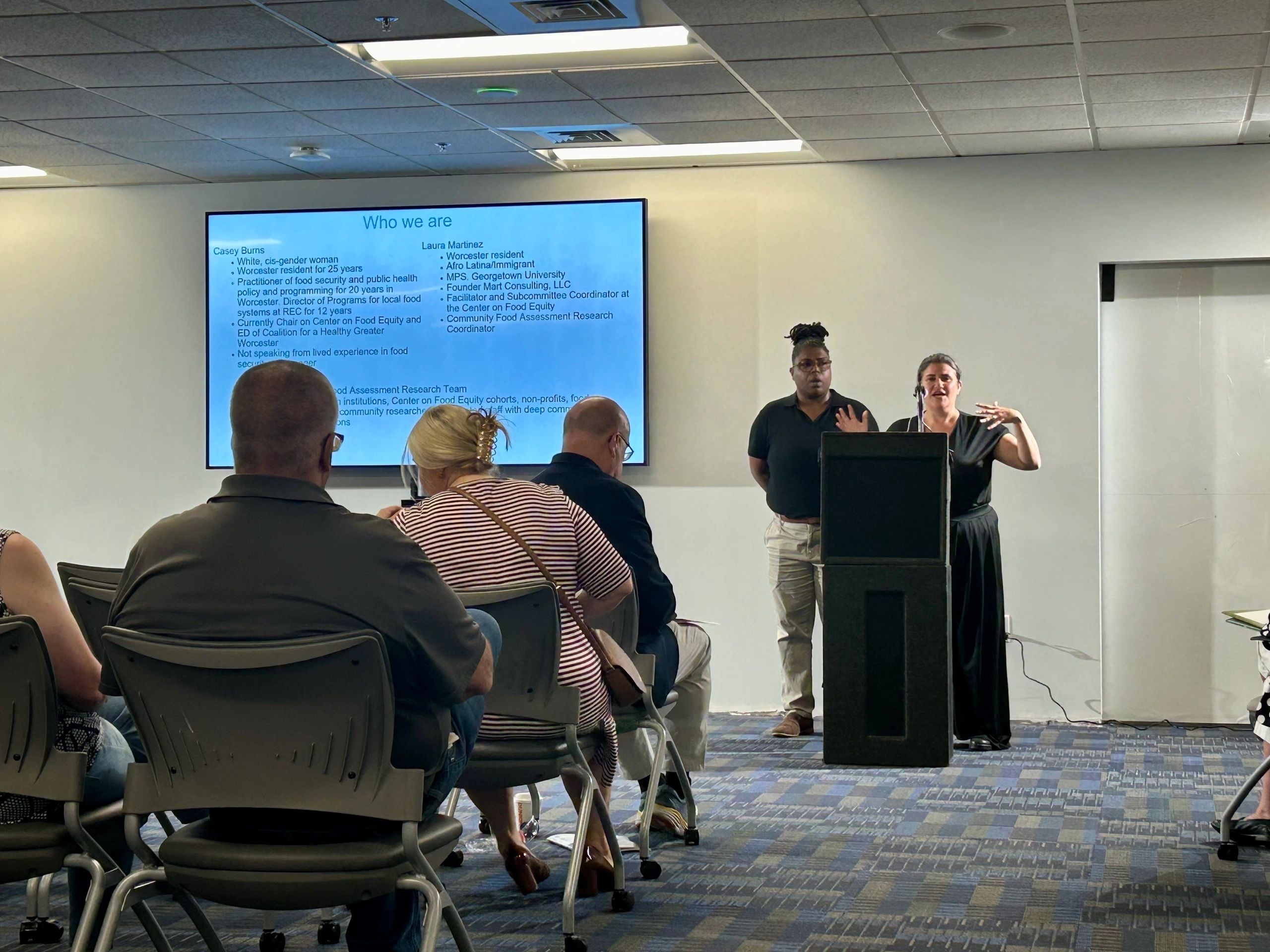
WORCESTER—Anti-hunger advocates in Worcester said additional nutrition benefits from state and federal officials, more accessible public transportation to grocery stores and partnerships with local farms for donations are a few measures that can be taken to fight food insecurity in the region.
A Worcester Community Food Assessment report showed that more than half of approximately 500 people surveyed said they struggled to buy food, could not keep enough food at home and did not eat enough.
The report, from the Center of Food Equity and the Worcester County Food Bank, also said as of 2023, the number of Worcester residents with food insecurity ranged from 11.2 percent to 38.1 percent. Participants in the survey were largely low-income residents, people living in temporary housing and having lower education attainment.
In addition, it showed that families with children, particularly Hispanic households, were 48 percent less likely to use SNAP (Supplemental Nutrition Assistance Program). Households with children were 2.2 percent more likely to experience food insecurity.
The more than half of respondents enrolled in SNAP find it easy to use. Although more people are eligible for resources post COVID-19, an inability to connect to benefits is a major issue. Reasons cited include a lack of knowledge, concern about immigration status and ineligibility to qualify while still having a financial need.
In an interview, Casey Burns, co-director of the Center on Food Equity, said the report reinforced a lot of what advocates already knew but demonstrated the importance of “addressing the systems creating the needs.”
Rising food prices with inflation were cited as a major contributor to the problem. Lower food prices would make it easier to access healthy food and fresh produce, according to 67 percent of those surveyed.
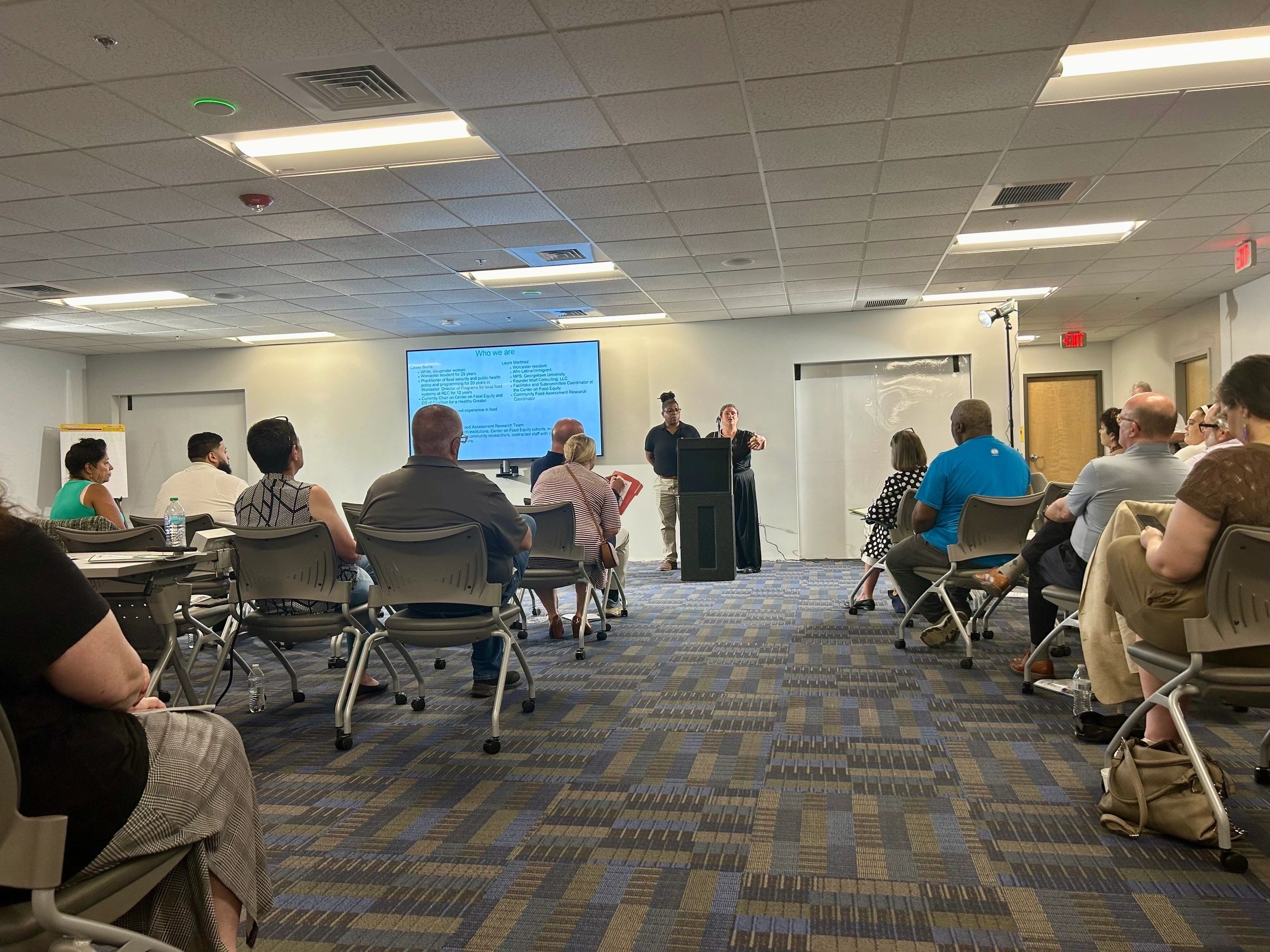
At a recent event to talk about the findings, Congressman Jim McGovern joined community organization leaders and said advocacy is a key factor.
“We need to use the advocacy team we’ve developed to not only advocate for the expansion of benefits but to help encourage outreach and application assistance,” said McGovern.
Burns noted the report showed that half of the respondents had never been screened about food insecurity by healthcare providers. Of the remainder that had, they were not provided referrals to resources even when eligible for assistance.
“Healthcare providers can do a better job of offering support,” Burns said.
She noted that ideally there would be a common application whereby those qualifying for MassHealth for example, would be automatically renewed and could bypass navigators.
McGovern said the assessment correctly includes the impact of transportation, health care and housing on food insecurity.
Some things can be solved like having better bus routes and more convenient schedules, he said.
Burns noted that respondents spoke about difficulties such as the ability to travel to locations to obtain food and use of the bus system, which has a one-seat policy. That policy would preclude people from carrying more than a couple of bags on board.
She said there is a need for infrastructure improvements to sidewalks and bus routes to facilitate transportation to grocery stores and food pantries.
The Worcester County Food Bank partners with a network of 26 food pantries throughout the region. Food is largely donated by the state government, U.S. Department of Agriculture, local companies, farms and food drives.
There are an additional 10 pantries not affiliated with WCFB.
Because of the higher costs of not only groceries but also housing and utilities, unprecedented numbers of people (a 32 percent increase) are turning to food banks. Federal benefits post pandemic have decreased by an average of 33 percent.
Wait times at food banks were cited as an issue as was the depletion of items at food fridges.
Burns noted that people demonstrated in the survey that they knew about food fridges, what they are and how to access them, even though they are smaller and less common.
She said food fridges have ”lessons to learn and borrow from” that can be applied to other resources so that they can become similarly known.
Burns also emphasized the importance of outreach to specific populations, such as offering information in their own languages and switching up ways in which to access it such as online through groups like WhatsApp and other means where people trust the messengers.
She urged Worcester residents eager to help to engage in local, state and federal advocacy. Burns said instead of starting new initiatives, it is better if people support and join existing, neighborhood resources to help strengthen them.
Susan Gonsalves is currently editor-in-chief of a mental health trade journal and a freelance writer/editor specializing in education, medical/health and business. She previously worked at the University of Massachusetts Dartmouth and has contributed to publications at Worcester Polytechnic Institute and College of the Holy Cross. At the Worcester Telegram, she covered the town of Leicester and wrote for Business Matters. She can be reached at smgedit@comcast.net
As the Worcester Guardian marks nearly a year of delivering free, independent digital news to our city, our dedication to this mission strengthens. Please consider a tax-deductible donation to support our ongoing commitment to providing hyperlocal news coverage to Worcester. Scroll to the bottom of our home page to sign up for our daily newsletter
