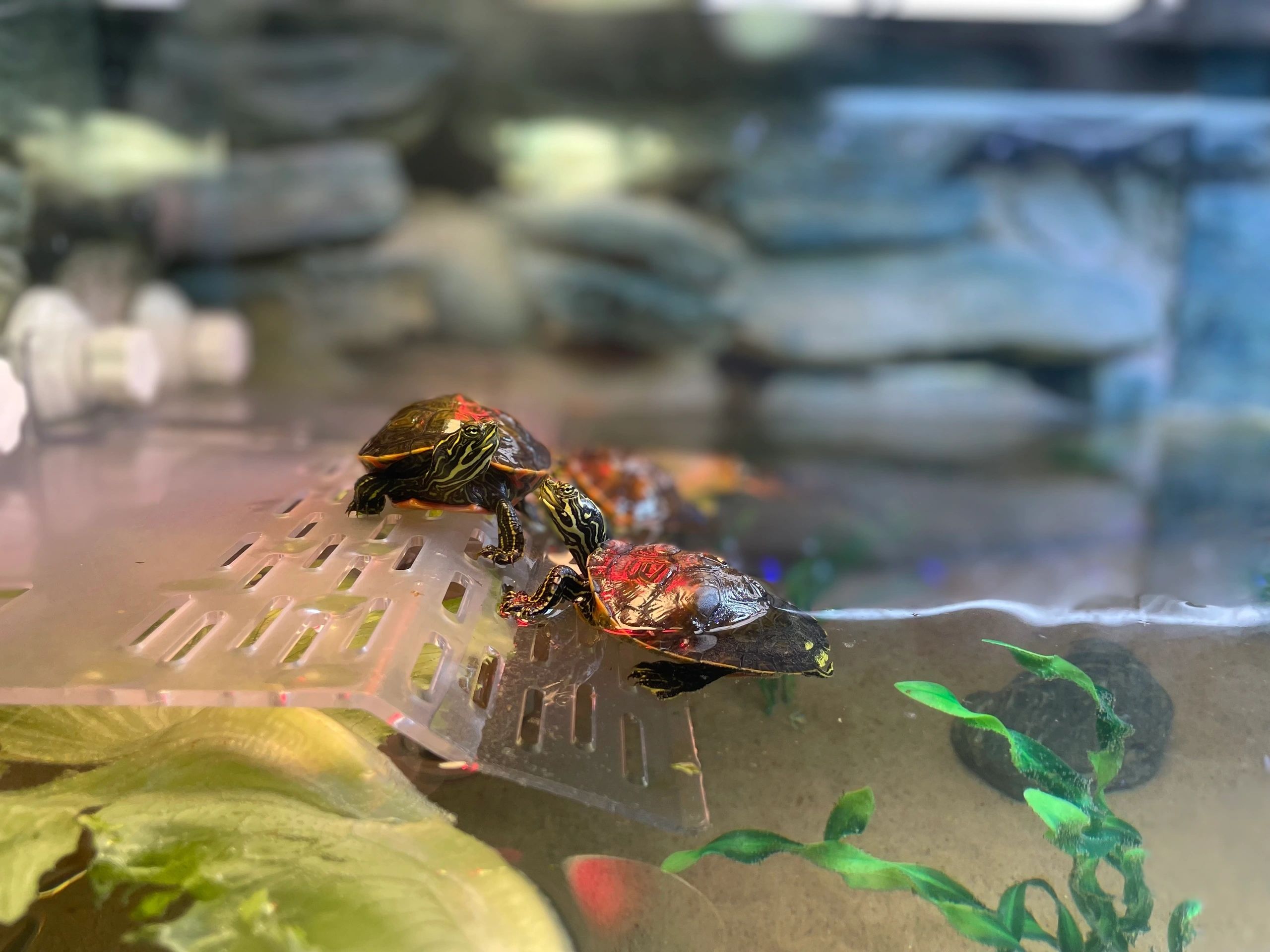
WORCESTER—Four northern red-bellied cooter turtles are spending the winter at the EcoTarium to gain a head start on their futures—and to help bolster the population of their endangered species.
The turtles that benignly bask under special UV lights, swim in warm water and eat copious amounts of lettuce are part of a growing success story that began 40 years ago.
The EcoTarium is participating in a statewide “headstarting’’ program, the oldest such freshwater turtle headstart project in existence. Mass Wildlife officials credit this work with tripling the vulnerable red cooter breeding population in Massachusetts.
The turtles were listed as an endangered species in 1980, their population falling prey to human encroachment and habitat loss. At that time, fewer than 200 breeding adults were identified in Massachusetts, mostly in Plymouth County and more than half of them in one pond.
To improve these numbers and brighten the outlook for the turtles, MassWildlife began the headstarting program in 1984.
Through this effort, about 100 to 150 hatchlings are collected by Mass Wildlife from the wild each year and distributed to partners across the state, including schools and facilities such as the EcoTarium, that agree to care for them. There the turtles spend their first eight months or so being raised in captivity, safe from predators such as great blue heron and large bullfrogs and with access to warm water and generous portions of food.
This gives them a “head start’’ to success in the wild. After receiving close watch and care for about nine months, the turtles will be released at the size of a softball _ or what would take them three years to reach in the wild.
This is especially important, according to Mass Wildlife, because female turtles do not reach breeding age until they are 13 to 20.
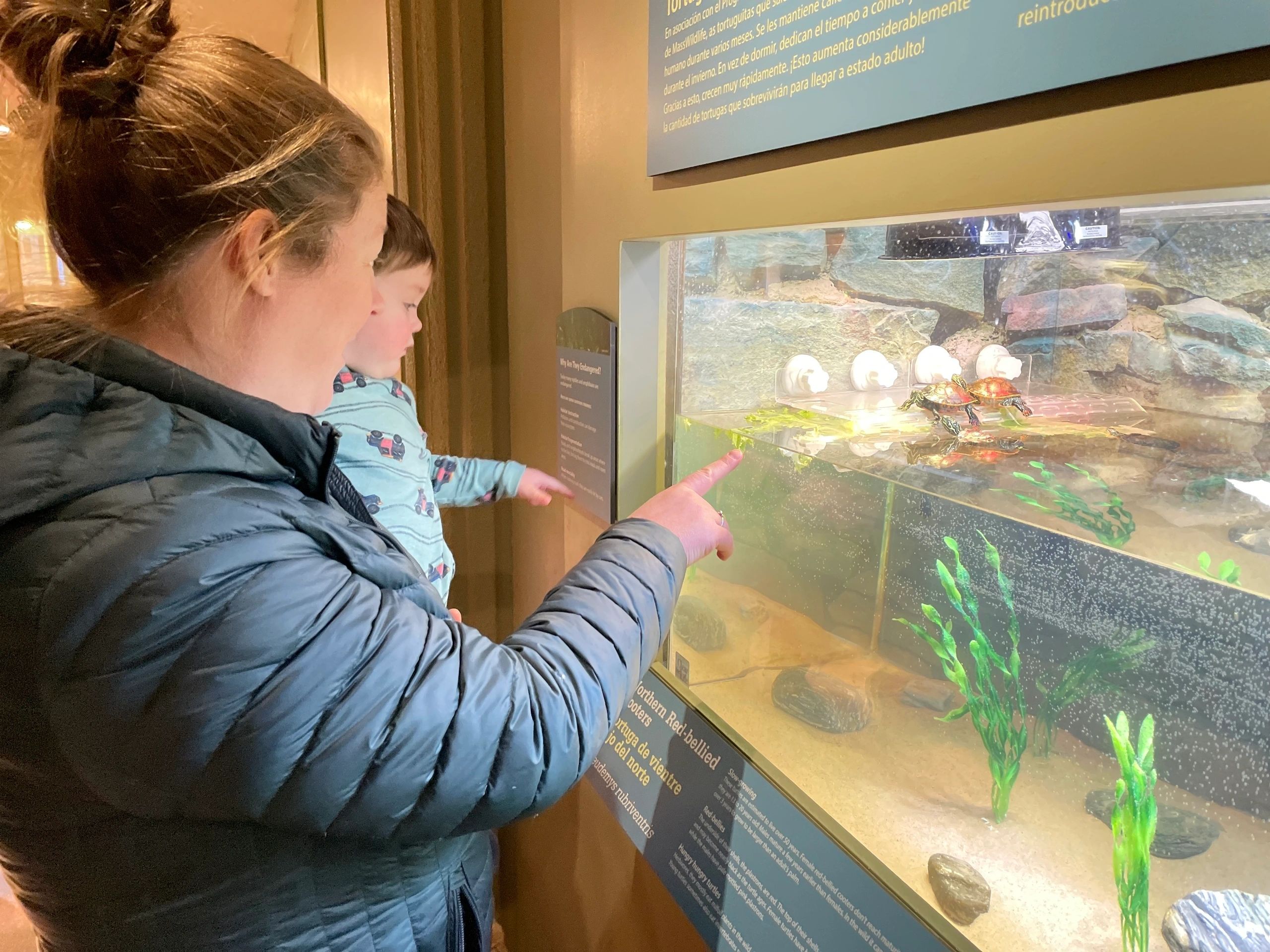
Numbers bear out the program’s success. Based on the most recent figures available, 400-600 breeding-age individuals were identified among more than 20 ponds. Since 1985, 4,924 headstarted turtles have been released at 38 sites in southeastern Massachusetts.
For staff at the EcoTarium, the project provides a chance to oversee the care of an animal that will eventually be returned to the wild, unlike the majority of the wildlife they care for, such as otters, owls, eagles and soft-shelled and snapping turtles, which are unable to be released into their traditional habitats for a variety of reasons.
“We’re giving back to our community,’’ said Emma Porrello, lead animal keeper at the EcoTarium.
Animal keeper C. J. Hall said he entered the field because of a dedication to conservation and a concern for climate change, global warming and other factors that can impact the environment. “To see a native species get back on the rise and to go from being threatened to being stronger is awesome.’’
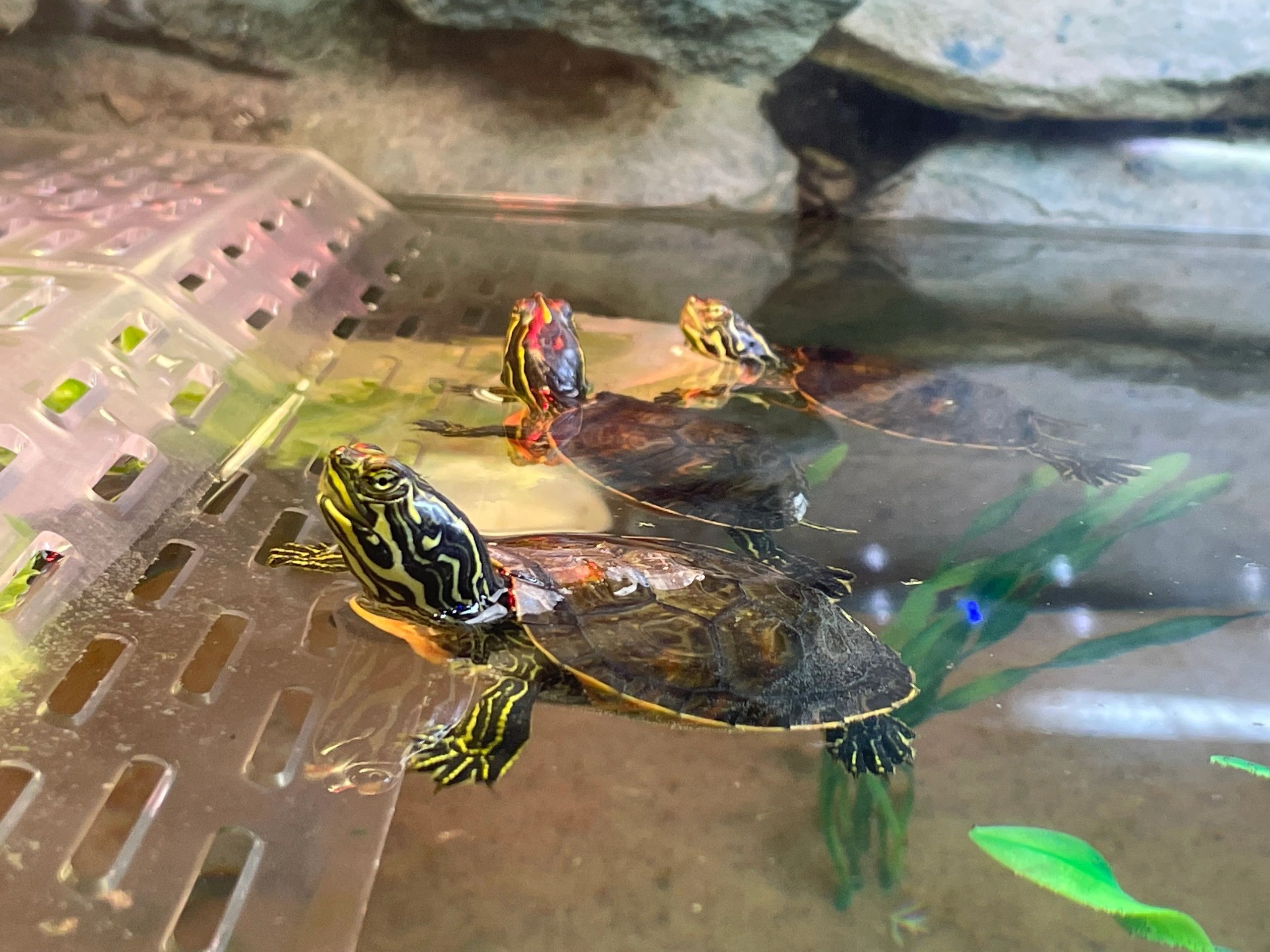
The EcoTarium built a special tank for the turtles, which have to be kept separate from the other exhibits to prevent any potential cross-contamination that they could then bring into the wild. The enclosure includes special UV lighting that helps their shells harden, Porrello said.
The staff keeps track of the growth of the turtles, with the results submitted to Mass Wildlife.
When they are released, the turtles are tracked so that wildlife officials and their caretakers can monitor their individual progress in the wild.
For now, the EcoTarium staff has a specific role: Making sure the turtles grow strong and healthy.
They are growing steadily, Porrello said, with a recent weight gain of a gram a week.
“We’re packing them full of lettuce,’’ Hall said.
Sandy Quadros Bowles is a journalist with more than 40 years of experience in print and online journalism. In her free time, she enjoys traveling, reading and interacting with any and all animals that cross her path. She can be reached at sqbfreelance@gmail.com