
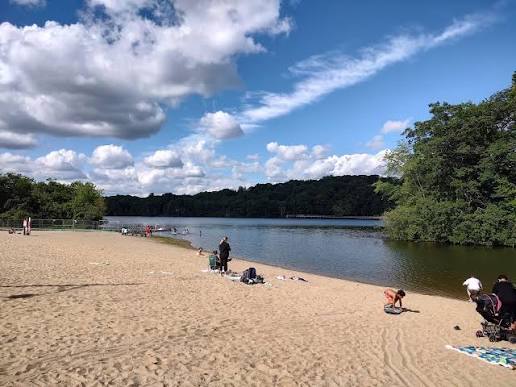
Two of Worcester’s most popular lakes will be temporarily off-limits Monday as the city carries out a preventive treatment aimed at stopping potentially harmful algae before it becomes a problem.
Contractors hired by the Worcester Department of Sustainability and Resilience will apply copper sulfate to Coes Reservoir and Indian Lake on Monday, July 6, according to a city announcement.
City officials stressed that the treatment is preventive and that there is currently no threat of exposure to harmful algae at either lake.
Still, residents and visitors are being asked to stay out of the water on the day of the treatment. Swimming, boating and fishing should be suspended, and pets should be kept away from the water. The city is also advising against using water from either lake to irrigate lawns or plants or to provide water for livestock.
Beaches will be posted before the treatment begins. The restrictions are expected to be lifted the following day.
The city uses copper sulfate to control the growth of harmful, toxin-producing algae, including cyanobacteria, commonly known as blue-green algae. According to the announcement, the treatment is a common lake-management practice and poses minimal risk to people and animals after the application is complete.
The Worcester Conservation Commission has approved the treatment.
The work comes during the height of the summer recreation season, when both Coes Reservoir and Indian Lake draw swimmers, boaters, anglers and other visitors. By treating the lakes before harmful algae is detected, the city is seeking to prevent blooms that can lead to longer closures and restrictions on recreational use.
The treatment is separate from the city’s recent work targeting invasive aquatic plants. In late June, Worcester treated the northern section of Coes Reservoir with the herbicide ProcellaCOR to control Eurasian milfoil, an invasive plant that can form dense growth beneath the water’s surface.
Monday’s treatment, by contrast, targets algae and will apply to both Coes Reservoir and Indian Lake.