
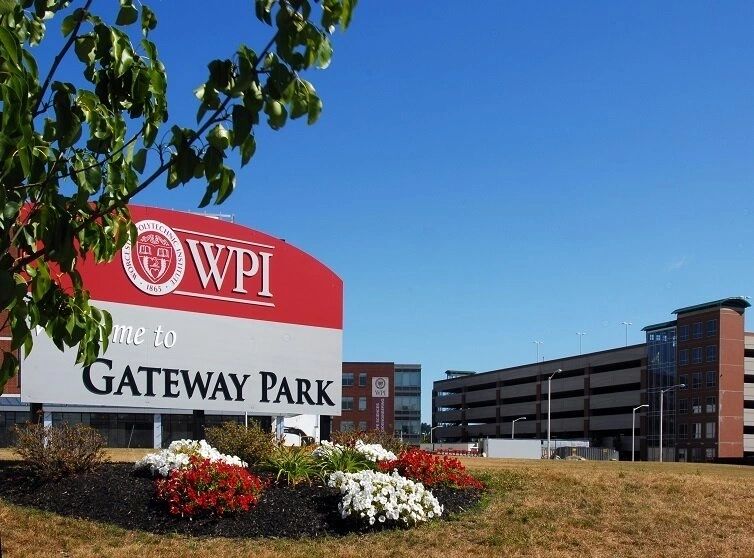
WORCESTER — In a surprising turn of events that sent shockwaves through the community, it was recently revealed that WPI apparently has plans to acquire two hotels in the Gateway Park area — the Hampton Inn & Suites and Courtyard Worcester — with plans to convert them into student housing.
Monique Joseph, president of Discover Central Massachusetts, voiced alarm over the potential loss of 234 hotel rooms from the city’s inventory in a letter addressed to WPI President Grace Wang.
This response comes in the wake of a strongly-worded letter from Worcester’s mayor, city manager and business leaders, who also expressed their frustration with WPI’s plan.
This decision, while addressing WPI’s need for additional student housing, has raised significant concerns about its potential impact on Worcester’s economy and tourism industry.
“The sale of the two hotels is a bigger issue than you would originally think,” Joseph told the Worcester Guardian. “Once you look at the effects that it’ll have on the tourism industry, this is a huge deal. Most of the conventions that are already signed for the DCU center rely on hotel availability.”
Sandy Dunn, general manager of the DCU Center, echoed her concerns.
“This impacts us in the sense that we struggle now to be able to get enough hotel rooms to accommodate the conventions that are coming into the city,” Dunn said. “This will absolutely deal a blow in terms of the events that we’ll be able to bid on and bring to the city. Obviously that’s economic impact to the downtown area, jobs, money coming to the DCU center itself. Clearly there will be a big impact if those two properties close.”
As the third-largest industry in Massachusetts, tourism plays a vital role in Worcester’s economic landscape.
“Tourism is a huge economic driver into the city,” Joseph said. “It supports a lot of jobs, a lot of small businesses. And to not be able to compete for those conventions and sporting events that look to come to Worcester will be a challenge for the city.”
In 2022, tourism-related spending in Worcester amounted for $446.5 million and generated more than $112 million in payroll. The loss of these hotel rooms could jeopardize events such as the NCAA hockey tournament, Joseph said, which alone contributes $1.2 million to the local economy in just a few days.
“The tourism numbers in Worcester are so strong,” Joseph said. “It’s about supporting jobs. Tourism itself supports 2,900 jobs and that number is from 2022. We’re waiting on the data from 2023 to come out.”
Dunn highlighted the immediate impact on upcoming sporting events.
“We recently bid on NCAA hockey for 2027, 2028 and 2029,” she said. “The housing agency for the NCAA reached out and said they were struggling to find enough hotel rooms to do NCAA hockey [here in Worcester]. This is not a big lift since there’s only four teams. They were already struggling to find those rooms, so we gave them assistance in being able to identify properties that they could reach out to.”
The situation is particularly critical given existing commitments.
“We already have people that are contracted well into 2028 with conventions for the city and likely have contracts with the property to be able to house their delegates,” Dunn said.
Joseph emphasized the broader implications of WPI’s plan.
“This is not just about a hotel room,” she said. “This is about the trickle-down effect and supporting our small businesses and the people working in these hospitality jobs.”
With a population of 207,000, Worcester only has 924 hotel rooms. Providence, with 190,000 residents, has more than 2,800 rooms; Springfield, with 153,000 residents, has 1,300 rooms; and Hartford, with 119,000 residents, has 1,100 rooms.
The letter from Discover Central Massachusetts urges WPI to recognize the critical importance of collaborating with local entities to ensure the city’s economic vitality is not undermined.
“With the limited amount of rooms that we currently have on the books,” Joseph warned, “to lose even more, will make it almost impossible to compete with neighboring cities for this business. This is a huge loss of economic impact.”
“Part of the problem is that we’re being blindsided by this,” Dunn said. “There’s no time to create a strategy. Hopefully we can encourage WPI to not take these properties offline. These are critical to the economic success of Worcester.
“For now, there are no imminent plans to build a new hotel property and nothing that’s broken new ground,” Dunn added. “Obviously, it takes a lot of time to build a new hotel.”
As Worcester faces this challenge, the coming months will be crucial in determining how the city balances the needs of its educational institutions with its economic growth strategy.
“Conventions in Worcester impact nearby communities in central Massachusetts as well; not just Worcester,” Joseph said. “We’ll work closely with the city and the Chamber of Commerce to help come up with a solution to this problem.”
The Worcester Guardian reached out to WPI for a statement, but a spokesperson for the school declined to comment.
Matt Olszewski is a freelance content and news writer based in Boston, MA. In his free time, Matt enjoys running, hiking or skiing. Matt is currently finishing up the MPH degree program at Tufts University. He can be reached at mattoskier@gmail.com
As the Worcester Guardian marks nearly a year of delivering free, independent digital news to our city, our dedication to this mission strengthens. Please consider a tax-deductible donation to support our ongoing commitment to providing hyperlocal news coverage to Worcester. Scroll to the bottom of our home page to sign up for our daily newsletter