
WORCESTER—One of the overarching goals of Worcester Public Schools’ five-year strategic plan is to ensure that it is acting in unison as a school district and not as a district of schools in its own silos, Superintendent Rachel Monárrez told reporters gathered in her office Monday.
That will also involve working with the city to see what implications the actions of the city have on the school district, according to Monárrez, who said things like housing developments in the city impact the number of students attending schools.
Monárrez indicated that she holds monthly meetings with Worcester City Manager Eric Batista to identify the city’s priorities, assess the district’s needs, and explore opportunities for alignment.
The Worcester School Committee approved the district’s 2023-28 Strategic Plan at a Dec. 21 committee meeting; it was initially presented to them at the end of November.
The plan, which Monárrez calls “our promise to the future,” has six key priorities: equitable resources and educational programs, family and community engagement, culture and climate, acquire and retain talent, health and wellness, and modernized safe facilities.
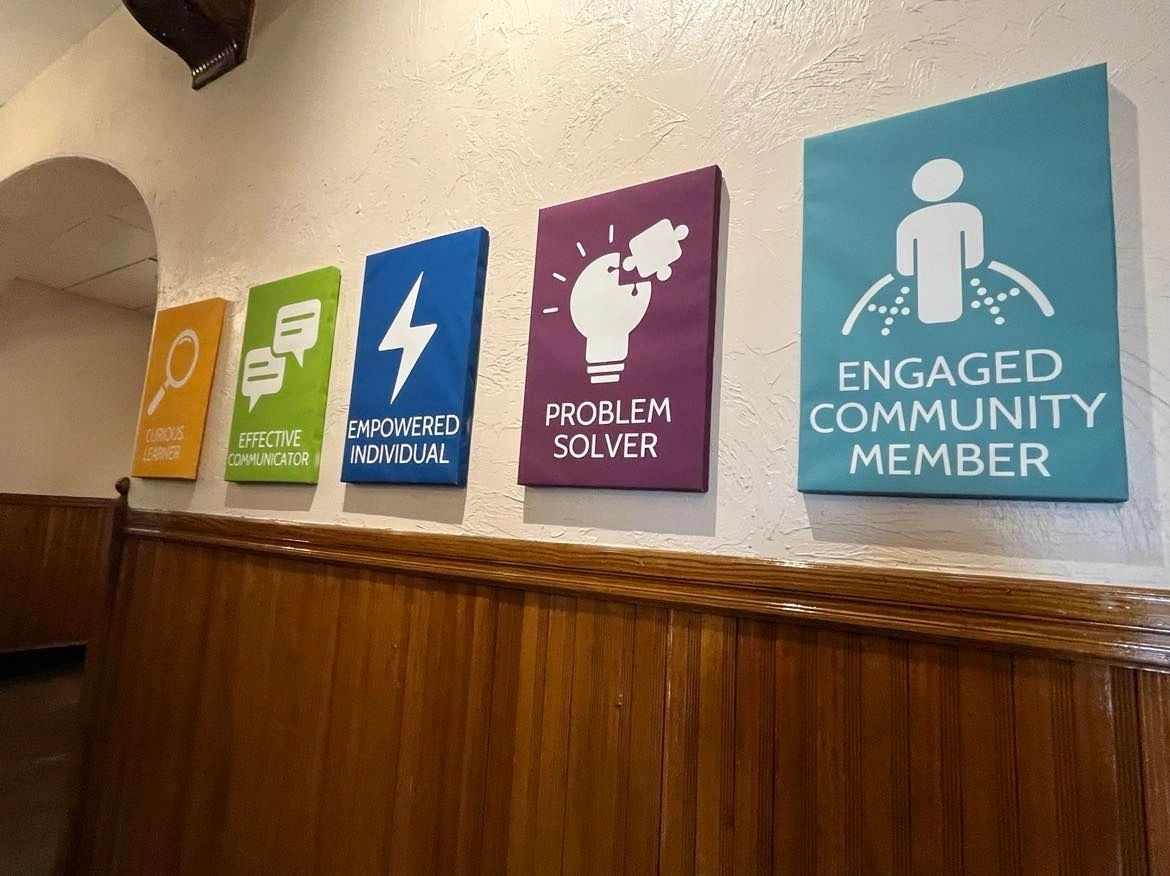
The strategic plan incorporates the district’s “vision of a learner,” which outlines characteristics and skills that all Worcester Public Schools “should master upon graduation to ensure all students are future-ready,” according to the district’s website. The goals of the “vision of a learner” is to create students who are engaged community members, problem solvers, empowered, effective communicators, and curious learners.
According to Monárrez, the district is already working on achieving the goals set out in key priority areas of the plan.
Reaching a contract with the Educational Association of Worcester in May of 2023 was a “really big deal,” according to Monárrez.
Monárrez said before the contract was reached there wasn’t a system that recognized the amount of time teachers and educators had put in working for the district or others.
“I do feel like it would be a little premature to say that has made an impact [on teacher retention],” Monárrez said. “You know, it’s just too early. But I can say I don’t get as many resignations as I did when I first started.”
The strategic plan took shape following a series of district-wide listening and learning tours conducted by Monárrez, who assumed the position in June 2022. During these engagements, a prevailing perception emerged—that advancing in one’s career within Worcester Public Schools relied on personal connections. Monárrez emphasized the district’s commitment to altering this perception and creating a more inclusive and merit-based professional growth environment.
“We’re just trying to create pipelines …on our non-certificated side, on our teaching side,” Monárrez said. “We want people to grow and stay with us because they’re committed to the vision.”
The aims in the strategic plan related to modernized and safe facilities call for an increase in spending on facilities to better repair and maintain the schools, grounds, and district buildings.
The district may be able to make progress on improving its facilities in the coming years, with the Board of the Massachusetts School Building Authority voting to allow Burncoat High School into the eligibility period for funding for a new school at the end of 2023, after voting against building a new Burncoat for several years.
“It’s a 5 to 7-year process, so it’s not something that happens right away,” Monárrez said. “But this is an opportunity for us.”
Regarding the prioritization of maintenance and repairs for other buildings, Monárrez explained that the district is currently crafting a comprehensive master plan for facilities. This plan will categorize schools into tiers based on the urgency of required repairs or modernization at each respective school.
Developing the master plan will involve inspecting the schools on many different levels, according to Monárrez, who said many people assume Grafton Street Elementary School is the school in most need of attention due to its age, but she said she’s been in other elementary schools that need a lot more work.
Monárrez guesses that the next school in line to be rebuilt would be Worcester East Middle School.
Parents also raised concerns about the condition of Chandler Magnet School when students from La Familia were sent there after the diocese of Worcester ended WPS’ lease on the Grafton Street building that was housing La Familia.
Issues with the lockers not opening have been addressed by taking them out and replacing them with hooks for students to place their coats and bags, according to Monárrez, and the administration took out classrooms that weren’t being used and created a library. She also said any rooms with mold in the school would not be in use, though she wasn’t sure if any did in fact have mold.
In addition to creating more district-wide plans to ensure the district is operating in unison, Monárrez said the district is collecting data on all the vocational opportunities that are offered throughout its elementary, middle, and high schools.
“In the past, every school was kind of doing their own thing, and so we really didn’t have a way to capture it all,” Monárrez said.
It’s clear there are vocational programs at Worcester Technical High School, according to Monárrez, but then there are also innovation pathways in the district.
Monárrez said all the programs are coming from a good place of making sure children have access to things, but it’s important to ensure that if students expect they are going to get a certification from a program, that it has been set up so they get that certification.
The district did not track the progress it made toward the goals set out in its last 5-year strategic plan, according to Monárrez, so she said it is important that the district plan out how they are going to measure progress.
For some of the key performance indicators in the strategic plan, Monárrez said they need to create a system to capture the data and overall need to collect a baseline of data on key performance indicators so the district will be able to measure improvement.
The district is starting work on finding that baseline data on Feb. 2, according to Monárrez. Then, once that baseline is created, they will determine set performance goals. The percentage and the benchmarking goals will be determined as part of the district’s administrative operational plan.
Once the baseline data is determined, Monárrez said it will be shared with the school committee along with the data the district continues to collect as the plan moves forward.
Part of the data collection will also help achieve some of the goals set out in the strategic plan, according to Monárrez.
The plan has the goal of “fostering authentic, effective, consistent, and inclusive two-way communication and engagement among families, schools, and the community.”
Part of the data collection process will be reaching out to families to complete surveys about their experiences with the district.
“We are in the process right now of rolling out a web-based platform called ParentSquare and ParentSquare allows for two-way communication,” Monárrez said.
Parents and legal guardians will be able to choose their preferred language platform, which expands access, according to Monárrez. Each school will have wraparound coordinators who will also be working with families.
“It all kind of starts to fall together, which is really nice about the aims, is you’ll start to see this overlap,” Monárrez said. “In order for us to get, for example, expanded opportunity to educational programming, parents need to know about it, so then that falls into community engagement and making sure parents know what we even have.”
The district is also working on student engagement, which has involved trying out methods to ensure students learn proper cell phone etiquette. While other districts require students to put their cell phones in pouches, Monárrez said that while it might work for those districts it might not be the best way forward for WPS.
Schools in the district have been piloting different programs to address phone use by students, including one that gives students breaks during the day to check their phones.
During her listening and learning tour, Monárrez said what really struck her was the people really enjoyed people able to engage and have a bridge to connect with the district, so since then she’s always thinking about how she can create those spaces.
As a result, Monárrez said she is holding a “Gathering for Excellence” on Jan. 30, at which she will share the overarching goals of the strategic plan and there will be a panel that consists of students, parents, principals, and members of her administration that will respond to the presentation.
Kiernan Dunlop is an award-winning journalist who has spent the past five years reporting in Worcester, New Bedford and Antigua and Barbuda. She’s been published in Bloomberg, USA Today, Canary Media, MassLive and the New Bedford Standard Times, among other outlets. She can be contacted at kdunlop@theworcesterguardian.org