WORCESTER—It’s not often that the moon obstructs our view of the sun, and witnessing a total eclipse is even more rare. Yet, for many, the time has finally arrived, and a lot of people are pretty excited about it.
On Monday, April 8, a total solar eclipse sweeps across the sky, and we discussed the ins and outs of the event, and where you can best take part in witnessing the eclipse in the Worcester area.
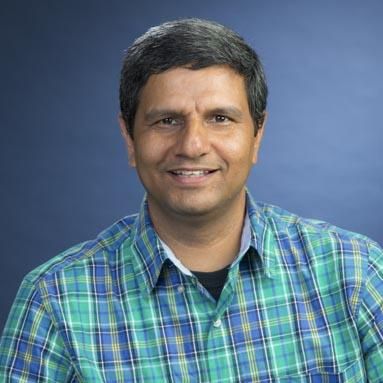
The Worcester Guardian caught up with Rudra Kafle, Ph.D., a professor of physics and teaching at Worcester Polytechnic Institute (WPI), to delve into the significance of this celestial event.
Worcester Guardian: Why is this particular solar eclipse such a “big deal?” Why is there such excitement around it — perhaps even more than the one in 2017?
Rudre Kafle: Solar eclipses happen when the shadow of the Moon falls on the Earth. But the Moon’s orbit around the Earth does not lie on the same plane as the Earth’s orbit around the Sun. Therefore, the Moon’s shadow does not reach the Earth frequently and hence the eclipses become rare events. As the Moon is much smaller compared to the size of the Earth, its shadow does not cover the entire Earth during an eclipse. This gives a narrow path of totality during an eclipse.
Fortunately, the solar eclipse on Monday, April 8, 2024, is passing across North America with a wider band of shadow compared to 2017. According to NASA, “In 2017, the path ranged from about 62 to 71 miles wide. During the April eclipse, the path over North America will range between 108 and 122 miles wide – meaning at any given moment, this eclipse covers more ground.” This means that more people can watch the total solar eclipse for a longer duration this time.
WG: You’ve mentioned that observations of the sun during an eclipse give scientists a way to make groundbreaking discoveries—-what are some examples? Is there anything specific scientists will be “looking for” during this upcoming eclipse?
RK: During the total solar eclipse, the whole solar disc is covered by the Moon. Everyone in the path of totality will experience, suddenly, complete darkness from the brightest moment! Isn’t this super exciting? Also, the solar scientists waiting to collect data with their state-of-the-art equipment will be able to collect information from the sky, which otherwise would not be possible.
One such example is the verification of Einstein’s Theory of General Relativity during the time of the famous 1919 solar eclipse observed by Sir Arthur Eddington and his team from Africa and South America. Their observations demonstrated that light from distant stars was bent by the Sun’s gravitational field and the stars could be observed which would not have been seen otherwise. This phenomenon is called the Gravitational Lensing.
Another discovery made during the time of a total solar eclipse was the discovery of Helium gas in the Sun’s atmosphere by a French Astronomer in 1868. That’s how the name of the Sun (Helios in Greek) came.
Among the many exciting but mysterious things about the Sun is how the outer part of the Sun called the corona is much hotter than the layer inner to the corona. This is called the “coronal heating problem” in the solar science community. Solar physicists and astrophysicists are focusing on such problems and hope to find clues and answers to such questions from the data collected during this and future solar eclipses.
WG: What is so fascinating about the eclipse to you?
RK: I am a physics educator and I also advise students in their astrophysics minor at WPI and astrophysics-related projects. I am very excited to view this eclipse. This will give me another chance to experience an eclipse right on campus at WPI Quad. I will use this moment to educate people in the community about this exciting phenomenon given by nature and how we can observe this safely.
WG: Do you think we’ll get a good view from Worcester? Most of the predictions seem to show a 90-95% totality in this area. Are we in one of the “better states/areas” to witness this?
RK: Different factors are to be considered in predicting and calculating the path of eclipses. According to the website Eclipse 2024, we can observe about 93.6% totality from Worcester, Massachusetts, which is pretty good.
WG: Another expert the Worcester Guardian spoke with said that if you can manage it, head north for the eclipse. Would you suggest this, too? If you’re staying “home” in Worcester, any suggestions of good spots to watch? We are, in fact, the city of seven hills.
RK: If we can go to the path of totality, that would definitely be fantastic! I am planning to observe the eclipse from the WPI Quadrangle, and I hope that will be the best.
Dr. Rudra Kafle is an associate professor of teaching at Worcester Polytechnic Institute (WPI). He received his Ph.D. in theoretical atomic physics from WPI and did postdoctoral research in theoretical and experimental DNA biophysics at the University of Michigan. He joined WPI as a physics faculty member in 2015. Ever since, he has been focusing on innovative teaching, project advising, and developing physics pedagogy course at WPI. He teaches astrophysics courses and advises students in their astrophysics minor projects.